5 Manageable Strategies to Improve Gut Health

Five evidence-backed strategies to improve gut health that fit into your real life, even when your gut feels unpredictable.
Strategy 1: Add Fermented Foods to Your Plate
If you're looking for strategies to improve gut health, fermented foods are one of the most well-studied places to start. A 17-week randomized study published in Cell found that people who ate a diet rich in fermented foods, things like yogurt, kefir, kimchi, and sauerkraut, steadily increased their gut microbial diversityThe variety of different bacterial species living in your digestive tract, generally considered a marker of a healthier gut. and saw a decrease in several markers of inflammation [1]. That's a meaningful finding, because a more diverse microbiome tends to be a more resilient one.
What makes fermented foods special is that they arrive pre-populated with live microorganisms. Think of them as reinforcements for your gut's existing community. The same study found that the high-fermented-food group showed consistent benefits across the board, while the high-fiber group's results varied more depending on their baseline gut health [1]. In other words, fermented foods may be a more universally accessible starting point, especially for people whose guts are already sensitive.
Practical ways to add more fermented foods:
- Stir plain kefir or live-culture yogurt into smoothies or sauces
- Add a small spoonful of kimchi or sauerkraut as a side
- Sip on kombucha occasionally as a lower-sugar swap for soda
Start small. A few tablespoons a day is a reasonable beginning, and you can build from there as your gut adjusts.
Strategy 2: Gradually Increase Your Fiber Intake
Fiber is essentially food for your gut bacteria. When you eat it, certain bacteria ferment it and produce compounds called short-chain fatty acidsSmall molecules produced when gut bacteria break down fiber; they help regulate inflammation, gut barrier strength, and even mood., or SCFAs. These SCFAs seem to do a lot of good work: they help maintain the gut lining, support immune function, and may play a role in keeping inflammation in check [2].
A 2022 review in Microorganisms noted that declining fiber intake over recent centuries has likely contributed to shifts in gut microbial composition that researchers associate with a range of modern health issues [2]. A separate 2025 review found that fiber- and polyphenol-rich foods consistently enriched SCFA-producing bacteria, including species like Faecalibacterium and Roseburia, and that the anti-inflammatory effects may be even stronger when fiber and polyphenols work together [3].
The catch is that adding too much fiber too quickly can cause bloating and discomfort, especially if you have IBS. Researchers suggest that the type, amount, and timing of fiber all matter [2]. A gentler approach tends to work better for sensitive guts:
- Add one new high-fiber food per week rather than overhauling your diet overnight
- Prioritize cooked vegetables, oats, and legumes, which are often easier to tolerate than raw fiber
- Drink plenty of water, since fiber works best when you're well hydrated
Strategy 3: Move Your Body Consistently (But Not Excessively)
Exercise tends to support a healthier gut microbiome, though the relationship is more nuanced than a simple "more is better" rule. A 2022 systematic review found that physical activity does modulate gut microbial composition in humans, with regular moderate movement generally associated with greater diversity and more beneficial bacterial profiles [9]. A 2023 review in Frontiers in Physiology echoed this, noting that exercise influences gut diversity, bacterial composition, and microbial metabolite production [8].
The important caveat is that prolonged, very high-intensity exercise may actually tip the balance toward gut dysbiosisAn imbalance in the gut microbial community, often characterized by a reduction in beneficial bacteria and an overgrowth of potentially harmful ones., at least temporarily [9]. So the goal isn't to train like an elite athlete. It's to move consistently at a level your body can sustain.
For most people with gut issues, a few simple habits seem to help:
- Aim for 20 to 30 minutes of moderate-intensity movement most days, like brisk walking, cycling, or swimming
- Incorporate lower-intensity activity like yoga or stretching on days when your gut feels more reactive
- Avoid intense workouts on an empty stomach if you're prone to digestive symptoms
Consistency over intensity is the key principle here. A daily walk tends to do more for your gut over time than occasional extreme efforts.
Strategy 4: Protect Your Sleep and Manage Stress
Your gut and your brain are in constant conversation, and two of the biggest disruptors of that conversation are poor sleep and chronic stress. A 2025 systematic review found that sleep disorders are associated with reduced levels of beneficial gut bacteria and an increase in pro-inflammatory species [6]. The relationship seems to run both ways: a disrupted microbiome may make it harder to sleep, partly because gut bacteria help produce sleep-related compounds like tryptophan metabolites and GABA [6]. A 2023 meta-analysis also found that modulating gut bacteria through probiotics shows promise for improving sleep quality outcomes [7].
On the stress side, a 2023 systematic review of 13 human studies found that psychological stress is associated with changes in gut bacterial abundance [5]. An earlier review in Frontiers in Microbiology linked stress-induced shifts in the microbiome to increased gut permeability and more pronounced gastrointestinal symptoms [10]. In other words, a stressful period can make your gut more reactive, and a reactive gut can make stress feel harder to manage.
You don't need to eliminate stress entirely. A few manageable habits tend to help:
- Aim for 7 to 9 hours of sleep and try to keep a consistent bedtime, even on weekends
- Experiment with brief daily stress-reduction practices like diaphragmatic breathing, gentle movement, or a short walk outside
- Limit screens in the hour before bed, since disrupted circadian rhythms seem to affect gut bacteria as well as sleep quality [10]
Strategy 5: Think About Your Lifestyle as a Whole System
One insight that comes through clearly in recent research is that diet, sleep, exercise, and stress don't operate independently. A 2025 comprehensive review found that these factors work synergistically on gut microbial communities, and that looking at them in isolation limits our ability to understand what actually moves the needle [4]. In practical terms, this means that eating more fiber while sleeping poorly and managing chronic stress may produce underwhelming results compared to making modest improvements across all four areas at once.
This is actually encouraging news if you have IBS or a sensitive gut. You don't need to do everything perfectly. Small, consistent changes across multiple lifestyle factors tend to compound over time. Adding a serving of fermented food, taking a daily walk, going to bed 30 minutes earlier, and building in one stress-reducing habit each week adds up to a meaningfully different lifestyle within a few months, without requiring a dramatic overhaul all at once [4].
The research also suggests that gut health responses are highly individual [1]. What works well for one person may not produce the same results for another, which is why tracking your own symptoms and adjusting based on what you observe tends to be more useful than following a rigid protocol. If you have a diagnosed condition like IBS, working with a registered dietitian or gastroenterologist can help you personalize these strategies to your specific situation.
How Redbloom Helps
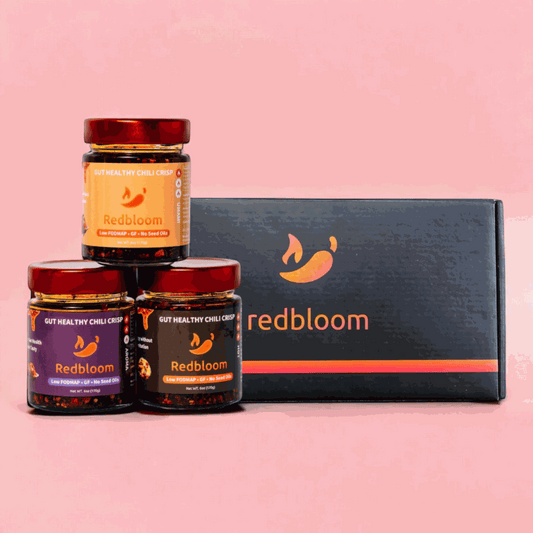
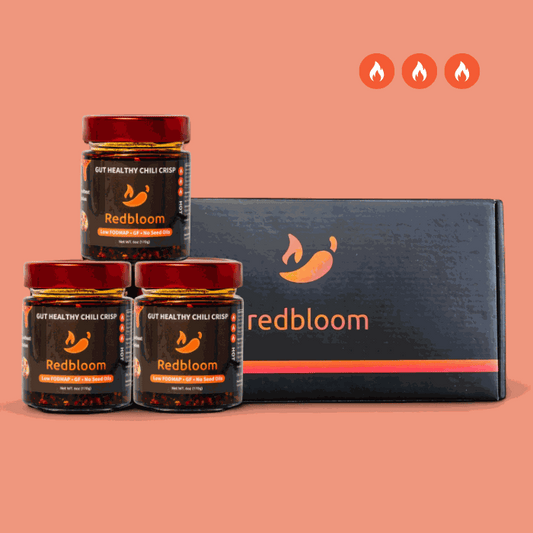
If you have a sensitive gut, you already know that wanting to eat flavorful food and actually tolerating it can feel like two very different things. Capsaicin, the active compound in chili peppers, activates TRPV1 receptors in your gut lining and is clinically shown to help reduce gut sensitivity over time with careful, gradual exposure. The problem is that most traditional chili products deliver too much capsaicin too fast, which can trigger discomfort before your gut has a chance to adapt. That mismatch between the potential benefit and the actual experience is exactly what Redbloom Chili Crisp was designed to address.
Redbloom takes a different approach by microencapsulating capsaicin in oleic acid from avocado oil. That process creates a protective cushion around the capsaicin, slowing its release and making it gentler on sensitive digestive systems. Instead of a sudden flood of heat hitting your gut lining all at once, the capsaicin releases more gradually, giving your system a better chance to respond without going into overdrive. For people who have been avoiding spice because of past discomfort, this kind of controlled delivery makes a real difference.
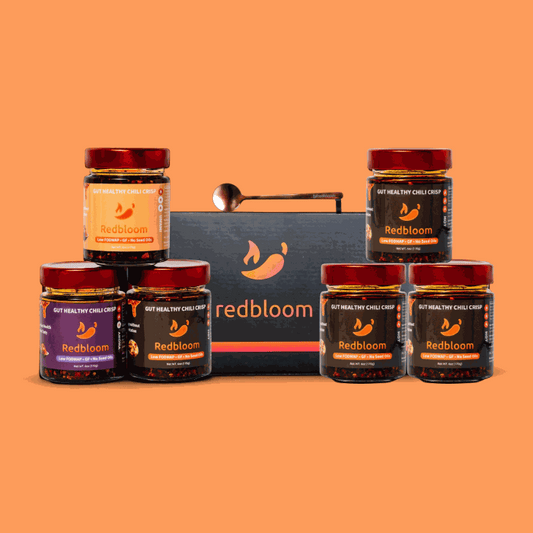
Redbloom also takes the guesswork out of building tolerance with a structured 3-phase protocol: Mild Umami first, then Medium Aroma, then Hot Dopamine. Each phase is designed to gradually increase capsaicin exposure in a way that helps your gut adapt sustainably over time, rather than jumping straight to an intensity level that overwhelms a sensitive system. It's a practical, structured way to work toward reduced gut hypersensitivity, one step at a time.


Key Takeaways
- Fermented foods like yogurt, kimchi, and kefir may increase gut microbial diversity and reduce inflammation, making them one of the most accessible starting points for gut health.
- Fiber feeds beneficial gut bacteria that produce short-chain fatty acids; add it gradually to avoid triggering bloating, especially with IBS.
- Moderate, consistent exercise tends to support a healthier microbiome, but very high-intensity training may temporarily disrupt it.
- Poor sleep and chronic stress are both linked to shifts in gut bacteria, so protecting both is a meaningful gut health strategy, not just a wellness cliché.
- Small improvements across diet, movement, sleep, and stress tend to compound over time. You don't need to overhaul everything at once.
Frequently asked questions
How long does it take to see improvements in gut health?
Research suggests the timeline varies quite a bit depending on the person and the intervention. The fermented food study in Cell ran for 17 weeks and found that microbiome diversity increased steadily over that period [1]. For fiber, changes in bacterial composition can begin within days of increasing intake, though meaningful shifts in how you feel may take several weeks. The honest answer is that gut health tends to respond to consistent habits over months rather than quick fixes over days.
Can stress really affect my gut bacteria?
Studies suggest it can. A 2023 systematic review found that psychological stress is associated with changes in the abundance of certain gut bacteria [5], and a broader review linked stress to increased gut permeability and more pronounced digestive symptoms [10]. The relationship seems to be bidirectional: stress affects your microbiome, and your microbiome may influence how you respond to stress. Managing stress isn't just good for your mental health; it seems to matter for your gut too.
Is there a best diet for gut health?
Research points to diets rich in fiber and polyphenols, including Mediterranean-style eating patterns, as consistently beneficial for gut microbial diversity and SCFA production [3]. That said, the Cell study found that dietary responses are highly individual and depend partly on your baseline microbiome [1]. Rather than following one rigid diet, most researchers suggest focusing on variety: more vegetables, fermented foods, legumes, nuts, and whole grains, adjusted based on what your gut actually tolerates.
Does exercise help with IBS symptoms specifically?
The evidence is encouraging but still developing. Systematic reviews suggest that regular moderate physical activity tends to support a healthier gut microbiome overall [8][9], and a 2025 lifestyle review noted synergistic effects between exercise, diet, and sleep on gut microbial communities [4]. For IBS specifically, low-to-moderate exercise like walking and yoga is generally well-tolerated and may help with symptom management, though very intense exercise can sometimes worsen symptoms in sensitive individuals. As always, it's worth checking with your healthcare provider before making big changes.
Can improving sleep actually help my gut?
Research suggests the connection is real. A 2025 systematic review found that sleep disorders are associated with reduced levels of beneficial gut bacteria like Bifidobacterium and Faecalibacterium, and that microbiota-derived metabolites including SCFAs and tryptophan-related compounds appear to influence sleep quality in return [6]. A 2023 meta-analysis also found that probiotic supplementation showed promise for improving sleep outcomes, suggesting the gut-sleep relationship is genuinely bidirectional [7]. Prioritizing consistent, quality sleep seems to be a meaningful strategy for gut health, not just general wellbeing.
Do I need to take probiotic supplements, or can I get enough from food?
Food-based sources like yogurt, kefir, kimchi, and sauerkraut are a well-supported starting point. The 17-week clinical study in Cell found meaningful microbiome and immune benefits from a high-fermented-food diet without supplementation [1]. Probiotic supplements may be helpful in specific situations, and some research suggests they can support sleep quality [7], but they are not a requirement for everyone. If you're considering supplements, it's worth discussing with a healthcare provider, since strain selection and dosing matter quite a bit.
References
- Wastyk HC, Fragiadakis GK, Perelman D, Dahan D, Merrill BD, Yu FB, et al. Gut-microbiota-targeted diets modulate human immune status. Cell 2021.
- Fu J, Zheng Y, Gao Y, Xu W. Dietary Fiber Intake and Gut Microbiota in Human Health. Microorganisms 2022.
- Meiners F, Ortega-Matienzo A, Fuellen G, Barrantes I. Gut microbiome-mediated health effects of fiber and polyphenol-rich dietary interventions. Frontiers in nutrition 2025.
- Zeng Q, Feng X, Hu Y, Su S. The human gut microbiota is associated with host lifestyle: a comprehensive narrative review. Frontiers in microbiology 2025.
- Ma L, Yan Y, Webb RJ, Li Y, Mehrabani S, Xin B, et al. Psychological Stress and Gut Microbiota Composition: A Systematic Review of Human Studies. Neuropsychobiology 2023.
- Oriquat G, Al-Hasnaawei S, Mousa HM, Malathi H, Singla S, Sahoo S, et al. Gut Microbiome-Sleep Crosstalk: Mechanistic Pathways, Dysbiosis Signatures, and Microbiome-Based Interventions. Brain and behavior 2026.
- Santi D, Debbi V, Costantino F, Spaggiari G, Simoni M, Greco C, et al. Microbiota Composition and Probiotics Supplementations on Sleep Quality: A Systematic Review and Meta-Analysis. Clocks & sleep 2023.
- Cullen JMA, Shahzad S, Dhillon J. A systematic review on the effects of exercise on gut microbial diversity, taxonomic composition, and microbial metabolites: identifying research gaps and future directions. Frontiers in physiology 2023.
- Dziewiecka H, Buttar H, Kasperska A, Ostapiuk–Karolczuk J, Domagalska M, Cichoń J, et al. Physical activity induced alterations of gut microbiota in humans: a systematic review. BMC Sports Science, Medicine and Rehabilitation 2022.
- Karl JP, Margolis LM, Madslien EH, et al. Effects of Psychological, Environmental and Physical Stressors on the Gut Microbiota. Frontiers in Microbiology 2018. [unverified]
Medical disclaimer
Medical Disclaimer: This article is for informational purposes only and is not intended as medical advice. Always consult with a qualified healthcare provider before making dietary changes or if you have a medical condition.