Butyrate: The Gut Fuel You've Never Heard Of

Introduction
Ever wonder why two people can eat the exact same diet and one has a happy gut while the other is doubled over with cramps? A tiny molecule called butyrate might be part of the answer. If you've been chasing butyrate gut health benefits without even knowing it, you're not alone. Most people have never heard of it, yet research suggests it plays a central role in keeping your gut lining strong, your inflammation low, and your digestive system running smoothly. This article breaks down what butyrate is, why it matters for people with IBS and gut issues, and how you can actually get more of it.
What Is Butyrate and How Does It Affect Your Gut?
Butyrate is a short-chain fatty acid (SCFA) – think of it as a tiny molecule your gut bacteria produce when they break down dietary fiber. It's not something you eat directly. Your gut microbes make it for you through fermentation in the colon. [1]
Once produced, butyrate becomes the primary fuel source for colonocytes – the cells lining your colon. Think of colonocytes like the bricks in a wall, and butyrate as the electricity keeping that wall strong and functional. [4]
Research suggests butyrate works through two main pathways: it acts as a histone deacetylase (HDAC) inhibitor, meaning it can influence how your genes are expressed, and it signals through G protein-coupled receptors (GPCRs), which are like on/off switches on cell surfaces. [1, 3] Both pathways help regulate inflammation and gut barrier integrity.
Why Low Butyrate Causes Gut Problems
1) A Weakened Gut Barrier
Your gut lining is only one cell thick. Butyrate helps maintain the tight junctions – the microscopic seals between those cells – that keep bacteria and toxins from leaking into your bloodstream. Research suggests butyrate regulates proteins like claudin-1 that are essential for keeping those seals intact. [2] When butyrate levels drop, those seals can loosen.
- Looser tight junctions may allow inflammatory particles to pass through. [2]
- This is sometimes called increased intestinal permeability, or informally, "leaky gut." [3]
2) Rising Inflammation
Butyrate has notable anti-inflammatory properties. Research shows it helps limit pro-inflammatory signaling molecules like IL-6 and IL-12, which are cytokines – essentially chemical alarm signals your immune system sends out. [2] When butyrate is low, those alarms can stay on longer than they should.
- Chronic low-grade gut inflammation is linked to IBS flares and inflammatory bowel disease. [7]
- Studies suggest butyrate may help suppress these inflammatory pathways and support mucosal immune defense. [1, 7]
3) Disrupted Gut Microbiome Balance
The bacteria that produce butyrate – including Faecalibacterium prausnitzii and Roseburia species – are also key players in keeping the broader microbial community healthy. They release antimicrobial substances and anti-inflammatory molecules that help maintain a balanced gut ecosystem. [2] Fewer of these bacteria means less butyrate and a less stable microbiome overall.
- Lower butyrate producers are associated with poorer gut health outcomes. [4]
- These bacteria also produce beneficial compounds like vitamin B and immunoglobulin A (IgA). [2]
Common Signs You Might Have Low Butyrate
There's no simple at-home butyrate test, but these gut symptoms are associated with disrupted SCFA production:
- Frequent bloating or cramping
- Loose stools or diarrhea that won't settle
- Chronic low-grade gut inflammation
- IBS symptoms that flare without an obvious trigger
- A sense that your gut is just... fragile
Why Some People Have More Butyrate Than Others
Here's the thing: butyrate levels aren't fixed. They depend heavily on what you eat and which bacteria are living in your gut. People who eat more dietary fiber – especially resistant starch found in foods like cooked-and-cooled potatoes, oats, and legumes – tend to produce more butyrate because fiber is the raw material their gut bacteria ferment. [3]
Antibiotic use, a low-fiber diet, and chronic stress can all deplete the butyrate-producing bacteria in your gut. [4] So two people eating "healthy" can still have very different butyrate landscapes depending on their microbiome history.
People with IBS or inflammatory bowel disease often show lower levels of butyrate-producing bacteria, which may help explain why gut barrier issues and inflammation tend to cluster together in these conditions. [7]
What the Science Says: Key Findings
The research on butyrate gut health benefits is genuinely compelling, though much of it is still building toward larger clinical trials.
- Gut barrier support: Research suggests butyrate strengthens the epithelial lining of the gut by regulating tight junction proteins, which may reduce intestinal permeability. [2, 3]
- Inflammation reduction: Studies show butyrate limits pro-inflammatory cytokines and supports mucosal immunity, which is relevant for conditions like IBD and IBS. [1, 7]
- Energy for your colon: Butyrate is the primary fuel source for colonocytes. Research indicates this energy supply is tightly linked to maintaining a healthy anaerobic gut environment – the kind beneficial bacteria prefer. [10]
- Beyond the gut: Emerging research suggests butyrate may also interact with the gut-brain axis and play a role in metabolic health, though these areas are still being studied and results are more preliminary. [3]
How to Boost Butyrate Through Food
- Eat more fiber, especially resistant starch. Resistant starch – found in cooked-and-cooled rice, green bananas, and legumes – is a preferred fuel for butyrate-producing bacteria. Research confirms that diets high in resistant starch and fiber support greater butyrate synthesis. [3]
- Add fermented foods. Foods like yogurt, kefir, and kimchi help diversify your gut microbiome, which can support the community of butyrate producers. This is commonly cited but less well-studied in direct butyrate trials.
- Reduce ultra-processed foods. A diet low in fiber and high in processed ingredients is associated with depleted populations of butyrate-producing bacteria like Faecalibacterium prausnitzii. [5]
- Be consistent. Gut bacteria populations respond to dietary patterns over time, not single meals. Steady, fiber-rich eating supports a more stable butyrate-producing ecosystem. [4]
Long-Term Strategies to Support Gut Health
- Build a fiber-forward plate gradually. If you're not used to high-fiber eating, increase slowly to avoid gas and bloating. Your gut bacteria need time to adapt. [3]
- Protect your microbiome after antibiotics. Antibiotic use can significantly reduce butyrate producers. Reintroducing fiber-rich foods and fermented foods afterward may help restore balance. [4]
- Manage stress. The gut-brain axis runs in both directions. Chronic stress can alter gut motility and microbiome composition, which may indirectly affect butyrate production. Research suggests butyrate itself may influence the gut-brain axis, though the mechanisms are still being studied. [1, 3]
When to See a Doctor
Gut health strategies work best alongside professional care when symptoms are significant. Reach out to a healthcare provider if you notice:
- Blood in your stool or black, tarry stools
- Unintended weight loss
- Severe or persistent abdominal pain
- Symptoms that worsen despite dietary changes
- Fever alongside gut symptoms
These can signal conditions like inflammatory bowel disease or other issues that need proper diagnosis and treatment.
How Redbloom Helps
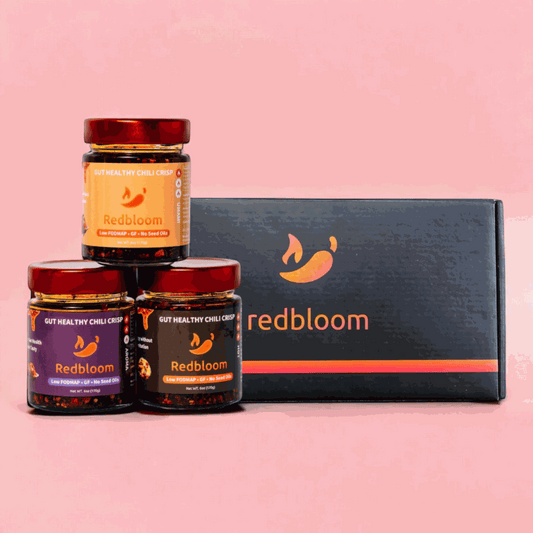
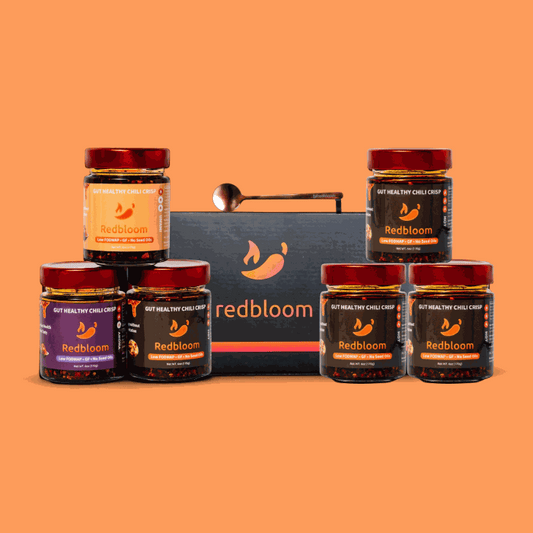
Building long term gut health for people with sensitive guts is exactly the challenge that Redbloom Chili Crisp was designed around. Capsaicin is clinically proven to help reduce gut sensitivity over time through TRPV1 desensitization, but the problem with most traditional chili products is that they deliver too much capsaicin too fast. That spike can trigger discomfort before your tongue or your gut has had any chance to adapt.
Redbloom addresses this by microencapsulating capsaicin in oleic acid from avocado oil, creating a protective cushion that releases more gradually and tends to be gentler on sensitive systems. Instead of a sudden flood of heat, you get a more measured exposure that gives your receptors time to respond without being overwhelmed.
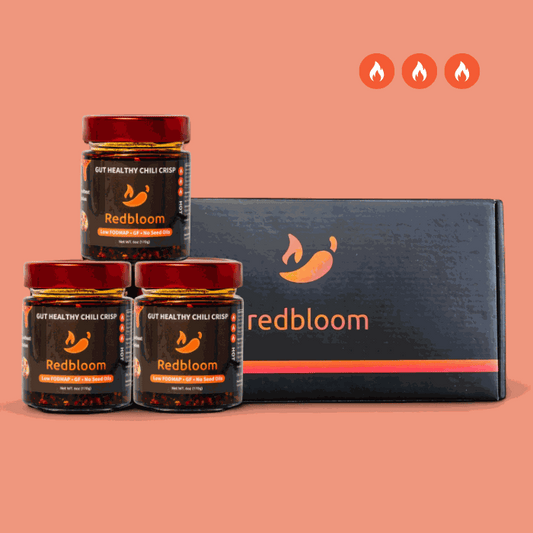
The product is also built around a 3-phase protocol: Mild Umami, then Medium Aroma, then Hot Dopamine. The idea is to move through increasing heat levels progressively, letting your tolerance build the way the research suggests it should, one manageable step at a time. For people with IBS or gut hypersensitivity who want to work spice back into their lives, that kind of structured, gradual approach tends to make the process feel a lot more sustainable.


Frequently asked questions
What foods increase butyrate the most?
Foods rich in resistant starch and dietary fiber are your best bet. Think cooked-and-cooled potatoes, oats, green bananas, and legumes. Research confirms these feed the gut bacteria that produce butyrate. [3]
Can I just take a butyrate supplement?
Butyrate supplements exist, but the research on their effectiveness in humans has produced mixed results so far. [4] Feeding your existing gut bacteria with fiber is currently the most evidence-supported approach for raising butyrate levels.
Is butyrate the same as fiber?
No – fiber is what you eat, and butyrate is what your gut bacteria produce from it. Fiber is the raw material; butyrate is the end product of fermentation. [1]
Does butyrate help with IBS specifically?
Research suggests butyrate supports gut barrier integrity and reduces inflammation – both of which are relevant to IBS. Lower levels of butyrate-producing bacteria are associated with IBS and inflammatory gut conditions. [7] However, clinical trials specifically targeting IBS with butyrate have shown variable results. [4]
How long does it take to see changes from eating more fiber?
Gut microbiome composition can begin shifting within days of dietary changes, though meaningful, stable changes tend to take weeks of consistent eating patterns. This is commonly cited but less well-studied with specific timelines in butyrate research.
Conclusion
Butyrate might be the most important gut molecule you've never thought about. It fuels your colon cells, seals your gut lining, and helps keep inflammation in check – all without you having to do anything fancy. The basics matter most here: eat more fiber, protect your microbiome, and stay consistent. Small, steady changes to what's on your plate can meaningfully shift your gut environment over time. Your gut bacteria are ready to do the work – they just need the right ingredients.
Bibliography
-
Liu H, Wang J, He T et al.. Butyrate: A Double-Edged Sword for Health?. *Advances in nutrition (Bethesda, Md.)*. 2018. DOI: [10.1093/advances/nmx009](https://doi.org/10.1093/advances/nmx009) https://doi.org/10.1093/advances/nmx009
-
Singh V, Lee G, Son H et al.. Butyrate producers, "The Sentinel of Gut": Their intestinal significance with and beyond butyrate, and prospective use as microbial therapeutics.. *Frontiers in microbiology*. 2022. DOI: [10.3389/fmicb.2022.1103836](https://doi.org/10.3389/fmicb.2022.1103836) https://doi.org/10.3389/fmicb.2022.1103836
-
Kalkan AE, BinMowyna MN, Raposo A et al.. Beyond the Gut: Unveiling Butyrate's Global Health Impact Through Gut Health and Dysbiosis-Related Conditions: A Narrative Review.. *Nutrients*. 2025. DOI: [10.3390/nu17081305](https://doi.org/10.3390/nu17081305) https://doi.org/10.3390/nu17081305
-
Hodgkinson K, El Abbar F, Dobranowski P et al.. Butyrate's role in human health and the current progress towards its clinical application to treat gastrointestinal disease.. *Clinical nutrition (Edinburgh, Scotland)*. 2023. DOI: [10.1016/j.clnu.2022.10.024](https://doi.org/10.1016/j.clnu.2022.10.024) https://doi.org/10.1016/j.clnu.2022.10.024
-
Karim MR, Iqbal S, Mohammad S et al.. Butyrate's (a short-chain fatty acid) microbial synthesis, absorption, and preventive roles against colorectal and lung cancer.. *Archives of microbiology*. 2024. DOI: [10.1007/s00203-024-03834-7](https://doi.org/10.1007/s00203-024-03834-7) https://doi.org/10.1007/s00203-024-03834-7
-
Adame MD, Stringer KA, Dickson RP. The Gut Microbiome and Short-Chain Fatty Acid Metabolites in Sepsis.. *Clinics in chest medicine*. 2026. DOI: [10.1016/j.ccm.2025.11.006](https://doi.org/10.1016/j.ccm.2025.11.006) https://doi.org/10.1016/j.ccm.2025.11.006
-
Ottria R, Mirmajidi S, Ciuffreda P. Gut Microbiota-Derived Short-Chain Fatty Acids in Inflammatory Bowel Disease: Mechanistic Insights into Gut Inflammation, Barrier Function, and Therapeutic Potential.. *International journal of molecular sciences*. 2026. DOI: [10.3390/ijms27021095](https://doi.org/10.3390/ijms27021095) https://doi.org/10.3390/ijms27021095
-
Imanbayev N, Iztleuov Y, Bekmukhambetov Y et al.. Colorectal cancer and microbiota: systematic review.. *Przeglad gastroenterologiczny*. 2024. DOI: [10.5114/pg.2024.136228](https://doi.org/10.5114/pg.2024.136228) https://doi.org/10.5114/pg.2024.136228
-
Millet V, Gensollen T, Maltese M et al.. Harnessing the Vnn1 pantetheinase pathway boosts short chain fatty acids production and mucosal protection in colitis.. *Gut*. 2023. DOI: [10.1136/gutjnl-2021-325792](https://doi.org/10.1136/gutjnl-2021-325792) https://doi.org/10.1136/gutjnl-2021-325792
-
Martínez-Ruiz M, Robeson MS, Piccolo BD. Fueling the fire: colonocyte metabolism and its effect on the colonic epithelia.. *Critical reviews in food science and nutrition*. 2025. DOI: [10.1080/10408398.2025.2507701](https://doi.org/10.1080/10408398.2025.2507701) https://doi.org/10.1080/10408398.2025.2507701
Medical Disclaimer: This article is for informational purposes only and is not intended as medical advice. Always consult with a qualified healthcare provider before making dietary changes or if you have a medical condition.