Gut Health 101: What Your Microbiome Actually Is

Introduction
Ever wonder why two people can eat the exact same meal and feel completely different afterward? One person feels great, the other is bloated and miserable. The answer often lives in the gut microbiome – and if you've been searching for what is the gut microbiome explained in plain English, you're in the right place.
Your gut is home to trillions of tiny organisms that influence digestion, immunity, mood, and more. This article breaks down what your microbiome actually is, why it matters, and what you can do to support it every day.
What Is the Gut Microbiome and What Does It Do?
Think of your gut microbiome as a bustling city living inside your digestive tract. Research describes it as a vast, ever-changing population of microorganisms – predominantly bacteria, but also viruses, fungi, and archaea – that interact with your body in countless ways. [3]
This community is not just along for the ride. Research suggests it helps with nutrient metabolism, modulates your immune system, protects against harmful pathogens, and influences your overall physiology. [3] One way it does this is by breaking down complex carbohydrates (glycans) from your food – a process that requires specialized enzymes that your own body cannot produce. [7]
In short, your microbiome is essentially a second organ – one that works around the clock to keep your body running.
Why Your Microbiome Affects So Much More Than Digestion
1) Your Immune System
A large portion of your immune activity is connected to what happens in the gut. Research suggests the microbiome plays a direct role in modulating immune responses, which means an imbalanced gut community may leave your defenses less effective. [10] Studies on respiratory infections, for example, have found that gut microbial imbalance (called dysbiosis) is associated with changes in inflammatory signals and immune outcomes. [10]
- Gut dysbiosis is linked to altered inflammatory responses. [10]
- A diverse microbiome appears to support healthier immune signaling. [10]
2) Mental Health and the Gut-Brain Connection
Your gut and brain are in constant communication along what researchers call the gut-brain axis. Emerging research suggests that fungal communities in the gut (called the mycobiome) may also play a role in neuropsychiatric health, not just bacteria. [4] Studies are exploring links between gut microbial imbalances and conditions like PTSD, with findings showing altered bacterial diversity in affected individuals. [8]
- Gut microbial diversity may be associated with mental health outcomes. [8]
- The mycobiome – the fungal portion of your gut – is an emerging area of research in neuropsychiatric disorders. [4]
3) How Your Body Responds to Medications
Here is something most people never consider: your gut microbiome can actually influence how well medications work for you. A 2023 review highlighted that gut bacteria can directly and indirectly modify how drugs are absorbed, distributed, metabolized, and excreted in the body. [1] This helps explain why the same drug dose works differently from person to person.
- Gut bacteria can alter drug metabolism and effectiveness. [1]
- Medications can also change the composition of your microbiome in return. [1]
Common Signs Your Microbiome May Be Out of Balance
Dysbiosis does not always announce itself loudly. Watch for these signals:
- Frequent bloating, gas, or cramping
- Irregular bowel movements – constipation or loose stools
- Feeling tired even after a full night of sleep
- Increased susceptibility to colds or infections [10]
- Mood changes or heightened anxiety (commonly cited but less well-studied in humans)
Why Some People Have a Healthier Microbiome Than Others
Your microbiome is shaped by a surprising number of factors. Diet is a big one – the types of carbohydrates you eat directly influence which bacteria thrive, since different gut bacteria compete or cooperate to break down different food structures. [7] A diverse, fiber-rich diet tends to support a more varied microbial community.
Exercise also plays a role. Research in exercise immunology suggests that the composition and diversity of gut microbiota can be influenced by physical activity, with potential benefits for immunity and overall health. [2]
Geography, genetics, age, and even the medications you take all leave their mark on your microbial community. [1][6] No two microbiomes are exactly alike – which is part of why gut health can feel so personal and sometimes frustrating to manage.
What the Science Says: Key Findings
The research on gut microbiome health is growing fast. Here are some of the clearest takeaways from current evidence:
- Diet shapes your microbiome in real time. The glycans (carbohydrate structures) in your food directly determine which bacterial species flourish or fade. Research shows that dietary changes can produce community-scale shifts in gut microbiota composition. [7]
- Herbal compounds may support beneficial bacteria. Research suggests certain plant-based compounds (phytochemicals) can act as prebiotics – promoting the growth of bacteria like Bifidobacterium and Lactobacillus – while also having antimicrobial effects against harmful microbes. [3]
- The gut microbiome is linked to cancer risk. A systematic review found consistent associations between specific bacterial species and colorectal cancer, with bacteria like Fusobacterium significantly enriched in samples from patients with colorectal cancer compared to controls. [5] This is an area of active research, not a confirmed causal relationship.
- Exercise may improve microbial diversity. Research in exercise immunology suggests that both acute and chronic exercise training can positively influence gut microbiota composition, with potential downstream benefits for immune function. [2]
Practical Strategies to Support Your Microbiome
1) Feed Your Gut a Variety of Fibers
Different gut bacteria specialize in breaking down different types of carbohydrates. Eating a wide range of plant foods – vegetables, legumes, whole grains, fruits – gives more species something to work with. [7] Variety matters more than volume.
2) Move Your Body Regularly
Moderate, consistent exercise appears to support gut microbial diversity over time. [2] You do not need extreme workouts – regular walks, cycling, or yoga can count. Consistency tends to matter more than intensity.
3) Be Thoughtful About Medications
Because gut bacteria can influence how medications work – and vice versa – it is worth discussing any gut-related changes with your doctor when starting or stopping medications. [1] This is especially relevant if you take antibiotics, which are known to disrupt microbial communities.
4) Consider Herbal and Prebiotic Foods
Research suggests some plant-based compounds may support the growth of beneficial gut bacteria. [3] Foods like garlic, onion, leeks, and asparagus contain prebiotic fibers that feed helpful microbes. Herbal interventions are a growing area of research, though individual responses vary based on genetics and baseline microbiome composition. [3]
When to See a Doctor
Supporting your microbiome through diet and lifestyle is a great starting point, but some symptoms need professional evaluation. Reach out to a healthcare provider if you notice:
- Persistent or severe abdominal pain
- Blood in your stool
- Unexplained weight loss
- Symptoms that significantly disrupt daily life
- No improvement after consistent dietary changes over several weeks
How Redbloom Helps
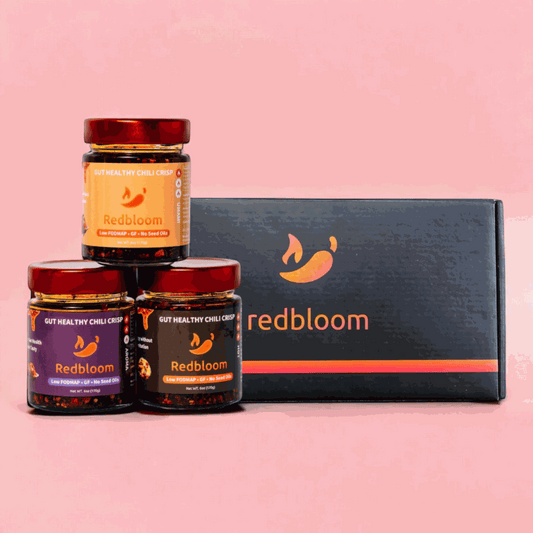
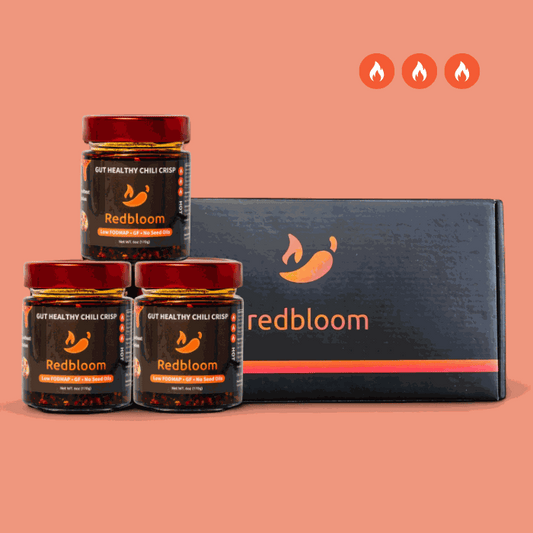
This is exactly the challenge that Redbloom Chili Crisp was designed around. Capsaicin is clinically proven to help reduce gut sensitivity over time through TRPV1 desensitization, but the problem with most traditional chili products is that they deliver too much capsaicin too fast. That spike can trigger discomfort before your tongue or your gut has had any chance to adapt.
Redbloom addresses this by microencapsulating capsaicin in oleic acid from avocado oil, creating a protective cushion that releases more gradually and tends to be gentler on sensitive systems. Instead of a sudden flood of heat, you get a more measured exposure that gives your receptors time to respond without being overwhelmed.
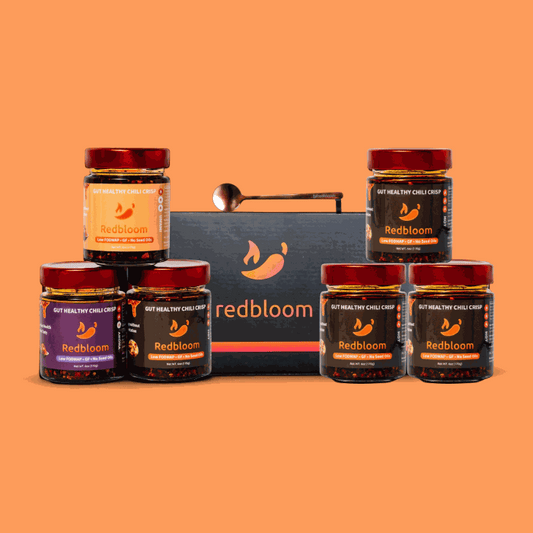
The product is also built around a 3-phase protocol: Mild Umami, then Medium Aroma, then Hot Dopamine. The idea is to move through increasing heat levels progressively, letting your tolerance build the way the research suggests it should, one manageable step at a time. For people with IBS or gut hypersensitivity who want to work spice back into their lives, that kind of structured, gradual approach tends to make the process feel a lot more sustainable.


FAQ
1) What exactly lives in the gut microbiome?
Your gut microbiome is made up of trillions of microorganisms – predominantly bacteria, but also viruses, fungi, and archaea. [3] The fungal portion, called the mycobiome, is a smaller but increasingly studied component linked to immune and even neuropsychiatric health. [4]
2) Can my microbiome affect my mood?
Research is actively exploring this connection. Studies suggest that gut microbial imbalances are associated with changes in mental health outcomes, including in conditions like PTSD. [8] The gut-brain relationship is real, though the exact mechanisms in humans are still being studied.
3) Does exercise really help gut health?
Research in exercise immunology suggests that regular physical activity can positively influence gut microbiota composition and diversity, with potential benefits for immunity. [2] Moderate, consistent movement appears more beneficial than occasional intense exercise.
4) How does diet change my microbiome?
The carbohydrates and fibers you eat directly shape which bacteria thrive in your gut. Different bacterial species specialize in breaking down different food structures, so eating a wider variety of plant foods tends to support greater microbial diversity. [7]
5) Can herbal remedies support gut health?
Research suggests certain plant-based compounds may promote the growth of beneficial bacteria like Bifidobacterium and Lactobacillus while reducing harmful microbes. [3] Individual responses vary, and herbal interventions should complement – not replace – a balanced diet and medical care.
Conclusion
Your gut microbiome is far more than a digestive helper. It is a dynamic, living community that touches your immunity, mental health, and even how your body responds to medications. The good news is that everyday choices – what you eat, how you move, how you manage stress – can meaningfully shape that community over time. Start small, stay consistent, and give your gut the variety it craves. You might be surprised how much better you feel.
Bibliography
-
Zhao Q, Chen Y, Huang W et al.. Drug-microbiota interactions: an emerging priority for precision medicine.. *Signal transduction and targeted therapy*. 2023. DOI: [10.1038/s41392-023-01619-w](https://doi.org/10.1038/s41392-023-01619-w) https://doi.org/10.1038/s41392-023-01619-w
-
Nieman DC, Pence BD. Exercise immunology: Future directions.. *Journal of sport and health science*. 2020. DOI: [10.1016/j.jshs.2019.12.003](https://doi.org/10.1016/j.jshs.2019.12.003) https://doi.org/10.1016/j.jshs.2019.12.003
-
Shinde Y, Deokar G. Regulation of Gut Microbiota by Herbal Medicines.. *Current drug metabolism*. 2024. DOI: [10.2174/0113892002287336240328083220](https://doi.org/10.2174/0113892002287336240328083220) https://doi.org/10.2174/0113892002287336240328083220
-
Hadrich I, Turki M, Chaari I et al.. Gut mycobiome and neuropsychiatric disorders: insights and therapeutic potential.. *Frontiers in cellular neuroscience*. 2024. DOI: [10.3389/fncel.2024.1495224](https://doi.org/10.3389/fncel.2024.1495224) https://doi.org/10.3389/fncel.2024.1495224
-
Huybrechts I, Zouiouich S, Loobuyck A et al.. The Human Microbiome in Relation to Cancer Risk: A Systematic Review of Epidemiologic Studies.. *Cancer epidemiology, biomarkers & prevention : a publication of the American Association for Cancer Research, cosponsored by the American Society of Preventive Oncology*. 2020. DOI: [10.1158/1055-9965.EPI-20-0288](https://doi.org/10.1158/1055-9965.EPI-20-0288) https://doi.org/10.1158/1055-9965.EPI-20-0288
-
Pheeha SM, Tamuzi JL, Chale-Matsau B et al.. A Scoping Review Evaluating the Current State of Gut Microbiota Research in Africa.. *Microorganisms*. 2023. DOI: [10.3390/microorganisms11082118](https://doi.org/10.3390/microorganisms11082118) https://doi.org/10.3390/microorganisms11082118
-
Briggs JA, Grondin JM, Brumer H. Communal living: glycan utilization by the human gut microbiota.. *Environmental microbiology*. 2021. DOI: [10.1111/1462-2920.15317](https://doi.org/10.1111/1462-2920.15317) https://doi.org/10.1111/1462-2920.15317
-
Petakh P, Oksenych V, Kamyshna I et al.. Exploring the interplay between posttraumatic stress disorder, gut microbiota, and inflammatory biomarkers: a comprehensive meta-analysis.. *Frontiers in immunology*. 2024. DOI: [10.3389/fimmu.2024.1349883](https://doi.org/10.3389/fimmu.2024.1349883) https://doi.org/10.3389/fimmu.2024.1349883
-
Weston S, Algotar A, Karjoo S et al.. State-of-the-art review of blenderized diets-Status and future directions.. *Journal of pediatric gastroenterology and nutrition*. 2025. DOI: [10.1002/jpn3.70048](https://doi.org/10.1002/jpn3.70048) https://doi.org/10.1002/jpn3.70048
-
Marrella V, Nicchiotti F, Cassani B. Microbiota and Immunity during Respiratory Infections: Lung and Gut Affair.. *International journal of molecular sciences*. 2024. DOI: [10.3390/ijms25074051](https://doi.org/10.3390/ijms25074051) https://doi.org/10.3390/ijms25074051
Medical Disclaimer: This article is for informational purposes only and is not intended as medical advice. Always consult with a qualified healthcare provider before making dietary changes or if you have a medical condition.