How Long Does Food Actually Stay in Your Stomach?
Food typically stays in your stomach for 2 to 5 hours, but the real answer depends on fat content, food texture, and how your individual gut works.

The Basic Timeline: What Happens After You Eat
Food typically stays in the stomach for about 2 to 5 hours, though that range can shift meaningfully depending on what you ate, how it was prepared, and how your individual gut is functioning that day. Your stomach is not a passive holding tank. It churns, secretes acid, and carefully meters food into the small intestine in a process called gastric emptyingThe process by which your stomach breaks down food and releases it into the small intestine for further digestion.. Think of it like a bouncer at a club: nothing gets through until it meets the right criteria.
| Food type | Examples | Time in stomach |
|---|---|---|
| Water and clear liquids | Water, tea, clear broth | 15 to 30 minutes |
| Simple carbohydrates | White rice, toast, fruit juice | 1 to 2 hours |
| Complex carbs and lean protein | Chicken breast, legumes, vegetables | 2 to 3 hours |
| Mixed meals | Pasta with sauce, sandwiches | 3 to 4 hours |
| High-fat solid meals | Steak, fried food, rich curries | 4 to 5+ hours |
These ranges come from research on gastric emptying physiologyThe coordinated muscular and hormonal process that controls how quickly food moves from the stomach into the small intestine.. The stomach empties in a roughly biphasic pattern: an initial lag phase where food is ground down, followed by a more linear emptying phase where contents are metered into the duodenum at a controlled rate [2]. The lag phase tends to be longer for solid foods, because the stomach needs to reduce particles to roughly 1 to 2 millimeters before they can pass through the pylorus.
Liquids tend to move through fastest, often within 20 to 30 minutes. Simple carbohydrates follow not far behind. Proteins take a bit longer, and high-fat meals can keep your stomach busy for four hours or more. The sequence matters because the longer food sits, the more opportunity there is for that familiar heavy, bloated feeling to set in, especially if your gut is already sensitive.
Researchers studying postprandial lipemiaThe rise in blood fats (lipids) that occurs in the hours after eating a meal, particularly a fat-rich one., the way blood fat levels rise after eating, have found that the physical form of a meal influences how the body processes it. A study comparing liquid, semi-solid, and solid dairy meals with similar fat content found that the physical structure of the food affected the body's postprandial response independently of calorie content [3]. In other words, it is not just what you eat but how it is structured that shapes your digestion.
What Slows Your Stomach Down (and What Speeds It Up)
Fat is the biggest brake pedal in the digestive system. When fat-rich food reaches the duodenum, it triggers the release of cholecystokinin (CCK)A hormone released by the small intestine in response to fat. CCK signals the stomach to slow gastric emptying and tells the brain you are getting full. and other gut hormones that signal the stomach to slow down [1, 2]. This feedback loop is partly why a greasy meal leaves you feeling full for so long, and why it can also leave sensitive guts feeling uncomfortable for hours.
Texture plays an important role too. Research on postprandial responses has shown that solid meals tend to linger longer than their liquid or semi-solid counterparts, even when the calorie and fat content are matched [3]. Your stomach has to work harder to break down solid food into small enough particles to pass through the pylorus, and that mechanical grinding takes time.
Several other factors influence how quickly your stomach empties:
- Meal size: Larger portions generally take longer to clear. The stomach empties caloric content at a roughly constant rate (about 1 to 4 kcal per minute for most meals), so a bigger meal means a longer total emptying time [2].
- Stress and anxiety: These can slow motility for some people and speed it up for others. The gut-brain axis mediates this response, which is part of why IBS symptoms feel so unpredictable under stress [4].
- Physical activity: Light movement after eating may support motility, while intense exercise tends to divert blood away from the gut and can delay emptying.
- Individual gut sensitivity: People with IBS often report that their stomachs feel sluggish even after modest meals, suggesting that the gut-brain connection plays a meaningful role beyond just food composition [4].
- Meal composition and osmolarity: Highly acidic or hypertonic meals (very salty or sugary) tend to slow emptying, because the duodenum regulates the rate at which it can safely process incoming content [1].
The takeaway is that digestion is deeply personal. Two people can eat the same meal and have noticeably different experiences based on their gut's baseline sensitivity and the state of their nervous system that day.
Why This Matters More When You Have IBS
If you live with IBS, you have probably noticed that your stomach seems to operate on its own unpredictable schedule. That is not in your head. Disrupted gut motility and heightened visceral sensitivityAn increased perception of pain or discomfort from normal digestive processes, common in people with IBS. are now understood to be central features of functional gastrointestinal disorders like IBS [4]. The signals between your gut and brain can get amplified in ways that make normal digestion feel uncomfortable, even when nothing is structurally wrong.
When gastric emptying is slower than usual, food ferments longer in the stomach and upper gut, which can feed bloating, nausea, and that uncomfortable pressure that seems to arrive within minutes of eating. When it is faster than usual, which can also happen in IBS, the gut may not have enough time to absorb water properly, contributing to urgency and loose stools.
Understanding your own digestion timeline can be genuinely useful here. Keeping a simple food and symptom journal, noting what you ate, its texture and fat content, and how you felt one to four hours later, can help you spot patterns that are easy to miss in the moment. Many people with IBS find that smaller, lower-fat meals spaced throughout the day feel more manageable than two or three large ones.
What Counts as an "Empty Stomach"?
This is one of the most common reasons people search for gastric emptying times, and the answer is more nuanced than a single number. If you have been told to take a medication "on an empty stomach," the general clinical guideline is at least 1 hour before eating or 2 hours after a meal [2]. That timing reflects the fact that most light-to-moderate meals will have substantially emptied from the stomach within about 2 hours.
However, this varies based on what you ate. A small bowl of plain rice will clear much faster than a fatty steak dinner. If your last meal was particularly large or high in fat, it may be worth waiting longer. When in doubt, follow the guidance from your pharmacist or prescribing physician, because some medications are more sensitive to the presence of food than others.
For fasting blood work, the standard recommendation is typically 8 to 12 hours of no food, which gives the full digestive tract (not just the stomach) enough time to finish processing.
How Redbloom Helps
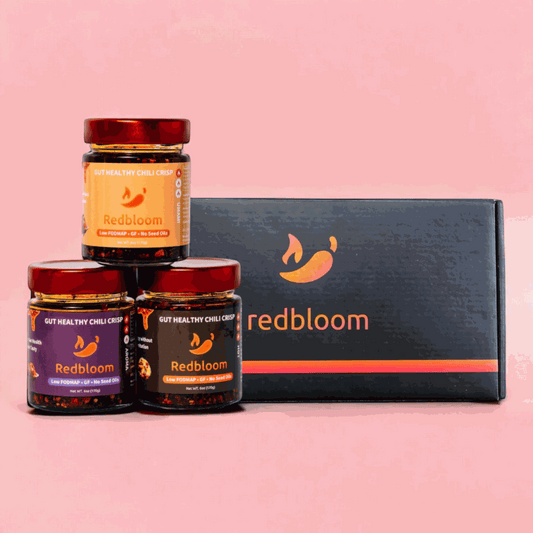
If you have a sensitive gut, you already know that spice is complicated. The heat you crave can just as easily become the thing that derails your afternoon. Redbloom Chili Crisp was designed with exactly that tension in mind. Capsaicin, the active compound in chili peppers, activates TRPV1 receptors in the gut and is clinically shown to help reduce gut sensitivity over time with careful, gradual exposure. The problem with most traditional chili products is that they deliver too much capsaicin too fast, which can trigger discomfort before your gut has had any chance to adapt.
Redbloom addresses this by microencapsulating capsaicin in oleic acid sourced from avocado oil. That encapsulation acts like a protective cushion, slowing the release of capsaicin so it reaches your gut more gradually and gently. For people with sensitive systems, that difference in delivery speed can mean the difference between enjoying a meal and regretting it.
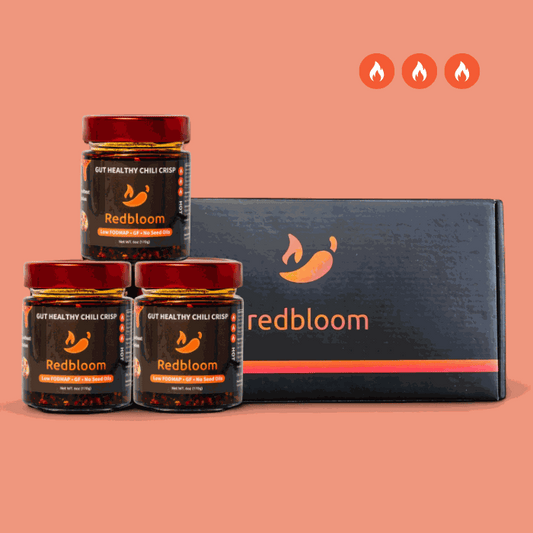
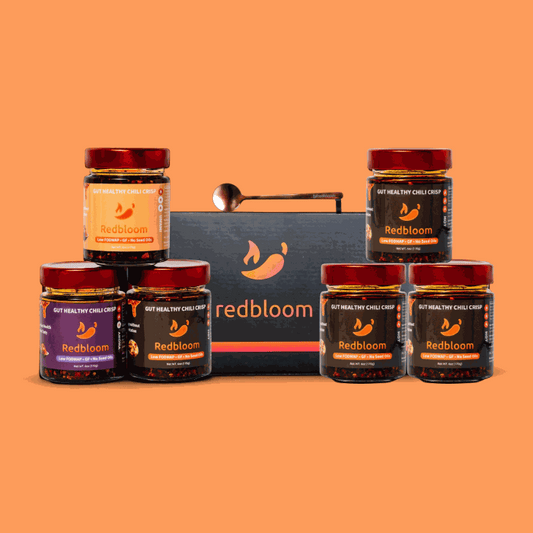
The experience is also structured intentionally. Redbloom uses a three-phase protocol, starting with Mild Umami, moving to Medium Aroma, and building toward Hot Dopamine, designed to help you gradually build tolerance and reduce gut hypersensitivity over time. Rather than jumping straight to high heat, you work up slowly, giving your gut the chance to adapt at a pace it can actually handle. It is a practical, evidence-informed approach to enjoying spice without the aftermath.


Key Takeaways
- Food typically stays in your stomach for 2 to 5 hours, with fat content and food texture being the biggest factors in that timing.
- Solid, high-fat meals tend to linger the longest; liquids and low-fat foods clear more quickly.
- The stomach empties caloric content at a roughly constant rate, so larger meals simply take longer to process.
- People with IBS may experience more variable gastric emptying, which can amplify bloating, urgency, or discomfort after meals.
- For medication purposes, "empty stomach" generally means 1 hour before or 2 hours after eating, though individual guidance from your pharmacist takes priority.
- Smaller, lower-fat meals spaced throughout the day tend to feel more manageable for sensitive guts than large, heavy ones.
- Gradual exposure to capsaicin through a structured approach may help reduce gut hypersensitivity over time, rather than triggering it.
Frequently asked questions
How long does food stay in your stomach on average?
For most people, food stays in the stomach roughly 2 to 5 hours, though that window varies based on fat content, meal size, food texture, and individual gut function. Liquids tend to clear in under an hour, while a high-fat solid meal may take 4 hours or longer. The stomach empties in a biphasic pattern, with an initial grinding phase followed by more linear emptying into the small intestine [2]. Research comparing liquid, semi-solid, and solid meals with similar fat content suggests that physical structure meaningfully influences emptying speed independently of calorie content [3].
Does food stay in your stomach longer if you have IBS?
It can, though IBS affects people differently. Some people with IBS experience slower gastric emptying, which may contribute to bloating and early fullness. Others experience faster transit, leading to urgency. Disrupted motility and heightened visceral sensitivity are now recognized as central features of functional gastrointestinal disorders [4], and stress can shift motility in either direction on any given day. Tracking your own patterns after meals tends to be more useful than relying on averages.
What foods empty from the stomach the fastest?
Liquids and simple carbohydrates generally clear the stomach fastest. Water and clear broths can move through in as little as 15 to 30 minutes. Foods that are low in fat and easy to break down mechanically tend to follow quickly. High-fat meals, especially solid ones, take the longest because fat triggers hormonal signals, particularly cholecystokinin, that deliberately slow gastric emptying [1, 2]. If you are working through gut sensitivity, lower-fat, softer foods earlier in the day can make digestion feel more comfortable.
How long after eating is your stomach considered empty?
For most people, the stomach is substantially empty about 2 to 4 hours after a moderate meal, though a large or high-fat meal can take longer. If you need to take medication on an empty stomach, the standard clinical guideline is at least 1 hour before eating or 2 hours after [2]. That said, the exact timing depends on what and how much you ate. A small bowl of rice clears much faster than a fatty steak. When in doubt, check with your pharmacist or prescribing physician, as some medications are more sensitive to the presence of food than others.
Can spicy food affect how long food stays in your stomach?
Spice tends to speed things up for a lot of people. Capsaicin activates TRPV1 receptors throughout the digestive tract that can increase gut motility, which is part of why some people notice urgency after a spicy meal. For others, particularly those with sensitive guts, that activation can also cause cramping or discomfort. Gradual exposure to capsaicin through a structured approach may help reduce that sensitivity over time rather than triggering it.
Does eating slowly actually help digestion?
It seems to, for several reasons. Chewing food more thoroughly reduces the mechanical work your stomach has to do, which may support more comfortable emptying. Eating slowly also gives satiety hormones like CCK time to signal fullness before you have overeaten, which reduces the load your stomach has to process at once [1]. For people with IBS or gut sensitivity, pacing meals and keeping portions moderate tends to be one of the more consistently helpful strategies.
Is it normal to feel full for hours after eating?
After a large or high-fat meal, feeling full for 2 to 4 hours is pretty normal. The stomach empties caloric content at a roughly constant rate, so a heavier meal simply takes longer to process [2]. If you regularly feel uncomfortably full, bloated, or heavy well beyond that window, especially after modest meals, it may be worth discussing with a healthcare provider, as prolonged fullness can sometimes point to slower-than-usual gastric emptying or other digestive considerations. This article is for informational purposes only and is not medical advice. Consult with a healthcare provider before making dietary changes, especially if you have a medical condition.
References
- CAMILLERI M, MALAGELADA J-R, et al. Integrated upper gastrointestinal response to food intake. Gastroenterology 2006; 131(2): 640–658.
- HELLSTRÖM PM, GRYBÄCK P, JACOBSSON H. The physiology of gastric emptying. Best Practice & Research Clinical Anaesthesiology 2006; 20(3): 397–407.
- CLEMENTE G, MANCINI M, NAZZARO F, LASORELLA G, RIVIECCIO A, PALUMBO A, et al. Effects of different dairy products on postprandial lipemia. Nutrition, Metabolism and Cardiovascular Diseases 2003.
- DROSSMAN DA. Functional gastrointestinal disorders: history, pathophysiology, clinical features, and Rome IV. Gastroenterology 2016; 150(6): 1262–1279.
Medical disclaimer
Medical Disclaimer: This article is for informational purposes only and is not intended as medical advice. Always consult with a qualified healthcare provider before making dietary changes or if you have a medical condition.