How to Eat Spicy Food Again After a Gut Flare-Up

Introduction
You used to love a good chili crisp. Then came the flare-up, and suddenly even a pinch of pepper felt like a gut grenade. Sound familiar? You're not alone. Many people with IBS or other gut issues find that spicy food becomes a trigger they quietly drop from their diet, sometimes forever.
But here's the encouraging part: for many people, the goal of learning how to reintroduce spicy food after gut problems is genuinely achievable. The key is understanding what's happening in your gut and taking a slow, strategic approach. This article walks you through the science, the symptoms, and the practical steps to get back to the flavors you love.
What Is Visceral Hypersensitivity and How Does It Affect Your Gut?
When your gut is inflamed or irritated, the nerves lining your digestive tract can become overactive. This is called visceral hypersensitivity, meaning your gut's pain sensors are turned up too high and react strongly to stimuli that wouldn't normally cause discomfort.
Capsaicin, the compound that makes chili peppers hot, binds to receptors called TRPV1 – think of these as heat and pain sensors embedded in your gut lining. In a healthy gut, TRPV1 activation produces a mild response. In a sensitized gut, the same signal can feel intense and painful. Research shows that people with IBS have a higher density of TRPV1-expressing nerve fibers in their colon, and that increase correlates with abdominal pain scores [3].
After a gut flare, those receptors can stay on high alert even after the original inflammation has resolved [1]. That's why spice that once felt fine can suddenly feel unbearable.
Why Spicy Food Triggers Gut Pain After a Flare-Up
1) Your Pain Receptors Are Still Sensitized
Even after inflammation clears, TRPV1 receptors in the gut can remain in a heightened state. One study in mice found that visceral hypersensitivity persisted for five weeks after colitis resolved, and that deleting TRPV1 prevented this post-inflammatory pain response [1]. In plain terms: your gut's alarm system can stay stuck in "loud" mode long after the fire is out.
- Capsaicin activates these already-sensitized receptors
- The result is pain that feels disproportionate to the amount of spice consumed
2) Histamine in the Gut Amplifies the Signal
In IBS, the gut lining can release histamine, a chemical that further sensitizes TRPV1 receptors. Research found that histamine from IBS tissue samples potentiated TRPV1 responses in nerve cells, and that blocking histamine receptors reduced IBS symptoms in a placebo-controlled trial [6]. So the sensitization isn't just about capsaicin alone – it's a multi-layered process.
- Histamine acts like a volume amplifier for gut pain signals
- This may explain why some people react to very small amounts of spice [6]
3) C-Fiber Nerves Stay on High Alert
TRPV1 receptors are concentrated on a specific type of nerve fiber called unmyelinated C-fibers, which are responsible for slow, burning pain. Research using animal models of colitis found that TRPV1 signaling specifically drove sensitization of these C-fibers, making them more reactive to gut distension [4]. After a flare, these fibers may remain primed, making spicy food feel far more intense than it should.
- C-fibers carry the "burning" quality of gut pain
- Their sensitization is a key reason spice feels harsher post-flare [4]
Common Symptoms After Reintroducing Spice Too Soon
- Burning or cramping in the stomach or lower abdomen
- Urgent need to use the bathroom
- Bloating or a feeling of gut distension
- Nausea during or after the meal
- Pain that lingers for hours after eating
Why Some People Handle the Reintroduction Better
Not everyone's gut rebounds at the same pace, and that's completely normal. A few factors shape how quickly you can reintroduce spice after gut problems.
Receptor sensitivity varies. Research suggests that in IBS, the heightened response to capsaicin may reflect functional sensitization of existing TRPV1 receptors rather than simply having more of them [2]. In other words, it's not just how many receptors you have, but how reactive they are – and that can change over time.
Your gut's inflammatory history matters. A more severe or prolonged flare may leave receptors sensitized for longer. The good news is that repeated low-level exposure to capsaicin can actually begin to desensitize TRPV1 over time, a process driven by calcium influx through the receptor itself acting as a natural off-switch [8].
Patience pays off. People who gradually reintroduce spice tend to fare better than those who jump back in at full heat.
What the Science Says: Key Findings
The research here is genuinely encouraging for anyone hoping to reintroduce spicy food after gut problems.
One clinical trial gave functional dyspepsia patients 2.5 grams per day of red pepper powder before meals for five weeks. Starting in the third week, the red pepper group showed significantly lower scores for overall digestive symptoms, epigastric pain, fullness, and nausea compared to the placebo group [9]. The researchers attributed this to capsaicin-induced desensitization of gastric pain fibers – essentially, repeated low-dose exposure quieted the alarm system.
A review of capsaicin's effects on functional dyspepsia further supports this, noting that repeated low-dose capsaicin exposure may shift the gut from a sensitized to a desensitized state, reducing visceral hypersensitivity over time [10].
The mechanism behind this is well-described: capsaicin triggers calcium influx through TRPV1, and that calcium acts as a negative feedback signal, gradually quieting the receptor's response [8]. The extent of desensitization depends on both the duration of exposure and the dose used [8].
Immediate Relief Strategies
If you've eaten something spicier than your gut was ready for, these steps may help ease the discomfort.
- Reach for dairy. Milk, yogurt, or a small amount of cheese contains casein, a protein that can help bind and wash capsaicin away from receptors. It's one of the most effective immediate remedies.
- Eat a starchy base. Rice, bread, or a plain potato helps dilute the capsaicin and slow its contact with your gut lining. Pairing spice with carbs from the start is even better.
- Avoid lying down. Staying upright for at least an hour after eating helps prevent capsaicin from moving upward and irritating the esophagus.
- Skip alcohol. Alcohol can further irritate an already sensitized gut lining and may intensify the burning sensation. Save it for a calmer meal.
Long-Term Strategies to Reduce Sensitivity
Building back your spice tolerance is a gradual process. These strategies give your gut the best chance of adapting without triggering a setback.
- Start very small and go slow. Begin with the mildest possible heat – think a tiny pinch of mild chili flakes on a full meal. Research supports the idea that low, consistent capsaicin exposure can desensitize TRPV1 receptors over time [9, 10]. Only increase the amount when you've had several symptom-free days at your current level.
- Always pair spice with food. Never eat capsaicin on an empty stomach. A buffer of carbohydrates and a small amount of fat slows absorption and reduces direct receptor contact.
- Track your symptoms honestly. Keep a simple note on your phone. If symptoms spike, pull back one level and hold there longer before trying again. Progress isn't always linear.
- Support your overall gut health. Stress, poor sleep, and a low-fiber diet can all keep visceral hypersensitivity elevated. Managing these factors alongside your spice reintroduction gives your gut nerves the best environment to calm down.
When to See a Doctor
Reintroducing spice should feel like a slow, manageable process. If any of the following occur, pause and speak with a healthcare provider:
- Severe or worsening abdominal pain that doesn't ease within a few hours
- Blood in your stool or black, tarry stools
- Unintended weight loss alongside gut symptoms
- Persistent vomiting or inability to keep food down
- Symptoms that feel like a full flare-up returning
How Redbloom Helps
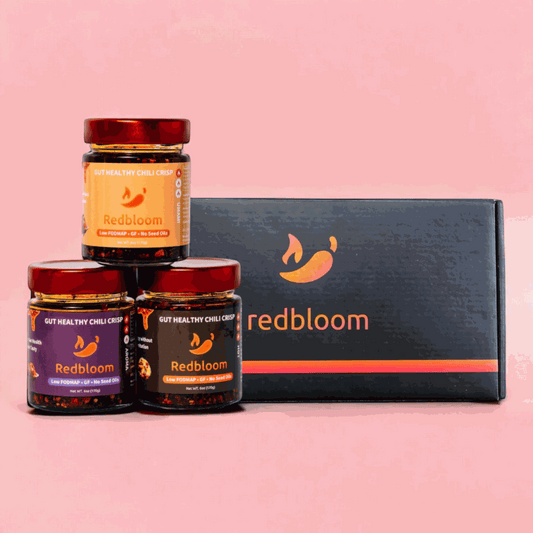
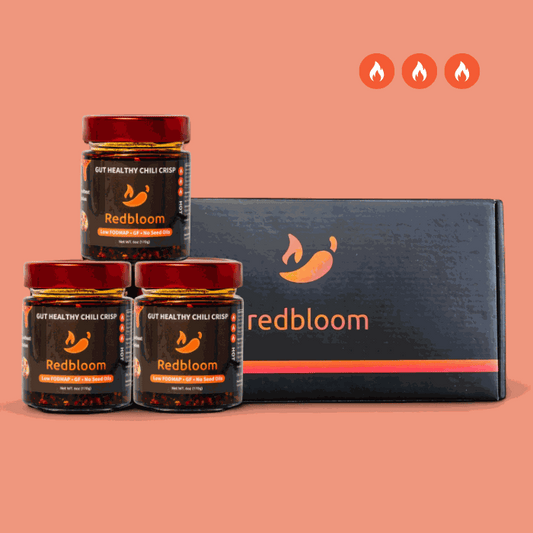
This is exactly the challenge that Redbloom Chili Crisp was designed around. Capsaicin is clinically proven to help reduce gut sensitivity over time through TRPV1 desensitization, but the problem with most traditional chili products is that they deliver too much capsaicin too fast. That spike can trigger discomfort before your tongue or your gut has had any chance to adapt.
Redbloom addresses this by microencapsulating capsaicin in oleic acid from avocado oil, creating a protective cushion that releases more gradually and tends to be gentler on sensitive systems. Instead of a sudden flood of heat, you get a more measured exposure that gives your receptors time to respond without being overwhelmed.
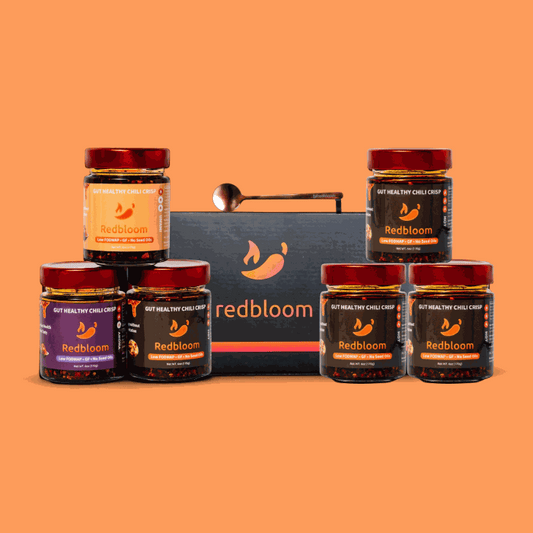
The product is also built around a 3-phase protocol: Mild Umami, then Medium Aroma, then Hot Dopamine. The idea is to move through increasing heat levels progressively, letting your tolerance build the way the research suggests it should, one manageable step at a time. For people with IBS or gut hypersensitivity who want to work spice back into their lives, that kind of structured, gradual approach tends to make the process feel a lot more sustainable.


Frequently asked questions
How long should I wait after a gut flare before trying spicy food again?
There's no universal timeline, but research suggests that post-inflammatory nerve sensitization can persist even after visible inflammation resolves [1]. A practical approach is to wait until you've had at least two to three weeks of stable, symptom-free digestion before attempting even mild spice. Start smaller than you think you need to.
Why does spice hurt more now than it did before my flare?
Research suggests that after gut inflammation, TRPV1 receptors – the pain sensors that capsaicin activates – can accumulate in greater numbers on nerve cell surfaces, making them more reactive [1]. Additionally, chemicals like histamine in the gut lining may further amplify that response [6]. Your gut's sensitivity threshold has genuinely shifted, at least temporarily.
Can I ever fully regain my spice tolerance?
For many people, yes. One clinical trial found that consistent low-dose capsaicin before meals led to significant symptom reduction in people with functional gut disorders starting in the third week of treatment [9]. The desensitization process is real, but it requires patience and a gradual approach.
Is chili oil harder on a sensitive gut than fresh chili?
It can be. Oil is fat-soluble, which means it may carry capsaicin more efficiently across the gut lining and prolong contact time. Concentrated condiments also deliver a higher dose per spoonful. When reintroducing spice, starting with a cooked, diluted source of mild chili is generally gentler than jumping straight to chili oil.
Does eating spicy food regularly actually help in the long run?
Research suggests it may, when done gradually. The mechanism involves repeated low-dose capsaicin triggering calcium influx through TRPV1 receptors, which acts as a natural off-switch that quiets the receptor over time [8, 10]. Consistency at a tolerable level appears to matter more than occasional high-heat challenges.
Conclusion
Getting back to spicy food after a gut flare is less about willpower and more about working with your nervous system, not against it. Your gut's pain receptors became sensitized for a reason, and they can be gently recalibrated with patience and the right approach. Start small, stay consistent, pair your spice with food, and listen to what your gut is telling you. The heat you love isn't gone forever – it just needs a slower welcome back.
Bibliography
-
Lapointe TK, Basso L, Iftinca MC et al.. TRPV1 sensitization mediates postinflammatory visceral pain following acute colitis. *American Journal of Physiology - Gastrointestinal and Liver Physiology*. 2015. DOI: [10.1152/ajpgi.00421.2014](https://doi.org/10.1152/ajpgi.00421.2014) https://doi.org/10.1152/ajpgi.00421.2014
-
Vanheel H, Vicario M, Vanuytsel T et al.. Sensitivity testing in irritable bowel syndrome with rectal capsaicin stimulations: role of TRPV1 upregulation and sensitization in visceral hypersensitivity?. *The Clinical Journal of Pain*. 2014. DOI: [10.1097/AJP.0000000000000080](https://doi.org/10.1097/AJP.0000000000000080) https://doi.org/10.1097/AJP.0000000000000080
-
Akbar A, Yiangou Y, Facer P et al.. Increased capsaicin receptor TRPV1-expressing sensory fibres in irritable bowel syndrome and their correlation with abdominal pain. *Gut*. 2008. DOI: [10.1136/gut.2007.138982](https://doi.org/10.1136/gut.2007.138982) https://doi.org/10.1136/gut.2007.138982
-
Lapointe TK, Bhatt DL, Bhatt S et al.. TRPV1 receptors on unmyelinated C-fibres mediate colitis-induced sensitization of pelvic afferent nerve fibres in rats. *Gut*. 2008. DOI: [10.1136/gut.2008.148007](https://doi.org/10.1136/gut.2008.148007) https://doi.org/10.1136/gut.2008.148007
-
Holzer P. TRPV1 and the gut: from a tasty receptor for a painful vanilloid to a key player in hyperalgesia. *European Journal of Pharmacology*. 2004. DOI: [10.1016/j.ejphar.2004.07.051](https://doi.org/10.1016/j.ejphar.2004.07.051) https://doi.org/10.1016/j.ejphar.2004.07.051
-
Wouters MM, Balemans D, Van Wanrooy S et al.. Histamine Receptor H1-Mediated Sensitization of TRPV1 Mediates Visceral Hypersensitivity and Symptoms in Patients With Irritable Bowel Syndrome. *Gastroenterology*. 2016. DOI: [10.1053/j.gastro.2015.11.013](https://doi.org/10.1053/j.gastro.2015.11.013) https://doi.org/10.1053/j.gastro.2015.11.013
-
Vyklický L, Nováková-Tousová K, Benedikt J et al.. Calcium-dependent desensitization of vanilloid receptor TRPV1: a mechanism possibly involved in analgesia induced by topical application of capsaicin. *Physiological Research*. 2008. DOI: [10.33549/physiolres.931478](https://doi.org/10.33549/physiolres.931478) https://doi.org/10.33549/physiolres.931478
-
Bhave G, Gereau RW. A 'cute' desensitization of TRPV1. *Nature Neuroscience*. 2004. DOI: [10.1038/nn1097](https://doi.org/10.1038/nn1097) https://doi.org/10.1038/nn1097
-
Bortolotti M, Coccia G, Grossi G, Miglioli M. The treatment of functional dyspepsia with red pepper. *Alimentary Pharmacology & Therapeutics*. 2002. DOI: [10.1046/j.1365-2036.2002.01280.x](https://doi.org/10.1046/j.1365-2036.2002.01280.x) https://doi.org/10.1046/j.1365-2036.2002.01280.x
-
Zhang H, Sun X, Ma J et al.. Capsaicin: A Novel Approach to the Treatment of Functional Dyspepsia. *Frontiers in Pharmacology*. 2023. DOI: [10.3389/fphar.2023.1121871](https://doi.org/10.3389/fphar.2023.1121871) https://doi.org/10.3389/fphar.2023.1121871
Medical Disclaimer: This article is for informational purposes only and is not intended as medical advice. Always consult with a qualified healthcare provider before making dietary changes or if you have a medical condition.