Introduction
Love the kick of chili oil and chili crisp but hate the aftermath? You're not alone. For many people, spicy meals can trigger burning stomach pain, cramping, or an urgent dash to the bathroom. The main culprit is capsaicin, the compound that makes chilies hot. Research suggests that while capsaicin may offer benefits like supporting metabolism, it also activates heat-sensitive nerves throughout your digestive tract [3,4]. The result: discomfort that can feel intense even when it's largely a sensory response. This article breaks down how to eat spicy food without stomach pain using science-backed strategies, why some folks react more than others, and how to keep spice in your routine with smart approaches.
What Is Capsaicin and How Does It Affect Your Stomach?
Capsaicin binds to TRPV1 receptors, which are heat and pain sensors found throughout your mouth, throat, stomach, and intestines. When activated, these receptors send "burning" signals to your brain and launch protective responses like sweating and extra mucus production. In the gut, this same activation can create discomfort [3,4].
Studies show that capsaicin affects your digestive system through both TRPV1-dependent and independent mechanisms. Interestingly, research suggests that appropriate doses of capsaicin may actually be beneficial for gastrointestinal health, while high doses can be harmful [3]. The key is finding your personal sweet spot.
Research also demonstrates that capsaicin inhibits rather than stimulates acid secretion, while promoting protective alkali and mucus secretions that help prevent acid-induced injury [4]. It even stimulates gastric blood flow, which aids in ulcer prevention and healing.
Why Spicy Food Triggers Digestive Discomfort
1) Dose-Dependent Effects
Animal studies reveal that capsaicin's effects on your digestive tract depend heavily on the amount consumed. Research shows that moderate doses (equivalent to about 40 mg/kg in mice) don't negatively affect gastrointestinal tissues, while higher doses can cause tissue damage and inflammation in the small intestine and colon [8].
- Low to moderate doses: Generally well-tolerated
- High doses: Can trigger inflammation and tissue irritation
- Individual thresholds vary significantly
2) Gastric Mucosa Irritation
The way capsaicin is delivered to your stomach matters significantly. Studies on capsaicin formulations show that free capsaicin crystals can cause more gastric inflammation compared to specially formulated versions [1,2]. This explains why some spicy foods hit harder than others.
- Direct capsaicin contact can irritate stomach lining
- Oil-based delivery may intensify or prolong contact
- Proper formulation can reduce irritation while maintaining benefits
3) Individual Sensitivity Variations
Your personal reaction to spicy food depends on your TRPV1 receptor sensitivity and overall gut health. People with digestive conditions may experience amplified responses to even small amounts of capsaicin [3,8].
- Genetic differences in receptor sensitivity
- Existing gut conditions can heighten responses
- Gut microbiota composition may influence tolerance
Common Symptoms of Capsaicin Sensitivity
Spice reactions can appear immediately or hours after eating:
- Burning or pain in the upper stomach
- Bloating, gas, or nausea
- Urgent diarrhea or loose stools
- Heartburn or chest burning
- Cramping or intestinal discomfort
Why Some People Handle Spice Better
Genetics and Receptor Sensitivity: Some people naturally have fewer or less reactive TRPV1 receptors, which means less perceived pain from capsaicin. This genetic variation explains why one person can demolish a bowl of extra-hot noodles while another reaches for milk after a single bite.
Gut Health Status: People with existing digestive conditions may have heightened sensitivity to capsaicin. Research suggests that gut microbiota composition, including beneficial bacteria like Bifidobacterium and Lactobacillus, may influence how well you tolerate spicy foods [8,9].
Adaptation Over Time: Regular, moderate exposure to capsaicin can help desensitize TRPV1 receptors and raise your comfort threshold. Studies show that gradual exposure tends to work better than occasional "spice challenges" for building long-term tolerance [3].
What the Science Says: Key Findings
Research on capsaicin and digestive health reveals several important insights for spice lovers:
Protective vs. Irritating Effects: Studies demonstrate that capsaicin has a biphasic effect, meaning it can be both protective and irritating depending on the dose. Low to moderate amounts may actually protect gastric mucosa by stimulating protective mucus and blood flow, while high doses can cause inflammation [3,4].
Formulation Matters: Research on capsaicin delivery systems shows that nanoemulsion formulations can significantly reduce gastric mucosa irritation compared to free capsaicin, while maintaining beneficial effects [1,2]. This suggests that how spicy food is prepared and consumed affects its impact on your gut.
Gut Microbiota Connection: Animal studies indicate that capsaicin intake affects gut bacterial populations, potentially influencing digestive tolerance. Changes in beneficial bacteria like Bifidobacterium and Lactobacillus may play a role in how well your gut handles spicy foods [8,9].
Immediate Relief Strategies
1. Dairy Products: Research confirms that dairy milk, particularly high-protein, full-fat versions, effectively reduces capsaicin burn. Both casein and whey proteins play important roles in neutralizing the burning sensation [5,6].
2. Plant-Based Alternatives: Studies show that soy milk and other plant milks with higher protein content can also provide relief, though dairy remains most effective [5].
3. Avoid Water: Research demonstrates that water is significantly less effective than milk-based solutions for reducing capsaicin-induced burning [5,6].
4. Probiotic Support: Some studies suggest that certain probiotic strains, like Lactobacillus fermentum, may help protect gastric mucosa against irritants, though more research is needed for capsaicin specifically [9].
Long-Term Strategies to Reduce Sensitivity
1. Gradual Exposure Protocol: Start with very mild heat and slowly increase over several weeks. Research suggests this desensitization approach can be effective for building tolerance without triggering severe symptoms [3].
2. Optimize Delivery Method: Choose spicy foods that use better formulation techniques. Studies show that capsaicin in certain oil-based systems or special preparations can reduce gastric irritation while maintaining flavor [1,2].
3. Support Gut Microbiota: Focus on foods and practices that promote beneficial bacteria like Bifidobacterium and Lactobacillus, which research suggests may influence spice tolerance [8,9].
4. Mind Your Dosage: Pay attention to portion sizes and frequency. Animal studies clearly show that moderate, consistent exposure is better tolerated than occasional high doses [8].
How Redbloom Fits In
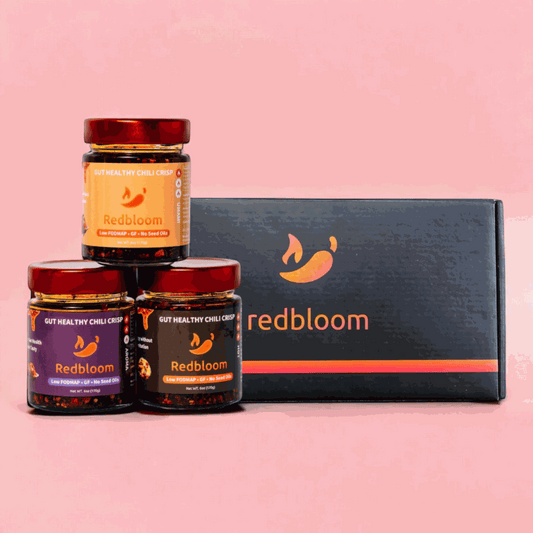
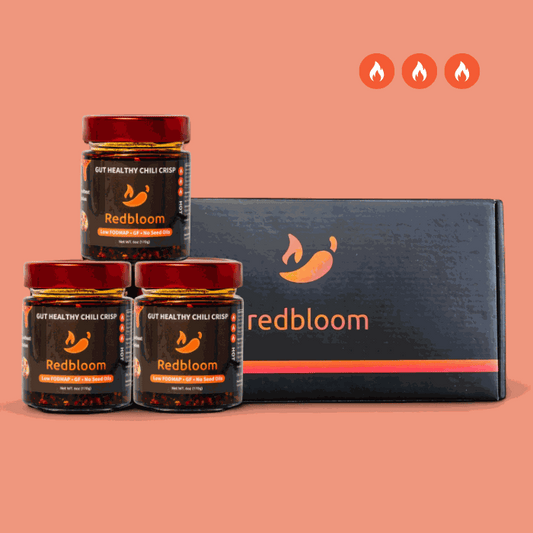
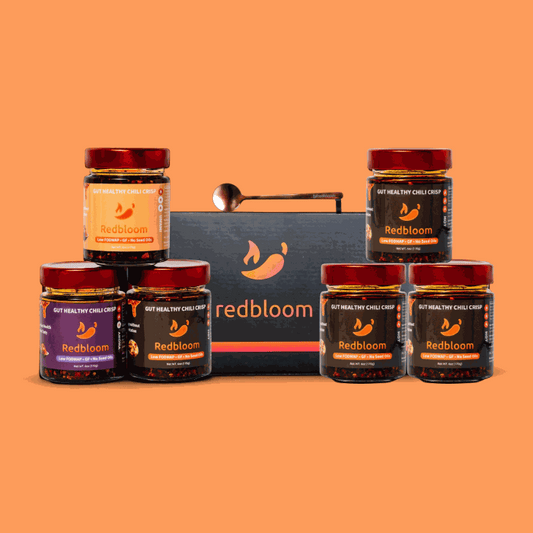
Redbloom's chili crisp uses microencapsulated capsaicin in avocado oil, which research suggests can help reduce gastric mucosa irritation compared to free capsaicin crystals. Our 3-phase clinical protocol (Mild Umami → Medium Aroma → Hot Dopamine over 6-8 weeks) is designed to build tolerance gradually without triggering flare-ups. Capsaicin is clinically proven to reduce gut sensitivity in 6 weeks, and Redbloom's formulation with 15 clinically-backed whole ingredients can support this desensitization process. This approach aligns with research showing that gradual exposure and proper formulation can help people enjoy spicy foods while minimizing digestive consequences. Learn more about Redbloom's approach.
FAQ
1) Can spicy food permanently damage my stomach?
Research suggests that moderate amounts of capsaicin are generally not harmful and may even be protective for gastric health [3,4]. However, consistently consuming very high doses could potentially contribute to inflammation in sensitive individuals [8].
2) Why do some spicy foods bother me more than others?
Studies show that how capsaicin is formulated and delivered matters significantly. Free capsaicin crystals can cause more gastric irritation than specially prepared formulations [1,2]. Oil-based sauces may also intensify or prolong contact with sensitive tissues.
3) Is it possible to build tolerance to spicy food safely?
Yes, research supports gradual exposure as an effective way to desensitize TRPV1 receptors and build tolerance [3]. The key is starting with very mild heat and increasing slowly over weeks, not days.
4) Do probiotics help with spice tolerance?
Some research suggests that certain probiotic strains may help protect gastric mucosa and that gut microbiota composition influences spice tolerance [8,9]. However, more specific research on probiotics and capsaicin tolerance is needed.
5) What's the safest way to enjoy spicy food with a sensitive stomach?
Start with small amounts, choose well-formulated products when possible, pair with dairy or high-protein foods, and pay attention to your individual dose threshold. Research shows that moderate, consistent exposure is better tolerated than occasional high doses [8].
Conclusion
Learning how to eat spicy food without stomach pain is absolutely possible with the right approach. By understanding how capsaicin affects your digestive system and using science-backed strategies like gradual exposure, proper formulation, and smart pairing techniques, you can enjoy the foods you love without the uncomfortable aftermath. Remember that building tolerance takes time, and everyone's threshold is different. Listen to your body, start slowly, and let research guide your journey toward comfortable spice enjoyment.
Medical Disclaimer: This article is for informational purposes only and is not intended as medical advice. Always consult with a qualified healthcare provider before making dietary changes or if you have a medical condition.
Bibliography
[1] Lu M, Cao Y, Ho CT, Huang Q. The enhanced anti-obesity effect and reduced gastric mucosa irritation of capsaicin-loaded nanoemulsions. Food & Function (2017). DOI: 10.1039/C7FO00173H
[2] Lu M, Cao Y, Ho CT, Huang Q. Development of Organogel-Derived Capsaicin Nanoemulsion with Improved Bioaccessibility and Reduced Gastric Mucosa Irritation. Journal of Agricultural and Food Chemistry (2016). DOI: 10.1021/acs.jafc.6b01095
[3] Kwon Y, Apostolidis E, Kim YC, Shetty K. Beneficial effects of dietary capsaicin in gastrointestinal health and disease. Experimental & Therapeutic Medicine (2022).
[4] Satyanarayana MN. Capsaicin and gastric ulcers. Critical Reviews in Food Science and Nutrition (2006).
[5] Gaiser J, Hayes JE, Hopfer H. More than fat – Proteins in dairy and plant milks contribute to the reduction of oral burn from capsaicin. Food Quality and Preference (2023).
[6] Malik Z, Olesen SS, Staerk D, Drewes AM. Role of dairy proteins in the reduction of capsaicin-induced oral burning pain. Physiology & Behavior (2022).
[7] Zhang Y, Yang X, Chen L, Wang Q. Acyclic cucurbit[n]urils-based supramolecular encapsulation for enhancing the protective effect of capsaicin on gastric mucosa and reducing irritation. International Journal of Pharmaceutics (2022).
[8] Xie Y, He Q, Chen H, Lin J. Capsaicin, the Spicy Ingredient of Chili Peppers: Effects on Gastrointestinal Tract and Composition of Gut Microbiota at Various Dosages. Nutrients (2022).
[9] Wang J, Li N, Zhang M, Chen K. Prophylactic Effect of Lactobacillus fermentum TKSN02 on Gastric Injury Induced by Hydrochloric Acid/Ethanol in Mice Through Its Antioxidant Capacity. Frontiers in Microbiology (2022).