Is Oat Milk Actually Better for Your Gut Than Dairy?

The oat milk vs dairy milk gut health digestion debate is more nuanced than your grocery aisle suggests. Here is what the science actually says.
Introduction
When you pour oat milk into your morning coffee, you are getting something dairy simply cannot offer: beta-glucanA soluble fiber found in oats that dissolves in water, forms a gel in your gut, and acts as food for beneficial bacteria.. This soluble fiber is the main reason researchers have been paying close attention to oats for gut health, and it carries over into oat milk, at least in products that are not too heavily processed.
So what does beta-glucan actually do once it reaches your gut? Think of it as a slow-burning fuel source for the beneficial bacteria living in your colon. Those bacteria ferment the fiber and produce compounds called short-chain fatty acidsSmall molecules produced when gut bacteria break down fiber. They help nourish your gut lining and may reduce inflammation., which seem to help nourish your gut lining and keep things running smoothly. A clinical trial in 168 adults found that an oat beta-glucan formula significantly improved defecation frequency and stool quality compared to a control group, while also boosting populations of beneficial bacteria like Bifidobacterium and Akkermansia [1]. Another randomized trial showed that daily oat consumption raised levels of several beneficial bacterial species and measurably increased short-chain fatty acid production in the bloodstream [3].
Research also suggests that oat beta-glucan may strengthen the intestinal barrier, the layer of cells that keeps harmful substances from leaking into your bloodstream [2]. One study found that oat beta-glucan supplementation modulated the expression of proteins involved in keeping that barrier tight [2]. In plain terms, oats may help your gut wall do its job better. That is a meaningful finding for anyone dealing with digestive sensitivity.
What Dairy Milk Actually Does to Your Gut
Dairy milk has a complicated reputation in gut health circles, and the science is genuinely mixed. The story depends heavily on one thing: whether or not you digest lactose well.
Lactose is the natural sugar in cow's milk. Your small intestine needs an enzyme called lactase to break it down. If you produce enough lactase, dairy milk moves through without much drama. But if you do not, undigested lactose travels to your colon, where bacteria ferment it and produce gas, bloating, and loose stools. This is lactose intolerance, and it affects a significant portion of the global population, particularly people of Asian, African, and Latin American descent.
Here is where it gets interesting, though. A matched-pair study found that whole milk supplementation actually increased populations of Bifidobacterium and other beneficial bacteria in people who were lactose malabsorbers, suggesting that lactose itself may act like a prebiotic for some people in that group [9]. So for lactose malabsorbers, dairy is not simply a villain. It may be quietly feeding certain good bacteria, even while causing surface-level discomfort.
For lactose absorbers, the picture is less dramatic. The same study found that whole milk did not significantly shift gut microbial diversity in people who digest lactose normally [9]. And a separate 12-week study found that eliminating dairy and then gradually reintroducing it barely changed the gut microbiome at all in self-reported lactose-intolerant adults, which suggests your microbiome may be more resilient to short-term dairy changes than many people assume [10].
The bottom line on dairy: it is not inherently harmful for your gut, but it is also not especially beneficial for most people from a microbiome standpoint. If you experience bloating, cramping, or urgency after drinking regular milk, that is a real signal worth listening to.
Oat Milk vs Dairy Milk: Head-to-Head for Gut Health
When you put oat milk vs dairy milk gut health digestion side by side, a few patterns emerge from the research.
A 2024 systematic review comparing animal milk to plant-based alternatives found that the key differences in gut microbiome outcomes came down to each milk's unique nutritional profile. Oat milk's beta-glucan content appeared to be a meaningful driver of its distinct microbiome effects, while dairy's effects were shaped by lactose, casein protein, and saturated fat [7]. Neither is universally better. They work differently depending on who is drinking them.
For people with IBS or gut sensitivity, oat milk tends to have a practical edge. It is naturally lactose-free, lower in fat, and the beta-glucan fiber may actively support the gut microbiome rather than simply avoiding harm. A 2025 animal study found that oat milk, compared to flaxseed and soy milk, was particularly effective at promoting Bifidobacterium and restoring gut balance after antibiotic-induced disruption [8]. That is a specific context, but it points to oat milk's potential as a gut-supportive option.
That said, not all oat milks are created equal. Many commercial versions are heavily processed and contain added sugars, oils, and thickeners that dilute or eliminate the beta-glucan benefit. If you are choosing oat milk for gut health reasons, look for products that list oats prominently and have minimal added ingredients. The fiber content on the label is a useful clue.
- Choose oat milk if: you are lactose intolerant, have IBS, or want to add prebiotic fiber to your diet.
- Dairy may still work if: you tolerate lactose well and enjoy it as part of a varied, fiber-rich diet.
- Either way: check the ingredient list. Processing matters as much as the base ingredient.
How Redbloom Helps
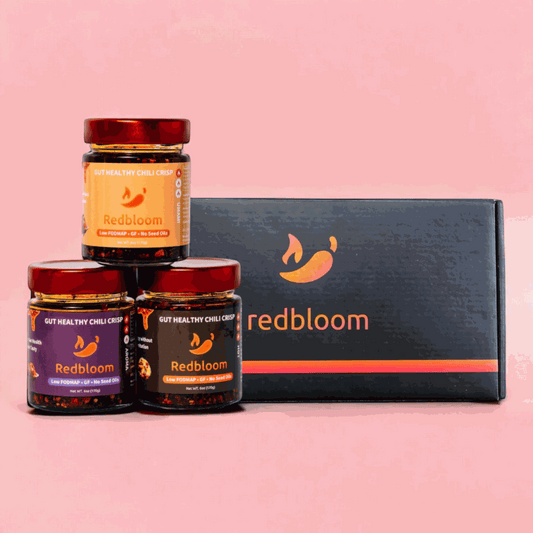
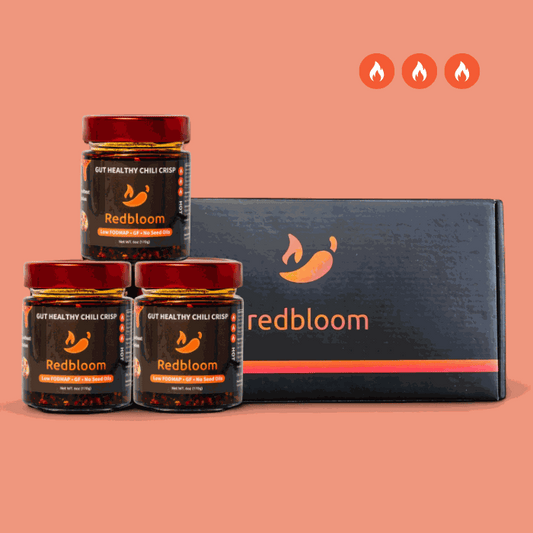
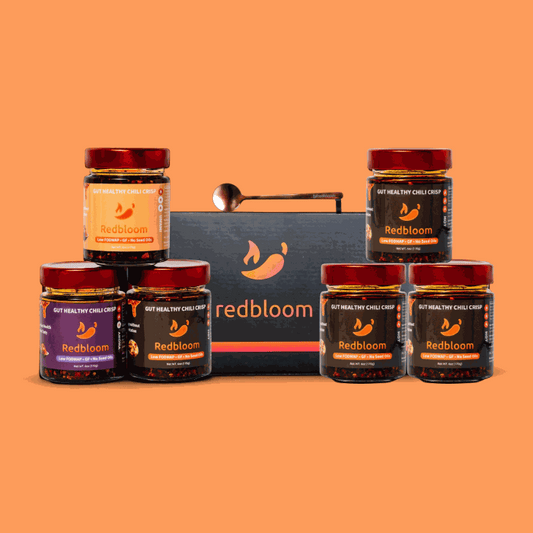
If you are navigating gut sensitivity and trying to build a diet that actually supports your microbiome, you are probably already thinking carefully about what you put in your body. That same careful thinking is what led to the creation of Redbloom Chili Crisp. Capsaicin, the active compound in chili peppers, has been clinically shown to activate TRPV1 receptors in the gut and, with careful, gradual exposure, helps reduce gut sensitivity over time. The challenge is that most traditional chili products deliver too much capsaicin too fast, which can trigger discomfort before your gut has a chance to adapt.
Redbloom addresses this by microencapsulating capsaicin in oleic acid sourced from avocado oil. This creates a protective cushion around the capsaicin, releasing it more gradually and gently as it moves through your digestive system. For people with sensitive guts, that slower release can make a meaningful difference in how tolerable the experience feels, especially when you are just starting out.
The product is also built around a structured 3-phase protocol: Mild Umami, then Medium Aroma, then Hot Dopamine. Rather than jumping straight to high heat, this progression is designed to help your gut adapt gradually and build tolerance sustainably over time. It is the kind of thoughtful, incremental approach that tends to work well for people who want the potential benefits of capsaicin without the discomfort of going too hard, too fast.


Key Takeaways
- Oat milk contains beta-glucan, a prebiotic fiber that research suggests may feed beneficial gut bacteria and support stool regularity.
- Dairy milk is not inherently bad for your gut, but its effects depend heavily on whether you tolerate lactose. People with lactose intolerance are likely to do better with oat milk.
- For people with IBS or gut sensitivity, oat milk tends to be the gentler, more gut-supportive option based on current evidence.
- The quality of oat milk matters. Look for minimally processed versions with actual oat fiber content listed on the label.
- No single milk swap will transform your gut health. A varied, fiber-rich diet overall is what tends to move the needle most.
Frequently asked questions
Is oat milk a probiotic or a prebiotic?
Oat milk is neither a probiotic nor a prebiotic on its own, but the beta-glucan fiber in oats does act as a prebiotic, meaning it serves as food for beneficial bacteria already living in your gut. Several studies suggest that oat beta-glucan may increase populations of bacteria like Bifidobacterium and Lactobacillus [1][5]. Probiotics, by contrast, are live bacteria you consume directly, like those found in yogurt or fermented foods. Oat milk does not contain live cultures.
Can oat milk help with IBS symptoms?
It may help for some people, though the research on oat milk specifically for IBS is still limited. What we do know is that oat beta-glucan seems to support gut motility and stool consistency [1], and that oat milk is naturally lactose-free, which removes a common IBS trigger. One study also found that oat milk helped restore gut balance and reduce markers of intestinal damage in an animal model [8]. If dairy tends to worsen your symptoms, switching to oat milk is a reasonable and low-risk option to try. As always, individual responses vary, so it is worth tracking how your gut responds.
Does dairy milk damage your gut microbiome?
The evidence does not support the idea that dairy milk damages the gut microbiome for most people. In fact, one study found that whole milk increased beneficial bacterial populations in lactose malabsorbers [9]. A separate study found that even eliminating dairy entirely and then reintroducing it had minimal impact on gut microbial structure [10]. That said, if you are lactose intolerant, the digestive discomfort from dairy is real and worth taking seriously, even if the microbiome effects are more nuanced than the headlines suggest.
Which oat milk is best for gut health?
Look for oat milks that are minimally processed and list whole oats or oat flour as a primary ingredient. The beta-glucan content is what drives most of the gut health benefits researchers have observed [1][3], and heavy processing can significantly reduce how much of that fiber survives into the final product. Avoid options with long ingredient lists, added sugars, or thickeners as the dominant components. Some brands also fortify their oat milk with fiber, which can be a useful addition.
Is oat milk okay if I have lactose intolerance?
Yes. Oat milk is naturally free of lactose because it comes from oats, not animals. It is one of the most widely recommended dairy alternatives for people with lactose intolerance precisely because it tends to be well-tolerated and does not contain the sugars or proteins that cause issues with cow's milk [7]. Just check the label for any added dairy-derived ingredients, which are occasionally included in flavored or barista-style versions.
How long does it take for oat milk to affect your gut microbiome?
Research suggests that meaningful changes in gut bacterial populations can begin to appear within a few weeks of consistent consumption. One clinical trial saw significant shifts in Bifidobacterium and Akkermansia populations after 14 days of oat beta-glucan supplementation [1], while another found measurable prebiotic effects after 45 days of daily oat intake [3]. That said, the gut microbiome is highly individual, and your results may vary depending on your baseline diet, health status, and the specific oat milk product you are using.
References
- Li A, Jin L, Xia H, Feng M, Zhou X, Chu Y, et al. Effects of Oat β-Glucan-Based Prebiotic Blended Formulas on Defecation and Gut Microbiota in Chinese Adults: A Randomized Clinical Trial. Food Science and Human Wellness 2025.
- Guzowska M, Dziendzikowska K, Kopiasz Ł, Gajewska M, Wilczak J, Harasym J, et al. Oat Beta-Glucans Modulate the Gut Microbiome, Barrier Function, and Immune Responses in an In Vivo Model of Early-Stage Colorectal Cancer. International Journal of Molecular Sciences 2024.
- Xu D, Feng M, Chu Y, Wang S, Shete V, Tuohy KM, et al. The Prebiotic Effects of Oats on Blood Lipids, Gut Microbiota, and Short-Chain Fatty Acids in Mildly Hypercholesterolemic Subjects Compared With Rice: A Randomized, Controlled Trial. Frontiers in immunology 2021.
- Duysburgh C, Van den Abbeele P, Kamil A, Fleige L, De Chavez PJ, Chu Y, et al. In Vitro–In Vivo Validation of Stimulatory Effect of Oat Ingredients on Lactobacilli. Pathogens (Basel, Switzerland) 2021.
- Mondragon Portocarrero A, Lopez-Santamarina A, Lopez P, Ortega I, Duman H, Karav S, et al. Substitutive Effects of Milk vs. Vegetable Milk on the Human Gut Microbiota and Implications for Human Health. Nutrients 2024.
- Ma X, Chen Y, Xu Z, Wang C, Wang X, Chen Z, et al. Plant-Based Milk Alleviates Antibiotics-Induced Intestinal Barrier Damage Associated with Modulation of Gut Microbiome and Metabolome. Food Science and Human Wellness 2025.
- Li X, Yin J, Zhu Y, Wang X, Hu X, Bao W, et al. Effects of Whole Milk Supplementation on Gut Microbiota and Cardiometabolic Biomarkers in Subjects with and without Lactose Malabsorption. Nutrients 2018.
- Smith CJ, Dethlefsen L, Gardner C, Nguyen L, Feldman M, Costello EK, et al. Short-Term Dairy Product Elimination and Reintroduction Minimally Perturbs the Gut Microbiota in Self-Reported Lactose-Intolerant Adults. mBio 2022.
Medical disclaimer
Medical Disclaimer: This article is for informational purposes only and is not intended as medical advice. Always consult with a qualified healthcare provider before making dietary changes or if you have a medical condition.