Matcha vs. Coffee: Which Is Better for Your Gut?
The matcha vs coffee gut health digestion debate finally gets a science-backed answer, and the winner depends on your gut.

Introduction
The matcha vs coffee gut health digestion question comes up constantly in wellness circles, and for good reason. What you drink every morning lands directly in your digestive tract before almost anything else does. For people managing IBSIrritable Bowel Syndrome: a common gut condition causing cramping, bloating, and irregular bowel habits without visible structural damage. or chronic gut sensitivity, that first cup can either set the tone for a calm day or kick off a cascade of discomfort.
Both drinks contain caffeine and both have loyal followings, but their effects on the gut go well beyond the buzz. Matcha is ground whole green tea leaves, so you consume the entire leaf, fiber and all. Coffee is a complex brew of hundreds of compounds including acids, oils, and antioxidants. Researchers have been studying both seriously, and the picture that emerges is nuanced but genuinely useful.
The short version: matcha tends to be more gut-friendly for sensitive people, while coffee offers real benefits too, just with more caveats. Here is what the research actually says.
What Matcha Does Inside Your Gut
Matcha's standout compound is EGCGEpigallocatechin gallate: a powerful antioxidant found in green tea that researchers think helps modulate gut bacteria and reduce intestinal inflammation., a plant antioxidant that seems to do a lot of its best work in the digestive tract. Because EGCG is poorly absorbed in the small intestine, most of it travels down to the colon, where it interacts directly with your gut bacteria [7]. Think of it as a prebiotic of sorts: it reaches the microbes that need it most.
A 2026 systematic review found that matcha supplementation tends to promote the growth of beneficial bacteria including Bifidobacterium and Akkermansia, a strain researchers associate with a healthier gut lining [1]. Studies in animal models have echoed this, showing that matcha can shift the gut microbiome in a favorable direction even under metabolically stressful conditions like a high-fat diet [3][4].
One particularly interesting finding comes from a 2021 study in the journal Microbiome. Researchers found that oral EGCG, delivered by mouth rather than directly into the colon, reduced colonic inflammation in a way that depended on the gut microbiome being present and intact [5]. In other words, EGCG seems to work with your existing gut bacteria rather than around them. The same study noted increased production of butyrate, a short-chain fatty acid that feeds the cells lining your colon and helps keep the gut barrier strong [5].
Beyond bacteria, matcha also appears to support the physical structure of the gut wall. Research suggests EGCG may help repair tight junctions, the tiny protein seals between intestinal cells that keep harmful particles from leaking through, and may stimulate mucin secretion, which is the protective mucus layer coating your gut lining [7]. For people with a sensitive or inflamed gut, those structural benefits could matter quite a bit.
A Note on Matcha Quality
Not all matcha is equal. The EGCG content varies considerably depending on the grade and sourcing of the tea, and researchers think higher-quality matcha with more catechins produces stronger gut benefits [1][2]. Ceremonial-grade matcha tends to have more bioactive compounds than culinary blends, so it may be worth the upgrade if gut health is your goal.
What Coffee Does to Your Gut
Coffee has a complicated relationship with the gut, and that complexity is worth understanding rather than dismissing. On the positive side, moderate coffee consumption, generally fewer than four cups a day, seems to support gut microbial diversity. A 2024 literature review found that coffee drinkers tend to have higher relative abundance of Bifidobacterium and increased Firmicutes, while Bacteroidetes levels appear lower [8]. Whether those shifts are uniformly beneficial is still being studied, but the microbiome response to coffee is real and measurable.
Coffee also reliably gets things moving. It stimulates motility in both the small and large intestine, and researchers have confirmed this happens through mechanisms beyond caffeine alone [8][9]. For people dealing with sluggish digestion or constipation, that effect can feel like a genuine benefit. For those with IBS-D (the diarrhea-predominant type), though, the same acceleration can be a problem.
The Stomach Acid Question
Here is where coffee gets more complicated for sensitive guts. Caffeine stimulates gastric acid secretion through bitter taste receptors in the stomach lining, a mechanism confirmed by a 2017 study published in PNAS [10]. More stomach acid is not inherently dangerous for healthy people, but for anyone who already experiences upper gut discomfort, that extra acid load can amplify symptoms. The effect appears to happen whether you drink caffeinated or decaffeinated coffee, since other bitter compounds in coffee also trigger the response [9][10].
The evidence on coffee and reflux is mixed, and researchers have not reached a firm consensus [9]. What seems clear is that individual responses vary a lot. Some people drink coffee daily with no gut issues whatsoever, while others find even a small cup reliably triggers bloating or burning. If you fall into the second group, that is useful information about your own gut, not a character flaw.
Head-to-Head: Which Is Gentler for a Sensitive Gut?
If you are managing IBS or gut hypersensitivity, the practical comparison comes down to a few key differences.
- Stomach acid: Matcha contains caffeine too, but at roughly one-third the level of coffee, and it comes packaged with L-theanine, an amino acid that tends to smooth out caffeine's stimulating effects. Coffee, by contrast, delivers a stronger acid-stimulating hit [9][10].
- Gut lining support: Matcha's EGCG appears to actively support the intestinal barrier and reduce inflammation, which is relevant for anyone whose gut lining is already irritated [5][7]. Coffee does not have a comparable mechanism here.
- Microbiome effects: Both drinks seem to support beneficial bacteria, but matcha's EGCG-driven prebiotic-like action is more specifically studied and better understood at this point [1][5][8].
- Motility: Coffee is the stronger gut mover. For constipation, that can be a plus. For urgency or cramping, it can make things worse [8][9].
The honest answer is that neither drink is universally better. For most people with a sensitive gut, matcha tends to offer more upside with less risk of triggering acid or urgency. Coffee can still be part of a gut-friendly routine for many people, especially at moderate amounts and ideally not on an empty stomach. Paying attention to your own response after each drink is still the most reliable guide.
How Redbloom Helps
If you are thinking carefully about what you put in your body first thing in the morning, you are probably already paying attention to how different foods and drinks affect your gut sensitivity. That same thinking applies to spice.
Capsaicin, the active compound in chili peppers, activates TRPV1 receptors in the gut and is clinically shown to help reduce gut sensitivity over time with careful, gradual exposure. The challenge is that most chili products deliver too much capsaicin too fast, which can trigger discomfort before your gut has a chance to adapt.
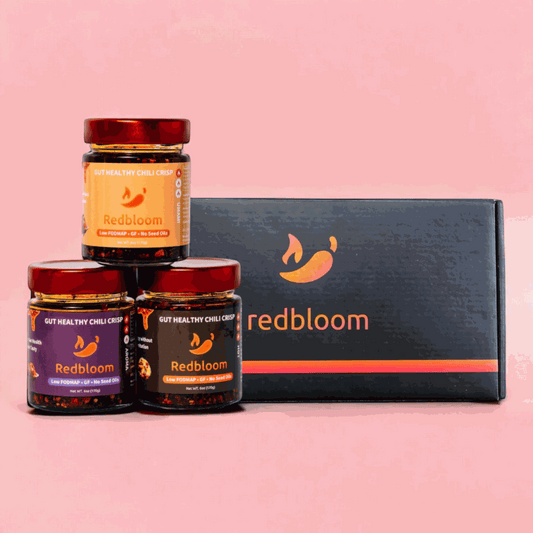
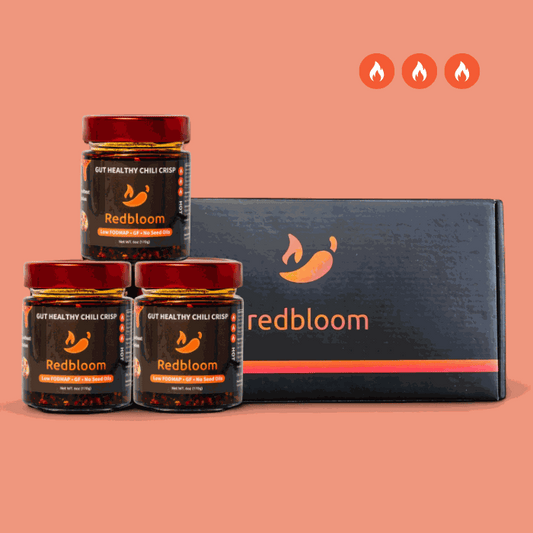
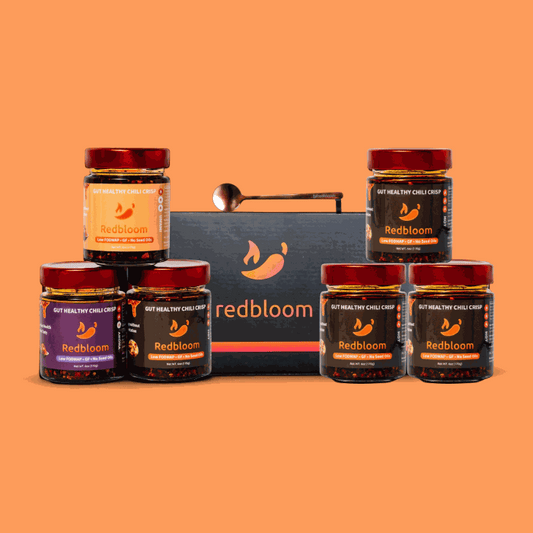
Redbloom Chili Crisp addresses this by microencapsulating capsaicin in oleic acid from avocado oil, creating a protective cushion that is gentler on sensitive guts. Rather than a sudden flood of heat, the capsaicin is released more gradually, giving your digestive system time to respond without being overwhelmed.
Redbloom also uses a 3-phase protocol: Mild Umami, then Medium Aroma, then Hot Dopamine. The idea is to gradually build tolerance and help reduce gut hypersensitivity over time, the same principle behind the desensitization research on capsaicin. It is a thoughtful approach for anyone who loves spice but has learned the hard way that their gut needs a slower on-ramp.


Key Takeaways
- Matcha's EGCG compound may support beneficial gut bacteria and help strengthen the gut lining, making it a strong choice for sensitive guts.
- Coffee stimulates gut motility and feeds some good microbes, but also triggers stomach acid secretion, which can be a problem for people with IBS or upper gut sensitivity.
- For most people with gut issues, matcha tends to be the gentler daily option, especially compared to coffee on an empty stomach.
- Neither drink is universally harmful or universally beneficial: your individual symptoms and microbiome matter most.
- Moderate coffee consumption (fewer than 4 cups daily) appears safer for gut health than heavy intake, and timing it with food may reduce acid-related discomfort.
Frequently asked questions
Does matcha help with IBS symptoms?
Research suggests matcha may help support the gut in ways relevant to IBS. EGCG, matcha's main antioxidant, appears to promote beneficial bacteria like Akkermansia and Bifidobacterium, and studies suggest it may help strengthen the gut lining and reduce intestinal inflammation [1][5][7]. That said, matcha is not a treatment for IBS, and individual responses vary. If you have IBS, it is worth trying matcha as a gentler alternative to coffee and seeing how your gut responds.
Is coffee bad for gut health?
Not necessarily. Moderate coffee consumption seems to support some beneficial gut bacteria and reliably stimulates gut motility, which can be helpful for constipation [8][9]. The main concern for sensitive guts is that coffee stimulates gastric acid secretion through bitter taste receptors in the stomach, which may worsen upper gut discomfort in some people [10]. Drinking coffee with food rather than on an empty stomach tends to reduce that effect for many people.
Can I drink both matcha and coffee for gut health?
Yes, for most people there is no reason to choose only one. Many people find that matcha works better in the morning on an empty stomach while coffee is more comfortable after a meal. If you have a sensitive gut, paying attention to timing and portion size matters more than picking a single winner. Researchers think the combined polyphenol load from both drinks could even support microbiome diversity [1][8].
Why does coffee upset my stomach but matcha does not?
Coffee triggers gastric acid secretion through bitter taste receptors in the stomach lining, a mechanism that matcha does not share to the same degree [10]. Matcha also contains L-theanine, which tends to smooth out caffeine's stimulating effects on the nervous system and gut. Additionally, matcha's EGCG may actually help protect the gut lining rather than irritate it [7]. If coffee consistently causes discomfort, your gut may simply be more sensitive to acid stimulation.
How much matcha should I drink to support gut health?
Most of the research on matcha's gut benefits has used supplementation protocols rather than specific cup counts, so there is no universally agreed-upon dose yet [1][2]. A reasonable starting point for most people is one to two cups of high-quality matcha per day. Ceremonial-grade matcha tends to have higher EGCG content, which researchers think is the key driver of gut microbiome benefits [1]. As with any dietary change, starting gradually and noticing how your body responds is a sensible approach.
Does decaf coffee have the same gut effects as regular coffee?
Mostly yes, at least for the gut-related effects. Research suggests that coffee stimulates gut motility and gastric acid secretion through mechanisms beyond caffeine alone, including other bitter compounds [9][10]. Decaf coffee still contains these compounds, so switching to decaf may not fully resolve gut sensitivity issues related to coffee. That said, removing caffeine does reduce the overall stimulating load, which some people find helpful.
References
- Gerasopoulos A, Gerasopoulos G, Giota E, Lazari D. Matcha Tea Quality and Functional Effects on Gut Microbiome: A Comprehensive Systematic Review. Food Reviews International 2026.
- Takegami M, Hamaguchi M, Miyoshi T, Munekawa C, Yoshimura T, Nakajima H, et al. Effect of Matcha Consumption on Gut Microbiota in Healthy Japanese Individuals: Study Protocol for a Double-Blind Crossover Interventional Study. Journal of clinical biochemistry and nutrition 2022.
- Wang Y, Yu Y, Ding L, Xu P, Zhou J. Matcha Green Tea Targets the Gut-Liver Axis to Alleviate Obesity and Metabolic Disorders Induced by a High-Fat Diet. Frontiers in nutrition 2022.
- Chong HC, Tang ST, Tseng YC, Yang SC, Watanabe Y, Yamada S, et al. Matcha Green Tea Improves Cafeteria-Diet-Induced NAFLD by Modulating the Gut Microbiota in Rats. Nutrients 2025.
- Wu Z, Huang S, Li T, Li N, Han D, Zhang B, et al. Gut Microbiota from Green Tea Polyphenol-Dosed Mice Improves Intestinal Epithelial Homeostasis and Ameliorates Experimental Colitis. Microbiome 2021.
- Liu X, Zhao K, Jing N, Kong Q, Yang X. Epigallocatechin Gallate (EGCG) Promotes the Immune Function of Ileum in High Fat Diet Fed Mice by Regulating Gut Microbiome Profiling and Immunoglobulin Production. Frontiers in nutrition 2021.
- Authors et al. The Intestinal-Level Metabolic Benefits of Green Tea Catechins: Mechanistic Insights from Pre-Clinical and Clinical Studies. Phytomedicine 2022.
- Saygili S, Hegde S, Shi XZ. Effects of Coffee on Gut Microbiota and Bowel Functions in Health and Diseases: A Literature Review. Nutrients 2024.
- Nehlig A. Effects of Coffee on the Gastro-Intestinal Tract: A Narrative Review and Literature Update. Nutrients 2022.
- Liszt K, Ley J, Lieder B, Behrens M, Stöger V, Reiner A, et al. Caffeine Induces Gastric Acid Secretion via Bitter Taste Signaling in Gastric Parietal Cells. Proceedings of the National Academy of Sciences 2017.
Medical disclaimer
Medical Disclaimer: This article is for informational purposes only and is not intended as medical advice. Always consult with a qualified healthcare provider before making dietary changes or if you have a medical condition.