Spicy Food and Longevity: What the Research Says
Every major spicy food longevity study points in the same direction, and the findings are hard to ignore.

The Research Is Surprisingly Consistent
The first time a major spicy food longevity study landed in a top journal, a lot of people assumed it was a fluke. Then a second study confirmed it. Then a third, from a completely different country. By the time researchers pooled all the data together, the pattern was hard to dismiss.
The landmark study came from China in 2015, following nearly 487,000 adults over several years. People who ate spicy food six or seven days a week had roughly a 14% lower risk of dying during the study period compared to those who rarely ate it [1]. That is a meaningful number for a single dietary habit, and it held up even after researchers accounted for smoking, alcohol, and other lifestyle factors.
Two years later, a US study using national health survey data found something similar. Among more than 16,000 American adults, people who regularly ate hot red chili peppers had about a 13% lower risk of death compared to non-consumers [2]. Then came an Italian study in 2019, which found that regular chili pepper eaters had lower rates of cardiovascular death, and this was true even among people already following a Mediterranean diet, which is already considered one of the healthiest eating patterns in the world [3].
A fourth study from Iran added black and chili pepper to the mix and found a similar protective signal [4]. When researchers combined all four studies into a single meta-analysis covering more than 564,000 adults, the result was a 12% lower risk of all-cause mortality among regular spice consumers, with remarkably little variation across the individual studies [5]. Two additional meta-analyses published in 2021 and 2023 confirmed the finding, extending it to cardiovascular and cancer-related deaths as well [7][7].
The consistency across four countries, four distinct diets, and multiple research teams is what makes scientists take this seriously. Correlation is not causation, and researchers are careful to say so. But when the same pattern keeps appearing in very different populations, it tends to point toward something real.
Why Capsaicin Might Actually Help You Live Longer
The leading explanation centers on a receptor in your body called TRPV1A protein receptor found throughout the body that responds to heat, capsaicin, and inflammation, helping regulate pain, blood vessel tone, and metabolism.. Think of TRPV1 as a tiny sensor that responds to heat, and capsaicin is its natural trigger. When capsaicin activates these receptors, a cascade of useful things seems to follow.
In blood vessels, TRPV1 activation appears to support healthy dilation and blood flow, which may help explain the cardiovascular signal seen in the population studies [8][9]. Researchers also think capsaicin promotes a process called thermogenesis, essentially nudging your body to burn more fat for energy, which could help with metabolic health over time [8]. A 2025 review went further, proposing that capsaicin may actually slow some of the cellular changes that cause blood vessels to age, which is a major driver of heart disease and mortality in older adults [10].
It is worth noting that these mechanisms are more clearly established in lab and animal research than in large human trials. The population studies show a strong association, but scientists are still working out exactly how much of the benefit comes from capsaicin directly versus the overall dietary patterns of people who eat a lot of spice. Still, the biological plausibility is there, and it lines up with what the epidemiology keeps finding [8].
One nuance worth knowing: inflammation can change how TRPV1 behaves. In a highly inflamed system, capsaicin's effects on blood vessels can become more complicated [9]. This is part of why the research on capsaicin is not a simple story of more spice equals more benefit. Context, dose, and the overall health of your gut and cardiovascular system all seem to matter.
What This Means If You Have a Sensitive Gut
Here is the tension that most spicy food articles gloss over. The same TRPV1 receptors that seem to support heart health and longevity are also densely packed throughout your digestive tract. For people with IBSIrritable bowel syndrome, a common gut condition involving abdominal pain, bloating, and irregular bowel habits without visible structural damage. or general gut sensitivity, those receptors can be overactive, which means capsaicin can trigger cramping, urgency, or discomfort before your body has a chance to adapt.
This does not mean spicy food is off the table permanently. Research actually suggests that gradual, consistent exposure to low doses of capsaicin can desensitize those overactive receptors over time, essentially turning down the volume on gut pain signals. But the key word is gradual. Flooding a sensitive gut with capsaicin all at once tends to backfire, producing exactly the kind of discomfort that makes people swear off spice entirely.
The longevity studies did not specifically look at people with IBS, so it is hard to say whether the mortality benefit applies equally to people with sensitive guts. What the research does suggest is that the potential upside of regular capsaicin consumption is real enough to be worth pursuing thoughtfully, especially if there is a way to get the exposure without the discomfort. That is where delivery method and dose start to matter a great deal.
How Redbloom Helps
If you have a sensitive gut, you have probably felt this tension firsthand. You want the flavor, and maybe you have read enough about capsaicin's potential to feel genuinely curious about it. But every time you reach for a traditional chili crisp or hot sauce, you end up paying for it later. The problem is not capsaicin itself. It is the delivery. Most chili products drop a large, concentrated dose of capsaicin into your digestive system all at once, and a sensitive gut simply does not have time to adjust before the discomfort sets in. Redbloom Chili Crisp was designed specifically around this challenge, starting from the understanding that capsaicin's real potential is only accessible if your gut can actually tolerate the exposure.
The way Redbloom addresses this is through microencapsulation. The capsaicin is encapsulated in oleic acid sourced from avocado oil, which creates a protective cushion around each particle. Instead of hitting your gut lining all at once, the capsaicin releases gradually as it moves through your digestive system. This slower, more distributed exposure is much gentler on sensitive systems, giving your TRPV1 receptors time to respond without being overwhelmed.
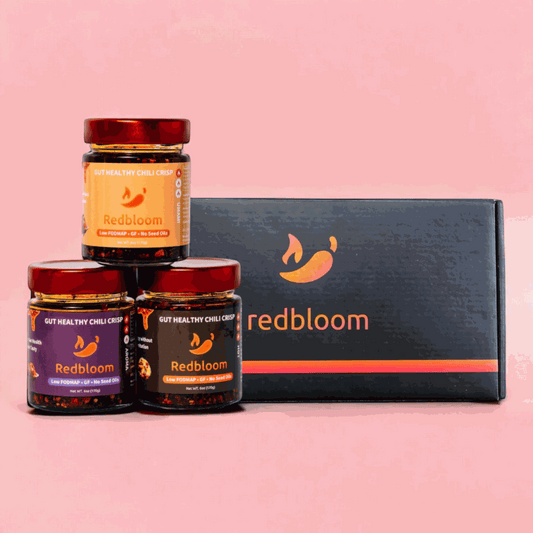
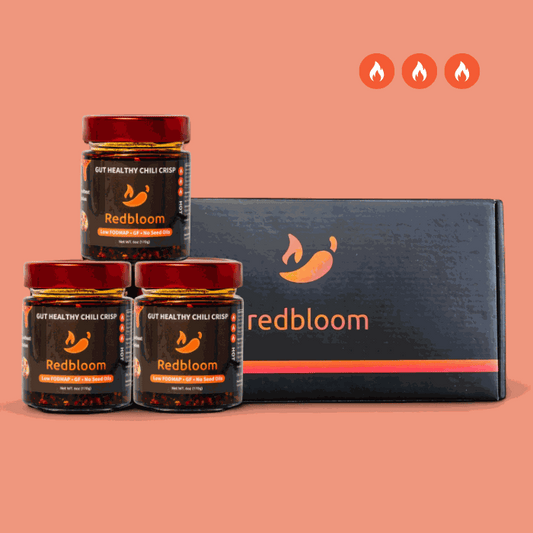
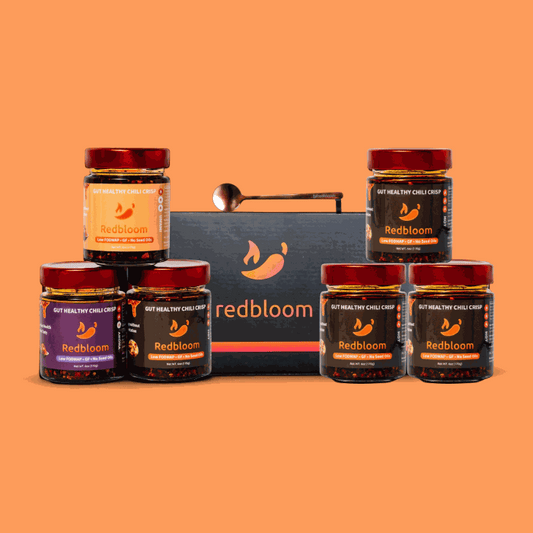
Beyond the formulation, Redbloom also takes a protocol-based approach to building tolerance. The three-phase system moves you from Mild Umami through Medium Aroma and into Hot Dopamine over time, giving your gut a structured, gradual path toward higher capsaicin exposure. This mirrors what the clinical research shows about desensitization: consistent, incremental doses reduces gut hypersensitivity far more effectively than occasional large ones. For people who have wanted to enjoy spicy food and potentially access some of its longer-term benefits, this kind of scaffolded approach offers a more sustainable way in.


Key Takeaways
- Multiple large studies across the US, China, Italy, and Iran consistently link regular chili pepper consumption to roughly 12-14% lower all-cause mortality.
- Capsaicin activates TRPV1 receptors in ways that may support heart health, fat metabolism, and possibly slower vascular aging, though human mechanistic research is still developing.
- The longevity signal is consistent enough across very different populations to suggest it reflects something real, not just a dietary confound.
- For sensitive guts, the dose and delivery of capsaicin matter enormously. Gradual exposure tends to reduce gut hypersensitivity over time rather than trigger it.
- If you have IBS or a digestive condition, talk to a healthcare provider before significantly increasing your capsaicin intake.
Frequently asked questions
Is there really a spicy food longevity study, or is this just hype?
There are actually several, conducted independently across multiple countries. The largest followed nearly 487,000 adults in China and found that eating spicy food six to seven days a week was associated with a 14% lower risk of dying during the study period [1]. A US study, an Italian study, and an Iranian study all found similar associations [5][3][4]. A meta-analysis pooling all four found a 12% lower risk of all-cause mortality among regular spice consumers [5]. That kind of cross-cultural consistency is what makes researchers take the finding seriously, even while acknowledging that these are observational studies and cannot prove that spice directly causes people to live longer.
What is it about chili peppers specifically that might support longevity?
The leading candidate is capsaicin, the compound that makes chili peppers hot. Capsaicin activates receptors called TRPV1 throughout the body, and researchers think this activation may support healthy blood vessel function, promote fat metabolism, and possibly slow some of the cellular aging processes in the cardiovascular system [8][10]. The population studies also found associations with lower cardiovascular and cancer-related mortality specifically, which lines up with these proposed mechanisms [6][7]. That said, researchers are still working out how much of the benefit is directly attributable to capsaicin versus other aspects of the diets and lifestyles of people who eat a lot of spice.
Does this apply to people with IBS or sensitive stomachs?
The longevity studies did not focus on people with IBS, so it is hard to say whether the mortality associations apply equally to this group. What research does suggest is that capsaicin can be particularly activating for people with sensitive guts, since TRPV1 receptors in the digestive tract may already be overactive in IBS. The good news is that gradual, low-dose exposure to capsaicin appears to help desensitize those receptors over time, which may actually reduce gut pain sensitivity with consistent practice. If you have IBS or another digestive condition, it is worth talking to a healthcare provider before significantly increasing your capsaicin intake.
How much spicy food would I need to eat to see a benefit?
The Chinese cohort study found the strongest association at six to seven days per week of spicy food consumption [1], but meaningful associations appeared even at lower frequencies. The meta-analyses suggest that eating chili peppers more than once a week is associated with reduced mortality risk compared to rare or no consumption [7]. There is no established therapeutic dose, and the research does not point to a specific amount per meal. The general pattern across studies suggests that regular, habitual consumption matters more than occasional large amounts.
Are all spicy foods equally beneficial, or does it have to be chili peppers?
Most of the longevity research has focused specifically on chili peppers and capsaicin, so the evidence is strongest for this particular compound. One study from Iran also looked at turmeric, cinnamon, and saffron alongside pepper, and found protective associations for several of these spices [4]. But the mechanistic research on TRPV1 activation and cardiovascular health points most directly to capsaicin as the active driver [8][9]. Other spices may have their own benefits, but chili peppers are where the longevity data is currently most robust.
Could eating spicy food cause problems for my heart or gut?
For most people with generally healthy cardiovascular systems, the population data is reassuring and suggests a net benefit rather than harm [5][6]. That said, researchers note that inflammation can change how TRPV1 receptors in blood vessels respond to capsaicin, and in some contexts this can have more complicated effects [9]. For the gut, people with sensitive digestive systems may experience discomfort, cramping, or urgency if they consume too much capsaicin too quickly. Gradual exposure tends to be much better tolerated. If you have a known heart condition or a diagnosed digestive disorder, talk to your healthcare provider before making significant changes to your spice intake.
References
- Lv J, Qi L, Yu C, Yang L, Guo Y, Chen Y, et al. Consumption of Spicy Foods and Total and Cause Specific Mortality: Population Based Cohort Study. BMJ (Clinical research ed.) 2015.
- Chopan M, Littenberg B. The Association of Hot Red Chili Pepper Consumption and Mortality: A Large Population-Based Cohort Study. PloS one 2017.
- Bonaccio M, Di Castelnuovo A, Costanzo S, Ruggiero E, De Curtis A, Persichillo M, et al. Chili Pepper Consumption and Mortality in Italian Adults. Journal of the American College of Cardiology 2019.
- Hashemian M, Poustchi H, Murphy G, Etemadi A, Kamangar F, Pourshams A, et al. Turmeric, Pepper, Cinnamon, and Saffron Consumption and Mortality. Journal of the American Heart Association 2019.
- Ofori-Asenso R, Mohsenpour MA, Nouri M, Faghih S, Liew D, Mazidi M. Association of Spicy Chilli Food Consumption With Cardiovascular and All-Cause Mortality: A Meta-Analysis of Prospective Cohort Studies. Angiology 2021.
- Yamani N, Musheer A, Gosain P, Sarfraz S, Qamar H, Waseem MM, et al. Meta-Analysis Evaluating the Impact of Chili-Pepper Intake on All-Cause and Cardiovascular Mortality: A Systematic Review. Annals of medicine and surgery (2012) 2021.
- Yang L, Sun J, Zhao M, Xi B. Chili Pepper Intake and All-Cause and Disease-Specific Mortality: A Meta-Analysis of Prospective Cohort Studies. International Journal for Vitamin and Nutrition Research 2023.
- Sun F, Xiong S, Zhu Z. Dietary Capsaicin Protects Cardiometabolic Organs from Dysfunction. Nutrients 2016.
- Munjuluri S, Wilkerson DA, Sooch G, Chen X, White FA, Obukhov AG. Capsaicin and TRPV1 Channels in the Cardiovascular System: The Role of Inflammation. Cells 2021.
- Cui XY, Zhan JK. Capsaicin and TRPV1: A Novel Therapeutic Approach to Mitigate Vascular Aging. Aging and disease 2025.
Medical disclaimer
Medical Disclaimer: This article is for informational purposes only and is not intended as medical advice. Always consult with a qualified healthcare provider before making dietary changes or if you have a medical condition.