Introduction
Ever notice your skin flares up right after a rough digestive week? You're not imagining it. Research now suggests a real, two-way communication system between your gut and your skin – sometimes called the gut-skin axis. For people already managing IBS or other gut issues, this gut health skin connection acne link can feel frustratingly familiar. This article breaks down how your gut microbiome influences breakouts and inflammatory skin conditions, what the science actually shows, and practical steps you can take to support both systems at once.
What Is the Gut-Skin Axis and How Does It Affect Your Skin?
Think of the gut-skin axis as a two-way messaging system. Your gut microbiome – the trillions of bacteria, fungi, and other microbes living in your digestive tract – sends signals that can influence inflammation all over your body, including your skin. When that microbial community gets thrown off balance (a state researchers call dysbiosis), those signals can go haywire.
Research suggests this imbalance is associated with several inflammatory skin conditions, including acne, rosacea, atopic dermatitis, and psoriasis [1, 4]. The communication runs through immune cells, microbial metabolites (chemical byproducts your gut bugs produce), and signaling molecules called cytokines [4]. In plain terms: an unhappy gut can show up on your face.
Why Gut Dysbiosis Triggers Skin Problems
1) Immune System Dysregulation
About 70% of your immune system lives in and around your gut. When gut bacteria become imbalanced, the immune system can shift into a state of chronic low-grade inflammation. Research describes how this immune dysregulation contributes to inflammatory skin diseases like acne and psoriasis [4].
- Dysbiosis is linked to an overactive inflammatory immune response [1, 4]
- That systemic inflammation can manifest as skin redness, pustules, or breakouts [4, 5]
2) Leaky Gut and Systemic Inflammation
Gut dysbiosis is associated with increased intestinal permeability – sometimes called "leaky gut." When the gut lining becomes more permeable, bacterial byproducts can enter the bloodstream and trigger wider immune activation. Research links reduced diversity in gut bacteria and depletion of short-chain fatty acid-producing microbes to this increased permeability and systemic immune activation [5].
- Reduced gut microbial diversity is associated with inflammatory skin flares [5]
- Short-chain fatty acids (produced by beneficial gut bacteria) appear to help regulate immune responses [4, 5]
3) The Stress Axis Connection
There is a third player here: your brain. The brain-gut-skin axis describes how stress hormones (via the hypothalamic-pituitary-adrenal, or HPA, axis) interact with gut microbes and skin inflammation. Stress can alter gut microbial composition, which in turn may worsen skin conditions like acne and rosacea [4].
- Neuropeptides and stress hormones appear to influence both gut motility and skin inflammation [4]
- This three-way connection helps explain why stress so often triggers simultaneous gut and skin flares [4]
Common Signs Your Skin May Be Reflecting Your Gut Health
- Acne breakouts that worsen during digestive flare-ups
- Facial redness or rosacea alongside bloating or irregular bowel habits
- Skin that flares after antibiotic use (which disrupts gut bacteria)
- Eczema or psoriasis patches that seem to track with gut symptoms
- Persistent skin inflammation that does not respond well to topical treatments alone
Why Some People React More Than Others
Not everyone with gut issues gets skin problems, and that comes down to individual differences in microbial composition, immune reactivity, and genetics. Research notes that the gut-skin axis is modulated by both environmental and genetic factors [2, 4].
People with IBS may be particularly affected because visceral hypersensitivity – where gut nerves become overly reactive – can amplify inflammatory signaling throughout the body. Skin conditions like rosacea also have a genetic predisposition component, meaning the same gut imbalance may cause a rash in one person and no skin symptoms at all in another [2, 3].
Diet plays a role too. Research suggests that dietary patterns can influence gut microbial composition, which in turn affects skin inflammation – though the specific mechanisms are still being studied [8].
What the Science Says: Key Findings
Here is what the current research actually shows – with honest caveats about where the evidence stands.
- Gut dysbiosis is associated with multiple skin conditions. Studies link imbalanced gut microbiomes to acne, rosacea, atopic dermatitis, and psoriasis. However, most of this evidence is associational – researchers have observed the connection but establishing direct causation in humans requires more study [1, 5, 7].
- Rosacea patients show gut microbiome differences. Research comparing rosacea patients to healthy controls found differences in both gut and skin microbial communities, suggesting the gut-skin axis plays a role in disease severity [3, 9].
- Probiotics show promise but evidence is mixed. Some studies report that probiotic supplementation may improve inflammatory skin conditions, but researchers note that results are difficult to compare across studies due to different probiotic strains and dosing protocols [6, 2].
- Diet appears to influence the gut-skin relationship. Nutritional patterns are considered a contributing factor in the gut-skin axis for conditions like acne and rosacea, with omega-3 fatty acids and probiotics receiving recent research attention for acne patients [8].
Immediate Steps to Support the Gut-Skin Connection
- Add fermented foods. Yogurt, kefir, kimchi, and sauerkraut introduce beneficial bacteria that may help restore microbial balance. Research supports gut microbiome modulation as a strategy for skin health, though results vary by individual [6].
- Reduce ultra-processed foods. Highly processed diets are associated with reduced gut microbial diversity, which research links to increased inflammatory signaling [5, 8].
- Manage stress actively. Because the brain-gut-skin axis is real, stress management (exercise, sleep, mindfulness) is not just good for your mood – it may also support gut microbial balance and reduce skin inflammation [4].
- Stay hydrated and fiber-rich. Prebiotic fibers (found in oats, garlic, bananas, and legumes) feed beneficial gut bacteria that produce anti-inflammatory short-chain fatty acids [5].
Long-Term Strategies to Reduce Gut-Driven Skin Inflammation
- Consider a probiotic protocol. Research suggests oral probiotics may help modulate gut microbiota and reduce skin inflammation in conditions like rosacea and acne, though researchers note that more standardized clinical trials are needed before specific strains can be widely recommended [2, 6].
- Track dietary triggers. For rosacea in particular, certain dietary factors have been postulated as triggers. Keeping a food and symptom diary can help you identify personal patterns, even if population-level evidence for specific foods remains limited [2, 8].
- Support intestinal barrier integrity. Strategies associated with a healthier gut lining include reducing alcohol, increasing diverse plant foods, and managing antibiotic use carefully. A stronger gut barrier may reduce the systemic immune activation linked to skin flares [5, 4].
- Be patient with microbiome changes. Gut microbial communities shift gradually. Research-backed interventions like dietary changes and probiotics tend to show effects over weeks to months, not days [6, 7].
How Redbloom Fits In
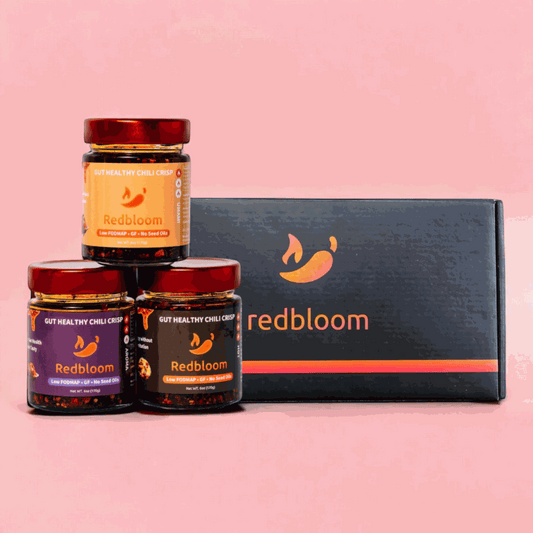
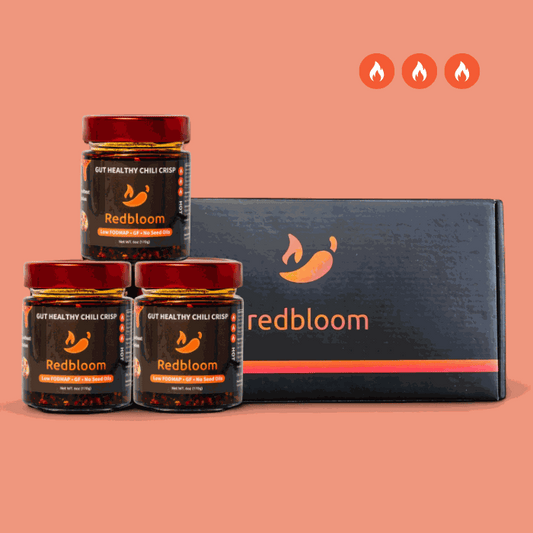
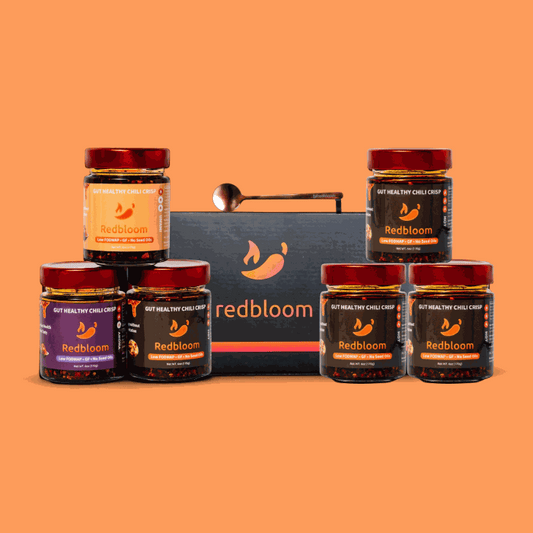
For those interested in building long-term gut resilience, Redbloom's chili crisp offers a unique approach. Capsaicin is clinically proven to reduce gut sensitivity, but traditional chili products can initially trigger flare-ups. Redbloom addresses this by microencapsulating capsaicin in oleic acid from avocado oil, creating a protective cushion that's gentler on sensitive guts. Our 3-phase protocol (Mild Umami → Medium Aroma → Hot Dopamine) is designed to gradually build tolerance, helping reduce gut hypersensitivity that underlies IBS symptoms.
FAQ
-
Does fixing your gut actually clear up acne?
Research suggests a link between gut dysbiosis and acne, and some studies report skin improvements alongside gut microbiome interventions. However, the evidence is still associational for most people – gut health is one factor among many, including hormones, skin care, and genetics [4, 5]. It may help, but it is unlikely to be a single fix for everyone. -
Can IBS cause skin problems?
IBS and skin conditions like rosacea and psoriasis share common ground in gut dysbiosis and immune dysregulation. Research describes how visceral hypersensitivity and systemic inflammation associated with IBS may contribute to skin flares, though direct causal studies in IBS populations specifically are limited [4, 6]. -
Are probiotics worth trying for skin health?
Possibly, with realistic expectations. Some clinical evidence suggests probiotics may reduce severity of inflammatory skin conditions like rosacea and acne, but researchers note that heterogeneity across studies makes it hard to recommend a specific strain or dose [2, 6]. They are generally safe and may be worth trying as part of a broader gut health strategy. -
How long does it take to see skin changes from gut interventions?
Gut microbiome shifts take time. Most probiotic and dietary studies measure outcomes over weeks to months. Research-backed approaches tend to show gradual improvement rather than rapid change [6, 7]. Consistency matters more than intensity here. -
Does diet directly affect the gut-skin connection?
Research considers nutrition a contributing factor in the gut-skin axis for conditions like acne and rosacea. Omega-3 fatty acids and probiotics have received recent research attention for acne specifically, though well-controlled studies are still limited [8]. Diet appears to influence gut microbial composition, which in turn may affect skin inflammation.
Conclusion
Your skin and your gut are in constant conversation. When your gut microbiome is out of balance, that disruption can show up as acne, redness, or other inflammatory skin conditions – through immune signaling, intestinal permeability, and even stress pathways. The good news is that many of the strategies that support gut health, like diverse plant foods, stress management, and probiotic-rich eating, may also benefit your skin over time. Start small, stay consistent, and pay attention to how your body responds.
Medical Disclaimer: This article is for informational purposes only and is not intended as medical advice. Always consult with a qualified healthcare provider before making dietary changes or if you have a medical condition.
Bibliography
- Thye AY, Bah YR, Law JW, et al. Gut-Skin Axis: Unravelling the Connection between the Gut Microbiome and Psoriasis. Biomedicines. 2022. https://doi.org/10.3390/biomedicines10051037
- Manfredini M, Barbieri M, Milandri M, et al. Probiotics and Diet in Rosacea: Current Evidence and Future Perspectives. Biomolecules. 2025. https://doi.org/10.3390/biom15030411
- Asees A, Sadur A, Choudhary S. The Skin Microbiome in Rosacea: Mechanisms, Gut-Skin Interactions, and Therapeutic Implications. Cutis. 2025. https://doi.org/10.12788/cutis.1240
- Guo Z, Yang J, Zang R, et al. The brain-gut-skin axis in inflammatory and disfiguring skin diseases: mechanistic insights, clinical correlations, and therapeutic strategies. Frontiers in Immunology. 2026. https://doi.org/10.3389/fimmu.2026.1737303
- Haidar L, Bănărescu CF, Uța C, et al. Beyond the Skin: Exploring the Gut-Skin Axis in Chronic Spontaneous Urticaria and Other Inflammatory Skin Diseases. Biomedicines. 2025. https://doi.org/10.3390/biomedicines13082014
- Szántó M, Dózsa A, Antal D, et al. Targeting the gut-skin axis – Probiotics as new tools for skin disorder management? Experimental Dermatology. 2019. https://doi.org/10.1111/exd.14016
- Memariani M, Memariani H. New horizons in the treatment of psoriasis: Modulation of gut microbiome. Heliyon. 2025. https://doi.org/10.1016/j.heliyon.2025.e41672
- Gürtler A, Schmitt L. The impact of clinical nutrition on inflammatory skin diseases. Journal of the German Society of Dermatology (JDDG). 2022. https://doi.org/10.1111/ddg.14683
- Joura MI, Nemes-Nikodém É, Jobbágy A, et al. Integrative Analysis of Fungal and Bacterial Microbiomes Across Skin, Blood, and Stool in Rosacea Patients. International Journal of Molecular Sciences. 2025. https://doi.org/10.3390/ijms26178127