What Actually Causes Poor Digestion (and How to Fix It)?
What causes poor digestion is more complex than you might think, but researchers are uncovering clear patterns worth knowing about.

Introduction
If you've ever wondered what causes poor digestion, the answer often starts somewhere you can't see: the trillions of bacteria living in your gut. Researchers now think that an imbalance in those bacteria, a state called dysbiosisAn imbalance in the gut's microbial community, where harmful or unhelpful bacteria outnumber the beneficial ones., sits at the center of many common digestive complaints [1].
Think of your gut microbiome like a working kitchen. When the right cooks are on shift, everything runs smoothly. But when the balance tips, orders get backed up. Researchers have found that gut bacteria produce chemical signals, including short-chain fatty acids and bile acid derivatives, that directly tell your gut muscles when to contract and when to relax [2]. When dysbiosis disrupts those signals, the whole conveyor belt can slow down or speed up unpredictably.
The relationship also runs in the other direction. A 2022 review found that gut motility itself shapes which bacteria can colonize and thrive, meaning that sluggish digestion can make dysbiosis worse, which then makes digestion more sluggish [2]. It is a feedback loop that can feel hard to escape, but understanding it is the first step toward breaking it.
What You Eat Changes Your Gut More Than You Might Expect
Diet is probably the most powerful lever you have over your digestive health, and research suggests the effects show up faster than most people realize. Diets high in fat and refined carbohydrates seem to shift the microbiome toward bacteria that produce more inflammatory signals and fewer of the protective compounds your gut lining depends on [9][10].
High-Sugar and High-Fat Diets
A 2023 animal study found that after several months on a high-glycemic diet, subjects developed constipation alongside measurable changes in gut bacteria and reduced muscle contractions in the colon [3]. The researchers concluded that diet-driven dysbiosis may directly impair the neuromuscular system that keeps digestion moving. In other words, what you eat does not just affect how you feel in the moment; it may gradually reshape how well your gut functions at a mechanical level.
High-fat diets tell a similar story. Research suggests they tend to increase populations of opportunistic bacteria while crowding out the beneficial strains that produce short-chain fatty acids, compounds that help keep the gut lining intact and inflammation in check [10]. When the lining weakens, bacterial byproducts like lipopolysaccharidesMolecules found on the outer wall of certain bacteria that can trigger inflammation when they leak into the bloodstream. can slip into the bloodstream and trigger low-grade inflammation throughout the body [9].
What Tends to Help
- Fiber-rich vegetables, legumes, and whole grains feed beneficial bacteria and support regular motility.
- Reducing ultra-processed foods and added sugars may help restore a healthier microbial balance over time.
- Eating a diverse range of plant foods is consistently linked to greater microbiome diversity, which researchers associate with better digestive resilience.
When Your Gut Stops Moving Properly
Digestion is not just a chemical process. It is also a physical one. Your gut relies on coordinated muscle contractions to move food from one end to the other, and when those contractions go wrong, things can get uncomfortable fast. Researchers call this problem GI dysmotilityA condition where the muscles of the digestive tract do not contract in a normal, coordinated way, leading to symptoms like bloating, constipation, or diarrhea..
What makes this particularly interesting is that dysmotility and dysbiosis seem to fuel each other. A 2024 study found that impaired gut motility significantly changed the mix of bacteria present in the gut, and that those bacterial changes in turn promoted intestinal inflammation [4]. The researchers observed that fecal samples from people with chronic constipation also elevated inflammation risk when transferred to other subjects, suggesting the microbiome changes from poor motility carry real consequences [4].
For people living with IBS, this cycle can feel all too familiar. Symptoms like bloating, cramping, and unpredictable bowel habits often reflect this push-and-pull between motility and microbial balance. The good news is that researchers think targeting either side of the loop, whether through diet, movement, or other interventions, may help interrupt it [1][2].
The Enzyme Factor Most People Overlook
Your digestive system depends on enzymes to break food down into pieces small enough to absorb. The pancreas is the main enzyme factory, and when it underperforms, a condition researchers call pancreatic exocrine insufficiency, the downstream effects on gut bacteria can be significant [5].
Studies in people with chronic pancreatic issues show a marked reduction in gut bacterial diversity, with protective strains that produce gut-lining-supporting compounds dropping sharply and opportunistic bacteria filling the gap [6]. The mechanism seems to involve reduced enzyme flow into the small intestine, which changes the local environment enough to let the wrong bacteria take hold.
Animal studies have shown that replacing the missing enzymes can largely reverse this dysbiosis, nudging the microbiome back toward a healthier state [7]. That finding points to a broader principle: digestion works as a system, and a weak link anywhere, whether it is motility, diet, or enzyme output, tends to ripple outward into the microbiome and beyond [8].
If you experience persistent bloating, fatty or pale stools, or unexplained weight changes alongside digestive discomfort, it is worth raising the possibility of enzyme insufficiency with a healthcare provider rather than assuming diet alone is the culprit.
How Redbloom Helps
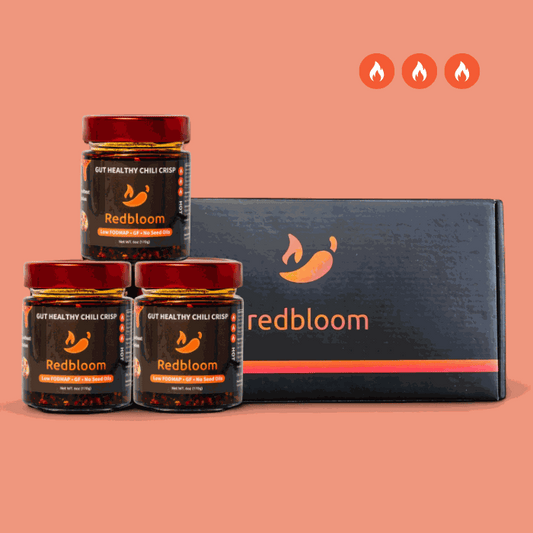
If you have been navigating gut sensitivity or IBS-style symptoms, you already know that most flavor-forward condiments feel like a gamble. Redbloom Chili Crisp was designed with exactly that tension in mind. Capsaicin, the active compound in chili peppers, activates TRPV1 receptors in the gut and is clinically shown to help reduce gut sensitivity over time with careful, gradual exposure. The problem is that most traditional chili products deliver too much capsaicin too fast, which can trigger discomfort before your gut has a chance to adapt. For people with sensitive systems, that all-or-nothing delivery is often what makes spice feel off-limits.
Redbloom addresses this by microencapsulating capsaicin in oleic acid from avocado oil, creating a protective cushion around the active compound. That cushion slows the release, which means the capsaicin reaches your gut more gradually and gently than it would from a standard chili oil. For sensitive guts, that difference in delivery makes the experience much more manageable.
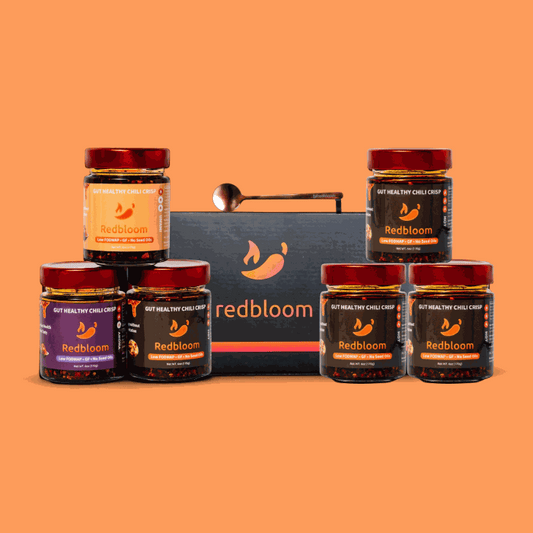
To make the process even more structured, Redbloom uses a 3-phase protocol: starting with Mild Umami, moving to Medium Aroma, and graduating to Hot Dopamine. The idea is to give your gut time to adapt at each level before stepping up the heat, rather than jumping straight to an intensity that might set you back. It is a gradual, intentional approach to building spice tolerance sustainably, which aligns with what researchers suggest about desensitization and gut adaptation.


Key Takeaways
- Gut bacterial imbalance (dysbiosis) is a central driver of poor digestion, affecting motility, inflammation, and gut lining integrity.
- High-fat and high-sugar diets tend to worsen dysbiosis and slow gut motility, while diverse, fiber-rich diets support a healthier microbiome.
- Poor gut motility and dysbiosis reinforce each other in a feedback loop, but targeting either side may help break the cycle.
- Digestive enzyme output matters: shortfalls can shift gut bacteria in ways that amplify digestive symptoms.
- Gradual, consistent dietary changes are more effective than quick fixes; work with a healthcare provider if symptoms persist or are severe.
Frequently asked questions
What causes poor digestion in otherwise healthy people?
Even without a diagnosed condition, poor digestion often comes down to shifts in gut bacteria driven by diet, stress, or lifestyle. Researchers think that diets high in processed foods and low in fiber tend to reduce microbial diversity, which can impair the signals your gut needs to move food efficiently [1][2]. Irregular sleep, low physical activity, and chronic stress may also play a role by influencing gut motility and the gut-brain connection.
Can what I eat really change my gut bacteria that quickly?
Studies suggest the microbiome can begin shifting within days of a significant dietary change, though lasting change tends to take longer. High-fat and high-sugar diets seem to promote opportunistic bacteria relatively quickly, while adding fiber and plant diversity tends to support beneficial strains over time [9][10]. Consistency matters more than any single meal.
Is slow digestion (constipation) linked to gut bacteria?
Researchers think so. Animal studies found that a high-glycemic diet produced both constipation and measurable changes in gut bacterial composition alongside reduced colon muscle contractions [3]. A 2024 study also found that fecal samples from people with chronic constipation could elevate inflammation risk in other subjects, suggesting the microbiome changes from slow motility carry real downstream effects [4].
How do I know if my digestion issues are related to enzymes rather than bacteria?
Enzyme-related digestion problems often show up as persistent bloating, fatty or pale stools, and difficulty absorbing nutrients despite a reasonable diet. These can overlap with bacterial dysbiosis symptoms, which is why it is worth consulting a healthcare provider rather than self-diagnosing. Research shows that enzyme shortfalls can directly alter gut bacterial balance, so the two issues often coexist [5][6].
What dietary changes are most likely to improve digestion?
Research consistently points to a few key shifts: increasing fiber from vegetables, legumes, and whole grains; reducing ultra-processed foods and added sugars; and eating a wide variety of plant foods to support microbial diversity [9][10]. These changes tend to support both gut motility and a healthier bacterial balance, which researchers think are the two most central factors in everyday digestive function [1][2].
Can spicy food make poor digestion worse?
It depends on how it is delivered and how sensitive your gut is. Capsaicin activates nerve receptors throughout the digestive tract, and for people with gut hypersensitivity, too much too fast can trigger cramping or urgency. That said, researchers also think that gradual, low-dose capsaicin exposure may help desensitize those same receptors over time, potentially reducing gut sensitivity rather than worsening it. The key seems to be dose and pacing, not spice itself.
References
- Singh R, Zogg H, Wei L, Bartlett A, Ghoshal UC, Rajender S, et al. Gut Microbial Dysbiosis in the Pathogenesis of Gastrointestinal Dysmotility and Metabolic Disorders. Journal of neurogastroenterology and motility 2021.
- Zheng Z, Tang J, Hu Y, Zhang W. Role of Gut Microbiota-Derived Signals in the Regulation of Gastrointestinal Motility. Frontiers in medicine 2022.
- Pei Y, Wang R, Chen W, Yi S, Huang C, Liang S, et al. Impaired Colonic Motility in High-Glycemic Diet-Induced Diabetic Mice Is Associated With Disrupted Gut Microbiota and Neuromuscular Function. Endocrine connections 2023.
- Zhang Y, Song F, Yang M, Chen C, Cui J, Xing M, et al. Gastrointestinal Dysmotility Predisposes to Colitis Through Regulation of Gut Microbial Composition and Linoleic Acid Metabolism. Advanced science (Weinheim, Baden-Wurttemberg, Germany) 2024.
- Guo Y, Cao Q, Bi Y, et al. Impacts of Pancreatic Exocrine Insufficiency on Gut Microbiota. Journal of Zhejiang University-Science B 2024.
- Frost F, Weiss FU, Sendler M, Kacprowski T, Rühlemann M, Bang C, et al. The Gut Microbiome in Patients With Chronic Pancreatitis Is Characterized by Significant Dysbiosis and Overgrowth by Opportunistic Pathogens. Clinical and translational gastroenterology 2020.
- Ritz S, Hahn D, Wami H, Tegelkamp K, Dobrindt U, Schnekenburger J. Gut Microbiome as a Response Marker for Pancreatic Enzyme Replacement Therapy in a Porcine Model of Exocrine Pancreas Insufficiency. Microbial Cell Factories 2020.
- Halle-Smith JM, Hall LA, Powell-Brett SF, Merali N, Frampton AE, Beggs AD, et al. Pancreatic Exocrine Insufficiency and the Gut Microbiome in Pancreatic Cancer: A Target for Future Diagnostic Tests and Therapies?. Cancers 2023.
- Chae YR, Lee YR, Kim YS, Park HY. Diet-Induced Gut Dysbiosis and Leaky Gut Syndrome. Journal of microbiology and biotechnology 2024.
- Chen J, Xiao Y, Li D, Zhang S, Wu Y, Zhang Q, et al. New Insights Into the Mechanisms of High-Fat Diet Mediated Gut Microbiota in Chronic Diseases. iMeta 2023.
Medical disclaimer
Medical Disclaimer: This article is for informational purposes only and is not intended as medical advice. Always consult with a qualified healthcare provider before making dietary changes or if you have a medical condition.