What Actually Happens to Your Gut as You Get Older?

Gut health aging microbiome changes are real, measurable, and more within your control than you might think.
Introduction
Gut health aging microbiome changes begin quietly, long before you notice any symptoms. Think of your gut as a living ecosystem, home to trillions of bacteria, fungi, and other microorganisms that collectively make up your microbiomeThe community of trillions of microorganisms living in your digestive tract that help with digestion, immunity, and metabolism.. When you are young and healthy, this ecosystem tends to be diverse and balanced. As the decades pass, that balance shifts in ways researchers are only beginning to fully understand [1].
A large systematic review found that older adults generally show higher overall microbial variety compared to middle-aged adults, which sounds like good news. The catch is that this variety often comes with a trade-off: beneficial bacteria that your gut relies on for protection and fuel tend to decline, while less helpful microbes tend to fill the gap [1]. It is less about having more species and more about which species are thriving.
Two groups of bacteria worth knowing about here are Faecalibacterium and the Lachnospiraceae family. Both are associated with gut lining protection and healthy inflammation control, and both tend to decrease with age [1]. Meanwhile, a bacterium called Akkermansia tends to become more abundant in older adults and is generally considered a positive sign, as it is linked to a stronger gut barrier [2]. The picture is nuanced, and researchers are still working out exactly what these shifts mean for everyday health.
The Metabolite Problem: Why What Your Bacteria Make Matters
Here is something that might surprise you: researchers now think the chemical signals your gut bacteria produce may matter even more than which specific bacteria are present [7]. These chemical signals are called metabolitesChemical compounds produced by gut bacteria as they break down food, which then signal to the rest of your body., and one group in particular, called short-chain fatty acids (SCFAs), seems especially important for aging well.
SCFAs are produced when your gut bacteria ferment dietary fiber. They serve as fuel for the cells lining your colon, help regulate appetite, and play a role in keeping inflammation in check [8]. The problem is that aging tends to reduce the bacteria responsible for making them, which means SCFA levels often drop as you get older [7]. Animal studies have found that this decline correlates with reduced signaling in the colon and shifts in how the body handles carbohydrates and energy [5].
On the flip side, aging also tends to enrich certain bacteria that produce compounds linked to insulin resistance and metabolic stress, including imidazole propionate and trimethylamine [7]. These are not household names, but their effects are meaningful: researchers associate them with higher risk of blood sugar dysregulation and cardiovascular strain, particularly in people who are aging less healthily [7]. The good news is that these metabolite profiles are not fixed. Diet appears to be one of the most powerful levers for shifting them in a more favorable direction [4].
What Centenarians Can Teach Us About Gut Aging
If you want a compelling argument that gut health and longevity are connected, look at the microbiomes of people who live past 100. Studies of centenarians consistently find that their gut ecosystems look remarkably different from those of average older adults. They tend to harbor higher levels of beneficial bacteria like Akkermansia and a group called Christensenellaceae, both associated with metabolic health and reduced inflammation [9][9].
Centenarian microbiomes also seem to maintain greater metabolic flexibility, meaning their gut bacteria can still produce a wider range of beneficial compounds, including SCFAs, even at extreme ages [9][2]. Researchers think this is not purely genetic luck. Diet, physical activity, and consistent lifestyle habits all appear to shape the microbiome in ways that either accelerate or slow age-related decline [2][3].
One review from Nature Reviews Gastroenterology and Hepatology noted that some of the microbiome changes seen in aging overlap with those seen in chronic disease, while others seem to be distinct patterns tied specifically to getting older [3]. That distinction matters because it suggests there may be room to intervene, to nudge the microbiome toward a healthier trajectory even later in life.
There is also an intriguing connection between gut changes and brain health. Research suggests that an aged microbiome can influence lipid metabolism in the brain, potentially contributing to cognitive changes associated with getting older [10]. The gut-brain relationship is still being mapped, but it adds another reason to take microbiome health seriously across your lifespan.
What You Can Actually Do About It
The research points to a few consistent levers that seem to support a healthier gut as you age. None of them are dramatic or require a complete lifestyle overhaul. They tend to work gradually, which is actually how microbiome change works best anyway.
Eat more fiber, consistently
Dietary fiber is the primary fuel for SCFA-producing bacteria. A Mediterranean-style diet rich in vegetables, legumes, and whole grains is one of the most studied patterns for supporting microbial diversity and resilience in older adults [4][2]. You do not need to follow it perfectly; even incremental increases in fiber intake seem to matter.
Move your body regularly
Exercise appears to support microbial diversity in ways that mirror healthy aging patterns [4]. Even moderate, consistent movement, like walking or cycling, seems to help maintain the kind of gut ecosystem associated with better metabolic health.
Be mindful of medications and antibiotics
Polypharmacy (taking multiple medications at once) and frequent antibiotic use can disrupt microbial diversity in ways that resemble dysbiosis, a term for an imbalanced gut ecosystem [4]. If you take multiple medications, it is worth discussing gut health with your healthcare provider, especially if you notice digestive changes.
Consider fermented foods and prebiotics
Fermented foods like yogurt, kefir, and kimchi introduce beneficial microorganisms, while prebiotic-rich foods like garlic, onions, and oats feed the bacteria already living in your gut. Both strategies have some support in the literature for promoting healthier aging microbiome patterns [2].
How Redbloom Helps
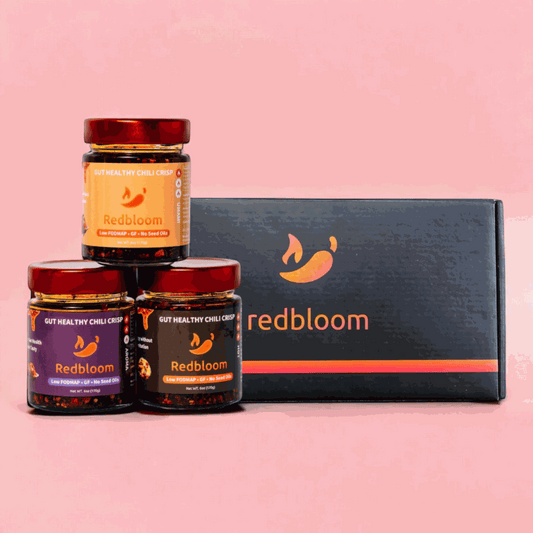
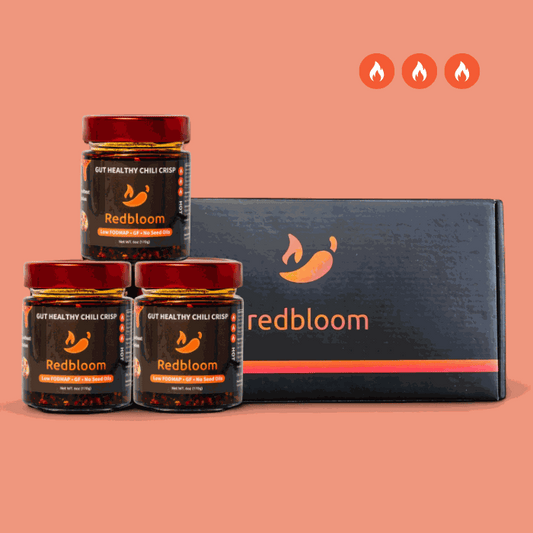
If you have been navigating gut sensitivity while trying to keep your diet interesting, you already know the frustration of feeling like flavor and comfort cannot coexist. Redbloom Chili Crisp was designed with exactly that tension in mind. Capsaicin, the active compound in chili peppers, is clinically shown to help reduce gut sensitivity over time through gradual, careful exposure. It works by activating receptors in the gut lining that, with consistent low-level stimulation, can become less reactive. The problem with most traditional chili products is that they deliver too much capsaicin too fast, which can trigger discomfort before your gut has had any chance to adapt.
Redbloom addresses this by microencapsulating capsaicin in oleic acid sourced from avocado oil. Think of it as a protective cushion around the active compound, one that releases gradually rather than all at once. This gentler delivery is designed specifically for people with sensitive digestive systems who want the benefits of capsaicin without the shock of a sudden, intense dose hitting an unprepared gut lining.
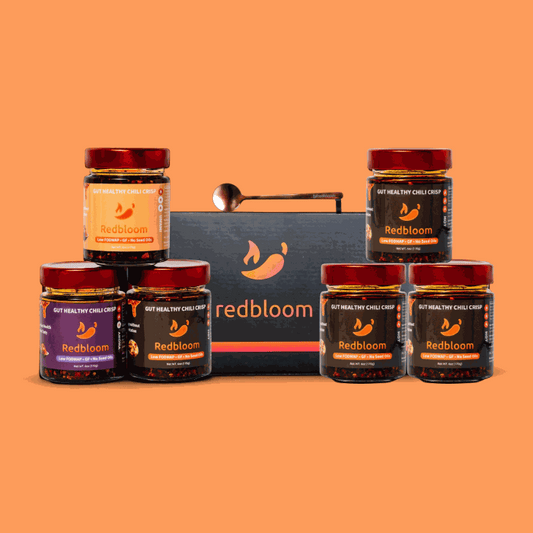
The experience is also structured intentionally. Redbloom uses a 3-phase protocol: Mild Umami first, then Medium Aroma, then Hot Dopamine. This progression is not just about flavor. It is a deliberate, gradual way to build tolerance over time, helping your gut adapt at a pace that feels manageable rather than overwhelming. For anyone working on reducing gut hypersensitivity, that kind of structured, incremental approach tends to be far more sustainable than jumping straight to high heat.


Key Takeaways
- Your gut microbiome shifts with age in predictable ways, including a decline in bacteria that produce protective short-chain fatty acids.
- The metabolites your gut bacteria produce may matter more than which specific bacteria are present, and diet is one of the strongest ways to influence them.
- Centenarians tend to have more diverse, metabolically flexible gut microbiomes, suggesting healthy aging and gut health are deeply linked.
- Fiber-rich diets, regular exercise, and mindful medication use are among the most evidence-backed strategies for supporting your microbiome as you age.
- Gradual capsaicin exposure, done carefully, may help reduce gut hypersensitivity over time rather than worsen it.
Frequently asked questions
Does your gut microbiome always get worse as you age?
Not necessarily. Research suggests that while certain beneficial bacteria tend to decline with age, the overall picture is more nuanced. Some studies find that the oldest adults, including centenarians, actually show greater microbial diversity and more robust metabolite production than average older adults [1][2]. Lifestyle factors like diet and exercise seem to play a significant role in how the microbiome ages, which means the trajectory is not entirely fixed.
What are short-chain fatty acids and why do they matter for aging?
Short-chain fatty acids (SCFAs) are compounds produced when gut bacteria break down dietary fiber. They serve as fuel for the cells lining your colon, help regulate appetite through the gut-brain axis, and play a role in keeping inflammation in check [8]. As you age, the bacteria responsible for making SCFAs tend to decline, which researchers associate with increased inflammation and metabolic changes [7][7]. Eating more fiber is one of the most direct ways to support SCFA production.
Can I improve my gut microbiome after 50?
Studies suggest yes. The microbiome remains responsive to dietary and lifestyle changes throughout life. A Mediterranean-style diet, regular physical activity, and fermented or prebiotic-rich foods have all shown promise for supporting microbial diversity and function in older adults [9][4]. Changes may be gradual, but researchers think the gut ecosystem retains meaningful plasticity well into later life.
Is there a connection between gut health and brain health as you age?
Research points to a real connection. One study found that age-related shifts in gut microbiota can influence lipid metabolism in the brain, with changes induced by an aged microbiome resembling features of host aging in brain tissue [10]. The gut-brain relationship is still being actively studied, but the findings suggest that supporting your gut microbiome may have benefits that extend well beyond digestion.
How does diet affect gut aging differently than genetics?
Genetics play a role, but diet and lifestyle appear to be powerful independent factors. Reviews of centenarian microbiomes suggest that their gut ecosystems reflect a combination of genetic predisposition, long-term dietary habits, and consistent physical activity [9][9]. Researchers note that the metabolite profiles gut bacteria produce, which are strongly shaped by what you eat, tend to be more consistent predictors of healthy aging than microbial composition alone [7]. That is encouraging, because diet is something you can influence.
Can spicy food like chili crisp actually help with gut sensitivity over time?
There is some clinical evidence suggesting that gradual, low-dose capsaicin exposure can help desensitize gut pain receptors over time, potentially reducing hypersensitivity in people with conditions like IBS. The key word is gradual. Delivering too much capsaicin too quickly tends to trigger discomfort rather than help. A structured, incremental approach, starting mild and building slowly, is what the research supports. Always check with a healthcare provider if you have a diagnosed gut condition before making changes.
References
- Badal V, Vaccariello E, Murray E, Yu K, Knight R, Jeste D, et al. The Gut Microbiome, Aging, and Longevity: A Systematic Review. Nutrients 2020.
- Tseng CH, Wu CY. From Dysbiosis to Longevity: A Narrative Review into the Gut Microbiome's Impact on Aging. Journal of biomedical science 2025.
- Ghosh T, Shanahan F, O’Toole P. The Gut Microbiome as a Modulator of Healthy Ageing. Nature Reviews Gastroenterology & Hepatology 2022.
- Aznou A, Drenth JPH, Nieuwdorp M, Meijnikman AS. Exploring the Role of the Gut Microbiome Across the Lifespan: Implications for Aging and Metabolic Disorders. Journal of the Endocrine Society 2025.
- You X, Dadwal UC, Lenburg ME, Kacena MA, Charles JF. Murine Gut Microbiome Meta-analysis Reveals Alterations in Carbohydrate Metabolism in Response to Aging. mSystems 2022.
- Araújo JR, Marques C, Rodrigues C, Calhau C, Faria A. The Metabolic and Endocrine Impact of Diet-Derived Gut Microbiota Metabolites on Ageing and Longevity. Ageing research reviews 2024.
- den Besten G, van Eunen K, Groen AK, Venema K, Reijngoud DJ, Bakker BM. The Role of Short-Chain Fatty Acids in the Interplay Between Diet, Gut Microbiota, and Host Energy Metabolism. Journal of lipid research 2013.
- Lozada‐Martinez I, Lozada‐Martinez L, Anaya J. Gut Microbiota in Centenarians: A Potential Metabolic and Aging Regulator in the Study of Extreme Longevity. AGING MEDICINE 2024.
- Albouery M, Buteau B, Grégoire S, Cherbuy C, Pais de Barros JP, Martine L, et al. Age-Related Changes in the Gut Microbiota Modify Brain Lipid Composition. Frontiers in cellular and infection microbiology 2019.
Medical disclaimer
Medical Disclaimer: This article is for informational purposes only and is not intended as medical advice. Always consult with a qualified healthcare provider before making dietary changes or if you have a medical condition.