What Are Prebiotics and Why Do They Matter as Much as Probiotics?
Understanding prebiotics vs probiotics and what is the difference could be the missing piece in your gut health routine.

Introduction
If you've ever stood in a supplement aisle staring at the words "prebiotic" and "probiotic" and wondered what on earth the difference is, you're in good company. The two terms sound almost identical, yet they play very different roles inside your gut, and understanding both may matter more than most people realize.
Here's the simplest way to think about it. Probiotics are live beneficial bacteriaMicroorganisms that, when consumed in adequate amounts, may support gut and immune health. that live in your digestive tract. Think of them as the workers on a farm. Prebiotics, on the other hand, are the food those workers eat. They are non-digestible fibers and compounds that your body cannot break down on its own, so they travel to your colon where your gut bacteria ferment them for fuel [6].
Without enough prebiotic fiber coming in, those probiotic workers go hungry. They may struggle to survive, let alone thrive. This is why researchers increasingly talk about both together, under the term synbioticsA combination of prebiotics and probiotics designed to work together for greater gut benefit., as a more complete strategy for gut health [6].
Common prebiotic sources include inulin (found in chicory root and garlic), fructooligosaccharides or FOS (found in onions and bananas), galacto-oligosaccharides (found in legumes), and resistant starch (found in cooked-and-cooled potatoes and green bananas) [3][9]. You likely already eat some of these without knowing it.
What Prebiotics Actually Do Inside Your Gut
When prebiotic fibers reach your colon, your gut bacteria ferment them and produce something called short-chain fatty acidsSmall molecules produced when gut bacteria ferment fiber; they help reduce inflammation and strengthen the gut lining., or SCFAs. These tiny molecules do a remarkable amount of work. They help lower the pH of your gut environment, which makes it harder for harmful bacteria to thrive. They also feed the cells lining your intestinal wall, helping to keep that barrier strong and intact [5][6].
Research suggests that SCFAs also play a role in calming gut inflammation, which is particularly relevant if you deal with IBS or other digestive sensitivities [6]. One review found that prebiotics and probiotics together can help restore a healthier balance of gut bacteria, increase SCFA production, and reduce inflammatory markers in the gut [4]. That combination effect seems to matter: studies comparing prebiotic fiber alone versus a probiotic alone versus both together tend to find that the combination produces the most consistent benefits [8].
One study using fructooligosaccharides found that FOS alone could significantly promote the growth of beneficial bacteria like Bifidobacterium and Lactobacillus, while inhibiting less desirable strains. Adding a probiotic to the mix produced some additional unique benefits, including enhanced carbon metabolism pathways [8]. In other words, the prebiotic did the heavy lifting, but the combination added something extra.
Are You Getting Enough Prebiotics?
Most people in Western countries consume far less prebiotic fiber than researchers consider optimal. Diets heavy in processed foods and low in vegetables, legumes, and whole grains tend to leave gut bacteria underfed. One review noted that widespread deficiency of fermentable fiber intake is a key driver of gut-metabolic dysfunction, and that synbiotics may represent a scalable way to address it [5].
The good news is that boosting your prebiotic intake does not require an expensive supplement. Some of the richest prebiotic foods are also the most accessible:
- Garlic and onions (inulin and fructooligosaccharides)
- Oats and barley (beta-glucan)
- Green bananas and cooked-and-cooled potatoes (resistant starch)
- Legumes like lentils and chickpeas (galacto-oligosaccharides)
- Chicory root and Jerusalem artichoke (inulin)
If you have IBS and find that some of these high-FODMAP options (like garlic or onions) trigger symptoms, it is worth working with a registered dietitian to find the prebiotic sources your gut tolerates best. Not every prebiotic fiber suits every gut, and that is completely normal.
What About Prebiotic Supplements?
Prebiotic supplements, typically sold as inulin, FOS, or psyllium husk, can be a useful addition for people who struggle to get enough from food. Research on prebiotic compounds like pectin and beta-glucan suggests they can meaningfully shift gut bacteria composition toward more beneficial strains [10]. That said, starting slowly tends to work better than jumping in with a large dose, since a sudden surge of fermentable fiber can cause temporary bloating or gas as your gut bacteria adjust.
The Case for Using Both Together
If prebiotics feed your gut bacteria and probiotics are the bacteria themselves, it follows that combining them should produce a better outcome than either alone. The research broadly supports this idea. A review of gastrointestinal inflammation found that prebiotics, probiotics, and their metabolites work synergistically to modulate the gut microbiome, strengthen the intestinal barrier, and regulate immune responses, with promising results for conditions like IBS [6].
Another study found that while a probiotic strain alone did not effectively shift microbiota structure, adding FOS as a prebiotic produced significant, consistent improvements in beneficial bacteria populations and metabolic activity [8]. Think of it like planting seeds without watering them versus planting seeds and giving them everything they need to grow.
This synbiotic approach also seems to support gut health beyond digestion. Emerging research links a healthy gut microbiome to muscle health, metabolic function, and immune regulation, suggesting that feeding your gut well has ripple effects throughout the body [1][2][5]. While much of this research is still developing, the direction of evidence points toward the gut microbiome as a central player in overall wellbeing, not just digestion.
For everyday practical purposes, a reasonable starting point is to eat a varied, fiber-rich diet that includes natural prebiotic sources, and to consider a quality probiotic supplement or fermented foods like yogurt, kefir, or kimchi if your gut health needs extra support. As always, it is worth checking with a healthcare provider before making significant changes, especially if you have a diagnosed gut condition.
How Redbloom Helps
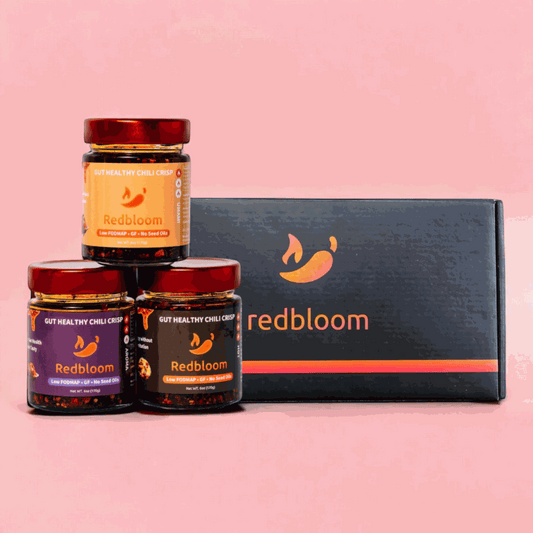
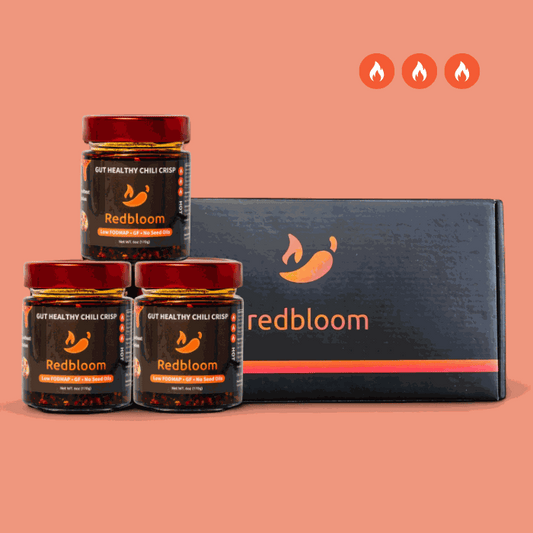
If you have a sensitive gut, you have probably noticed that even small dietary changes can feel like a gamble. Redbloom Chili Crisp was designed with exactly that challenge in mind. Capsaicin, the active compound in chili peppers, has been clinically studied for its potential to help reduce gut sensitivity over time through gradual, careful exposure to TRPV1 receptors in the gut lining. The problem with most traditional chili products is that they deliver too much capsaicin too fast, which can trigger discomfort before your gut has had any chance to adapt.
Redbloom addresses this by microencapsulating capsaicin in oleic acid sourced from avocado oil. That encapsulation acts as a protective cushion, slowing the release of capsaicin so it reaches your gut more gradually and gently. For people with sensitive digestive systems, that difference in delivery makes all the difference.
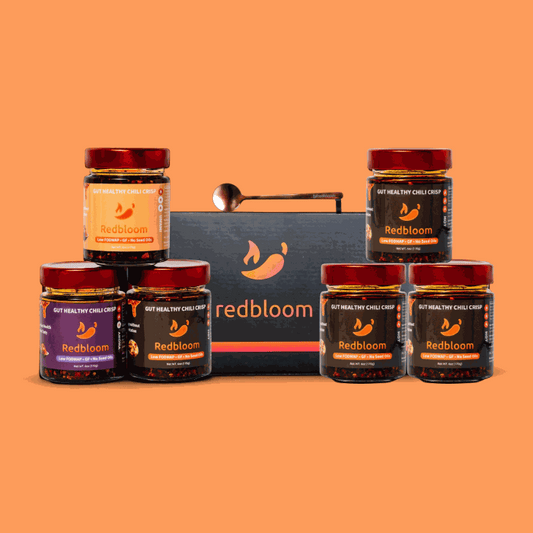
Redbloom uses a structured 3-phase protocol, starting with Mild Umami, then Medium Aroma, then Hot Dopamine, designed to help you build tolerance incrementally rather than all at once. It is a practical, structured way to work with your gut rather than against it, giving your system time to adapt at each stage before moving to the next level of heat.


Key Takeaways
- Probiotics are live beneficial bacteria; prebiotics are the fiber that feeds them. You need both.
- Prebiotics produce short-chain fatty acids that reduce gut inflammation and strengthen your intestinal lining.
- Combining prebiotics and probiotics (synbiotics) tends to produce more consistent gut benefits than either alone.
- You can boost prebiotic intake through everyday foods like oats, garlic, legumes, and green bananas.
- Start prebiotic-rich foods or supplements slowly to avoid temporary bloating as your gut bacteria adjust.
Frequently asked questions
Prebiotics vs probiotics: what is the difference in simple terms?
Probiotics are live beneficial bacteria that live in your gut and support digestion and immune health. Prebiotics are non-digestible fibers that feed those bacteria. Think of probiotics as the workers and prebiotics as their food supply. Both matter, and research suggests they work best when used together [9][6].
Can I just take a probiotic supplement without worrying about prebiotics?
You can, but you may get less benefit. Studies suggest that probiotic strains on their own sometimes struggle to shift gut bacteria composition in a meaningful way, while adding prebiotic fiber produces more consistent improvements [9]. Getting enough prebiotic-rich food in your diet helps your probiotic bacteria survive and do their job more effectively.
Which prebiotic foods are best for people with IBS?
Some of the most studied prebiotics, like inulin from garlic and onions, are also high-FODMAP, which can trigger IBS symptoms in some people. Lower-FODMAP prebiotic options that tend to be better tolerated include oats (beta-glucan), green banana resistant starch, and small amounts of cooked legumes. Working with a registered dietitian can help you find the right fit for your gut [4][9].
How long does it take for prebiotics to make a difference?
Research varies, but many studies observe meaningful shifts in gut bacteria composition within a few weeks of consistent prebiotic intake [8][10]. Gut symptoms like bloating or irregular bowel habits may take a similar timeframe to improve. Starting with small amounts and increasing gradually tends to produce a smoother experience.
What is a synbiotic, and should I take one?
A synbiotic is a product or dietary approach that combines both a prebiotic and a probiotic, designed so they work together. Research suggests synbiotics can help restore gut microbiome balance, increase short-chain fatty acid production, and reduce gut inflammation more effectively than either component alone [6][5]. Whether a supplement makes sense for you depends on your individual health situation, so it is worth discussing with a healthcare provider.
Are fermented foods a good source of probiotics?
Yes. Foods like yogurt, kefir, kimchi, sauerkraut, and miso contain live beneficial bacteria and are a well-recognized dietary source of probiotics [3]. Pairing them with prebiotic-rich foods in the same meal is a practical way to support both sides of the equation without relying entirely on supplements.
References
- Liu C, Cheung W, Li J, Chow S, Yu J, Wong S, et al. Understanding the gut microbiota and sarcopenia: a systematic review. Journal of Cachexia, Sarcopenia and Muscle 2021.
- Iyengar A, Ramadass B, Venkatesh S, Mak RH. Gut microbiota-targeted therapies in pediatric chronic kidney disease: gaps and opportunities. Pediatric nephrology (Berlin, Germany) 2026.
- Kumar D, Lal MK, Dutt S, Raigond P, Changan SS, Tiwari RK, et al. Functional Fermented Probiotics, Prebiotics, and Synbiotics from Non-Dairy Products: A Perspective from Nutraceutical. Molecular nutrition & food research 2022.
- Gui X, Wu L, Huang K, Zeng R, Zhao X, Yang A, et al. Can diets alleviate constipation and promote bowel movement? Exploring the underlying mechanisms of effects. Food research international (Ottawa, Ont.) 2025.
- Ganguly NK, Kalra S, Kapoor N, Rao P, Bakshi M. Reconsidering Obesity in India Through a Gut-Metabolic Lens: Mechanistic Insights and the Emerging Role of Synbiotics in Individuals with the Thin-Fat Phenotype. Advances in therapy 2026.
- Baheti R, Deshkar S, Jadhav S, Mule K, Jha A, Giram P, et al. Interplay of probiotics, prebiotics, synbiotics and postbiotics: a review of their therapeutic potential for gastrointestinal inflammation. Food research international (Ottawa, Ont.) 2026.
- Fu H, Chen Z, Teng W, Du Z, Zhang Y, Ye X, et al. Effects of fructooligosaccharides and Saccharomyces boulardii on the compositional structure and metabolism of gut microbiota in students. Microbiological research 2024.
- Mnisi CM, Dibakoane SR, Mpofu BI, Kumalo I, Sekano K, Mhlongo G, et al. Green banana resistant starch as a candidate prebiotic in poultry diets: Mechanisms, limitations, and prospects. Poultry science 2025.
- Viteri-Echeverría J, Andrés A, Calvo-Lerma J, Heredia A, García-Hernández J, Asensio-Grau A. In vitro screening of the impact of dietary prebiotic components, probiotic strains, and their symbiotic combinations on colonic microbiota in children with cystic fibrosis. Food & function 2024.
Medical disclaimer
Medical Disclaimer: This article is for informational purposes only and is not intended as medical advice. Always consult with a qualified healthcare provider before making dietary changes or if you have a medical condition.