Introduction
Love the burn of chili crisp on everything but find your gut paying the price by noon? You are not alone. Millions of people are curious about eating spicy food every day gut effects, especially those managing IBS or other digestive sensitivities. The short answer is: it depends heavily on dose, frequency, and how sensitive your gut nerves already are. This article walks you through what capsaicin actually does inside your digestive tract, why some people adapt beautifully while others flare, and what practical steps can help you find your personal sweet spot with spice.
What Is Capsaicin and How Does It Affect Your Gut?
Capsaicin is the active compound in chili peppers that creates the sensation of heat. It works by binding to a receptor called TRPV1 – think of TRPV1 as a smoke alarm wired into your gut lining. When capsaicin flips that switch, your nervous system reads it as burning heat, even though no actual tissue damage is happening. [4]
These TRPV1 receptors are found throughout your digestive tract, from your mouth all the way to your colon. When activated, they trigger the release of neuropeptides – chemical messengers that can speed up gut contractions, alter fluid secretion, and dial up pain sensitivity. [4, 10]
The key insight from research is that this response is highly dose-dependent. Low, consistent doses appear to produce very different outcomes than large, infrequent hits of heat. [4]
Why Eating Spicy Food Every Day Affects Your Gut
1) TRPV1 Activation and Gut Motility
Every time capsaicin binds to TRPV1 receptors in your intestinal wall, it can trigger faster muscle contractions along your digestive tract. This is why spicy food sometimes sends you rushing to the bathroom. Research suggests this effect is linked to the release of neuropeptides like substance P and CGRP, which ramp up gut movement and fluid secretion. [10] In mouse studies, higher capsaicin doses caused measurable rises in these neuropeptides alongside signs of intestinal inflammation, while lower doses did not produce the same damage. [5]
- Faster contractions can mean cramping or urgency.
- Neuropeptide release appears dose-dependent in animal models. [5]
2) Gastric Acid and Mucosal Protection
Here is something that surprises most people: at low doses, capsaicin may actually protect your stomach lining rather than harm it. A randomized study in 84 healthy human subjects found that low-dose capsaicin reduced basal stomach acid output and protected the gastric mucosa from injury caused by alcohol and anti-inflammatory drugs. [8] A separate rat study found that both acute and chronic capsaicin ingestion increased protective mucus in the stomach lining. [9]
- Low-dose capsaicin is associated with reduced stomach acid in human research. [8]
- Protective mucus production was observed in animal models. [9]
3) Gut Microbiota Shifts
Daily spice also interacts with the trillions of bacteria living in your colon. In mouse studies, capsaicin at varying doses altered populations of beneficial bacteria including Bifidobacterium, Lactobacillus, and Faecalibacterium, with the changes correlating to inflammatory outcomes at higher doses. [5] A broader review also identified short-chain fatty acid changes – compounds your gut bacteria produce that feed your colon lining – as a key mechanism linking chronic capsaicin consumption to gut adaptation. [10] It is worth noting these findings come from animal and review studies, so human data is still emerging.
- Microbiota shifts were dose-correlated in mouse studies. [5]
- Short-chain fatty acid changes may mediate gut adaptation. [10]
Common Symptoms to Watch For
If your gut is reacting poorly to daily spice, you might notice some of these signs:
- Burning or cramping in the upper or lower abdomen
- Urgent or loose stools shortly after eating
- Bloating and excess gas
- Nausea, especially with larger portions
- Heartburn or a burning sensation behind the breastbone
Why Some People Handle Daily Spice Better Than Others
If your friend eats chili crisp by the spoonful with zero consequences while you suffer after a single teaspoon, the difference likely comes down to TRPV1 sensitivity and gut nerve density.
Research found that people with IBS had a 3.5-fold increase in TRPV1-expressing nerve fibers in their gut compared to healthy controls, and that fiber density was directly correlated with abdominal pain scores. [6] In other words, IBS guts are literally wired with more pain-sensing receptors, making capsaicin feel much more intense.
The encouraging flip side is adaptation. A 17-day study in 51 healthy adults showed that repeated low-dose oral capsaicin significantly reduced perceived burn over time compared to a control group – a process called desensitization. [1] Your gut's alarm system can, with the right approach, be turned down gradually.
What the Science Says: Key Findings
Here are the most practically useful takeaways from the current research:
- Desensitization is real and measurable. In a 17-day human trial, consistent low-dose capsaicin exposure significantly reduced oral burn ratings, and the effect extended to other spicy compounds too. [1]
- The mechanism involves receptor adaptation. Research shows TRPV1 undergoes a roughly 14-fold shift in sensitivity through a process involving depletion of a membrane lipid called PIP2, allowing the receptor to adapt without changing its overall structure. [3] This is the molecular basis for building spice tolerance.
- IBS guts have more TRPV1 receptors. A biopsy study found significantly elevated TRPV1 nerve fibers in IBS patients, linked directly to pain intensity, suggesting this receptor is a meaningful driver of visceral hypersensitivity. [6]
- Dose is the deciding factor. A review of the evidence concludes that appropriate dose intake is generally associated with beneficial GI outcomes, while high-level chronic ingestion may worsen discomfort, particularly in people with pre-existing GI conditions. [4]
Immediate Relief Strategies
Already overdid it? These approaches may help calm things down:
- Dairy (milk or yogurt): Casein, the protein in dairy, can bind to capsaicin molecules and help clear them from your mouth and esophagus more quickly than water alone. This is commonly cited and practically useful.
- Eat a starchy base first: Rice, bread, or potatoes can dilute capsaicin in the stomach and slow its contact with the gut lining. Eating spice on an empty stomach tends to intensify the response.
- Avoid alcohol alongside spice: Research on gastric protection found that capsaicin and alcohol together were used specifically to model mucosal injury, suggesting this combination is particularly harsh on the stomach lining. [8, 9]
- Small sips of water or milk: Staying hydrated supports normal gut motility and can help move capsaicin through your system faster.
Long-Term Strategies to Reduce Sensitivity
Building genuine tolerance takes consistency, not willpower. Here is a practical framework:
- Start lower than you think you need to. The desensitization research used low doses consistently over time, not large amounts occasionally. [1] Begin with a small amount of mild heat and hold there until symptoms are stable before increasing.
- Keep a simple symptom log. Note what you ate, how much heat was involved, and how your gut felt 30 minutes to 3 hours later. Patterns become obvious quickly and help you find your personal threshold.
- Avoid stacking gut irritants. Combining spice with alcohol, NSAIDs (like ibuprofen), or very acidic foods creates a harsher environment for your gut lining, as seen in gastric protection research. [8, 9] On spicy days, keep everything else gentle.
- Support overall gut health. Adequate fiber, hydration, and stress management create a more resilient baseline. A calmer gut tolerates new challenges better.
How Redbloom Fits In
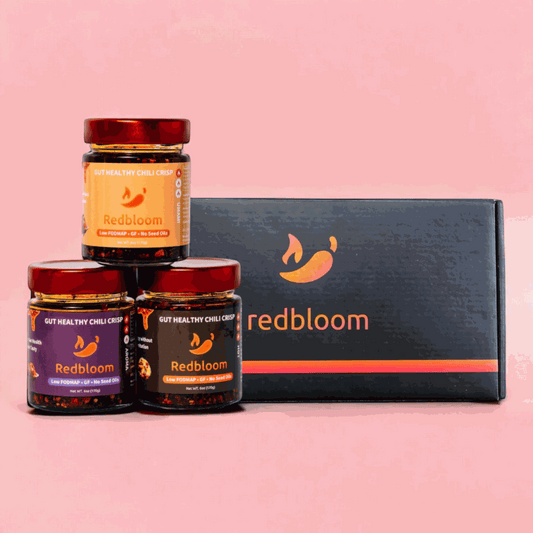
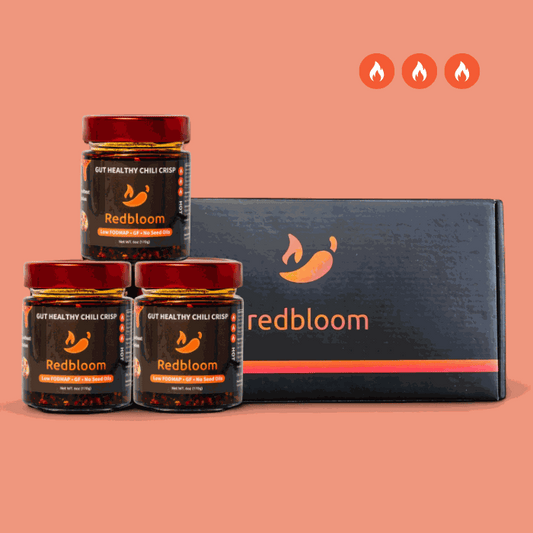
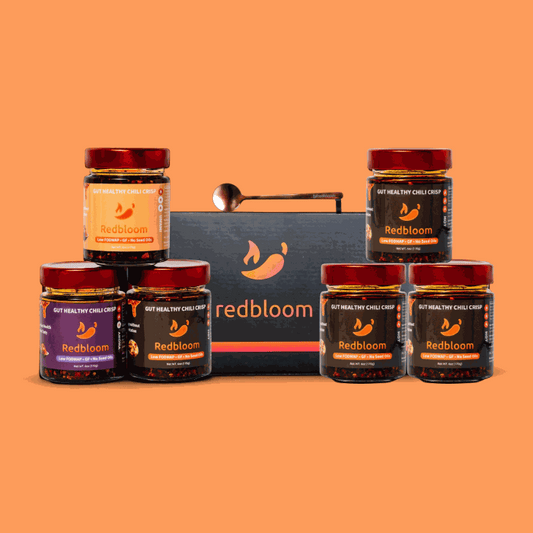
For those interested in building long-term gut resilience, Redbloom's chili crisp offers a unique approach. Capsaicin is clinically proven to reduce gut sensitivity, but traditional chili products can initially trigger flare-ups. Redbloom addresses this by microencapsulating capsaicin in oleic acid from avocado oil, creating a protective cushion that is gentler on sensitive guts. Our 3-phase protocol (Mild Umami → Medium Aroma → Hot Dopamine) is designed to gradually build tolerance, helping reduce gut hypersensitivity that underlies IBS symptoms.
FAQ
-
Is eating spicy food every day bad for your gut?
Not necessarily. Research suggests dose is the key variable. Low, consistent amounts are associated with protective effects in the stomach and gradual desensitization of gut nerve receptors. [4, 8] High doses, especially in people with IBS or other GI conditions, are more likely to cause discomfort or worsen symptoms. [4, 6] -
Why does spicy food hurt more when I have IBS?
Studies show that IBS patients have significantly more TRPV1-expressing nerve fibers in their gut compared to people without IBS, and that density is directly correlated with pain levels. [6] More receptors means more signals, which means more perceived pain from the same amount of capsaicin. -
Can you actually build a tolerance to spicy food?
Yes, and there is human trial data to support it. A 17-day study found that repeated low-dose capsaicin exposure significantly reduced burn perception over time, with the effect extending to other spicy compounds as well. [1] The key is consistent low-dose exposure, not occasional large amounts. -
Does spicy food damage your gut lining?
At low doses, research in humans and animal models actually points toward a protective effect, with capsaicin associated with reduced acid output and increased mucus production in the stomach. [8, 9] Higher doses in animal studies were linked to intestinal inflammation, which is why dose matters. [5] -
What should I eat with spicy food to protect my gut?
Pairing spice with starchy foods (rice, bread, potatoes) helps dilute capsaicin in the stomach. Dairy may help clear capsaicin from the esophagus. Avoiding alcohol and NSAIDs on spicy days also reduces the risk of mucosal irritation, based on gastric protection research. [8, 9]
Conclusion
Eating spicy food every day does not have to mean a daily battle with your gut. The research paints a nuanced picture: dose, consistency, and your baseline gut sensitivity all shape the outcome. If you have IBS or a sensitive digestive system, starting low and building gradually gives your gut's nerve receptors the chance to adapt. Small, steady steps tend to work far better than white-knuckling through a big bowl of heat and hoping for the best. Your gut can learn to love spice – it just needs a patient introduction.
Medical Disclaimer: This article is for informational purposes only and is not intended as medical advice. Always consult with a qualified healthcare provider before making dietary changes or if you have a medical condition.
Bibliography
- Nolden AA, Lenart G, Spielman AI et al. Inducible Desensitization to Capsaicin with Repeated Low-Dose Exposure in Human Volunteers. Physiology & Behavior (2024). https://doi.org/10.1016/j.physbeh.2023.114447
- Touska F, Marsakova L, Teisinger J, Vlachova V. A 'Cute' Desensitization of TRPV1. Current Pharmaceutical Biotechnology (2011). https://doi.org/10.2174/138920111793937826
- Yao J, Qin F. Interaction with Phosphoinositides Confers Adaptation onto the TRPV1 Pain Receptor. PLoS Biology (2009). https://doi.org/10.1371/journal.pbio.1000046
- Xiang Y, Xu X, Zhang T et al. Beneficial Effects of Dietary Capsaicin in Gastrointestinal Health and Disease. Experimental Cell Research (2022). https://doi.org/10.1016/j.yexcr.2022.113227
- Xiang Q, Tang X, Cui S et al. Capsaicin, the Spicy Ingredient of Chili Peppers: Effects on Gastrointestinal Tract and Composition of Gut Microbiota at Various Dosages. Foods (2022). https://doi.org/10.3390/foods11050686
- Akbar A, Yiangou Y, Facer P et al. Increased Capsaicin Receptor TRPV1-Expressing Sensory Fibres in Irritable Bowel Syndrome and Their Correlation with Abdominal Pain. Gut (2008). https://doi.org/10.1136/gut.2007.138982
- Szymaszkiewicz A, Wlodarczyk J, Wasilewski A, Di Marzo V, Storr M, Fichna J, Zielinska M. Desensitization of Transient Receptor Potential Vanilloid Type-1 (TRPV1) Channel as Promising Therapy of Irritable Bowel Syndrome: Characterization of the Action of Palvanil in the Mouse Gastrointestinal Tract. Naunyn-Schmiedeberg's Archives of Pharmacology (2020). https://doi.org/10.1007/s00210-020-01829-x
- Mozsik G, Szolcsanyi J, Racz I. Gastroprotection Induced by Capsaicin in Healthy Human Subjects. World Journal of Gastroenterology (2005). https://doi.org/10.3748/wjg.v11.i33.5180
- Kang JY, Teng CH, Wee A, Chen FC. Effect of Capsaicin and Chilli on Ethanol-Induced Gastric Mucosal Injury in the Rat. Gut (1995). https://doi.org/10.1136/gut.36.5.664
- Xiang Q, Guo W, Tang X et al. Capsaicin – the Spicy Ingredient of Chili Peppers: A Review of the Gastrointestinal Effects and Mechanisms. Trends in Food Science & Technology (2021). https://doi.org/10.1016/j.tifs.2021.12.026