What Is Gochujang (and What Is It Actually Made Of)?

What is gochujang, really? It's far more than a spicy condiment, it's a centuries-old fermented paste packed with bioactive compounds that researchers think may support your gut.
Introduction
If you've ever dipped into a Korean bibimbap or stirred a spoonful of deep-red paste into a marinade, you've probably encountered gochujang. But what is gochujang beyond that familiar heat and savory sweetness? At its core, it's a fermented red chili paste that has been a staple of Korean cooking for centuries, and its complexity goes far deeper than its flavor [1].
The four foundational ingredients are red chili peppers (Capsicum annuum), mejuFermented soybean blocks that serve as the microbial and enzymatic starter for gochujang, similar to how a sourdough starter works for bread., glutinous rice (which provides fermentable sugars), and salt. Each plays a distinct role. The chili delivers capsaicin and color. The meju brings the fermenting microbes and enzymes. The rice feeds those microbes and adds a subtle sweetness. The salt controls the pace of fermentation and keeps unwanted bacteria in check [2].
What makes gochujang genuinely interesting from a health standpoint is what happens after those ingredients come together. Fermentation is not just a preservation technique, it's a transformation. Over weeks or months, microbial activity converts raw starches, proteins, and fats into an entirely new set of compounds that your body interacts with differently than it would the original ingredients [1][2].
How Gochujang Is Made: The Fermentation Process
Making traditional gochujang is a multi-stage process that starts long before the chili paste itself comes together. It begins with meju, blocks of cooked soybeans that are shaped and left to ferment with naturally occurring molds and bacteria, primarily Aspergillus oryzae and Bacillus subtilis. Think of meju as the engine of the whole operation. Research shows that the timing of when Aspergillus oryzae is introduced to the meju significantly affects the concentration of free amino acids in the final paste, which in turn shapes both flavor and antioxidant potential [8].
Once the meju is ready, it's ground and blended with red chili powder, cooked glutinous rice, and salt. The resulting mixture is packed into large earthenware pots called onggi and left to ferment outdoors, sometimes for months or even years. During this time, a diverse community of microbes, including LactobacillusA genus of beneficial bacteria commonly found in fermented foods and the human gut, often associated with digestive and immune health., Weissella, Pediococcus, and the yeast Zygosaccharomyces rouxii, continue breaking down the paste and generating new bioactive compounds [1][3].
Studies using metabolomics (a method for mapping all the small molecules in a food) found that fermentation produces a striking variety of amino acids, fatty acids, and antioxidants that simply aren't present in the raw ingredients. Amino acids, in particular, appear to be the primary drivers of gochujang's antioxidant activity [10]. When combined starter cultures of Aspergillus oryzae and Bacillus velezensis are used, the resulting paste tends to show an even richer metabolite profile, more glucose, beneficial fatty acids like oleic and linoleic acid, and greater overall complexity [9].
Traditional vs. Commercial Gochujang
Not all gochujang on a supermarket shelf is the same thing. Traditional cottage-industry versions rely on naturally occurring microflora and longer fermentation times, producing a broader range of volatile flavor compounds and microbial diversity. Commercial versions use standardized starter cultures for consistency and speed. The trade-off is that commercial pastes can lack some of the microbial richness found in traditionally made batches, and some cottage-industry products have been found to carry contamination risks from Bacillus cereus, underscoring why quality sourcing matters [3].
What's Actually in Gochujang? Key Bioactive Compounds
The reason researchers keep coming back to gochujang is its unusually dense profile of bioactive compounds, molecules that interact with biological systems in ways that may benefit health. Here are the ones that show up most consistently in the research.
Capsaicin
This is the compound responsible for gochujang's heat. Capsaicin binds to TRPV1 receptorsSensory receptors found throughout the gut and nervous system that detect heat and pain signals, capsaicin activates them, which is why spicy food feels hot. throughout your gut, triggering a cascade of nerve signals. Researchers think that with careful, gradual exposure, this repeated activation may actually help desensitize those receptors over time, potentially reducing gut sensitivity rather than increasing it [1][2].
Isoflavones
These plant-based compounds come primarily from the soybean component of gochujang. During fermentation, bound isoflavones in soybeans are converted into free, non-glycoside forms that are more readily absorbed by the body. Studies link isoflavones to anti-inflammatory and antioxidant effects, and they seem to contribute to gochujang's potential benefits for metabolic health [2][5].
Polyphenols, Flavonoids, and Antioxidants
The type of red pepper used in gochujang influences how many polyphenols and flavonoids end up in the final paste. Research comparing five red pepper varieties found that certain cultivars, particularly those with higher inherent antioxidant content, produced gochujang with significantly greater polyphenol concentrations and stronger antioxidant activity over a 90-day fermentation period [4]. These compounds help neutralize free radicals, which are unstable molecules that can contribute to cellular damage over time.
Fermentation-Derived Amino Acids
Microbial enzymes during fermentation break down proteins into free amino acids, and metabolomics research suggests these amino acids are actually the biggest contributors to gochujang's overall antioxidant capacity, even more so than the polyphenols [10]. It's a reminder that fermentation isn't just about adding microbes; it's about what those microbes produce.
What Researchers Think Gochujang May Do for Your Gut
For anyone navigating IBS or general gut sensitivity, this is probably the section you've been waiting for. The honest answer is that research on gochujang and gut health is still developing, and most of the studies so far have been conducted in animal models rather than large human trials. That said, the early findings are genuinely interesting and worth understanding.
Animal studies using a standard model of gut inflammation found that gochujang seemed to suppress pro-inflammatory signals in the gut and help preserve the structural integrity of the intestinal lining [5][6]. Researchers attribute these effects to the synergistic action of capsaicin, isoflavones, and the fermentation-derived probiotic organisms present in the paste, not any single ingredient working alone.
On the microbiome side, gochujang's fermentation community includes several strains of bacteria associated with gut health, including Lactobacillus reuteri, which has been studied for its potential role in supporting colorectal health [7]. The broader microbial diversity in traditionally fermented gochujang may also help restore balance to a disrupted gut microbiome, though researchers are careful to note that this effect likely depends on how much live culture survives in the final product and how it's stored [1][2].
It's also worth noting that gochujang is a condiment, not a supplement. The amounts most people consume in a meal are meaningful but modest, and individual responses to fermented foods vary quite a bit. If you have a diagnosed gut condition, talking with a healthcare provider before making significant dietary changes is always the right move.
How Redbloom Helps
If you've been curious about capsaicin's potential gut benefits but find that traditional chili products leave you uncomfortable, you're not imagining things. The problem isn't capsaicin itself, it's the delivery. Most chili condiments flood your system with a large, fast dose of capsaicin all at once, which can overwhelm sensitive TRPV1 receptors before your gut has had any chance to adapt. That's the cycle that Redbloom Chili Crisp was specifically designed to break.
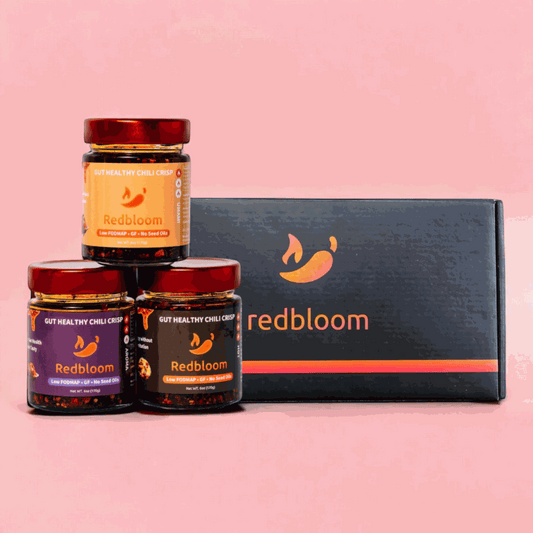
Redbloom microencapsulates capsaicin in oleic acid from avocado oil, creating a protective cushion around each capsaicin molecule. Instead of hitting your gut lining all at once, it releases gradually, giving sensitive systems a gentler, more manageable experience. Oleic acid is a monounsaturated fat that tends to be well-tolerated, and the encapsulation process means you can enjoy real chili flavor without the sharp spike that tends to trigger discomfort in people with gut sensitivity.
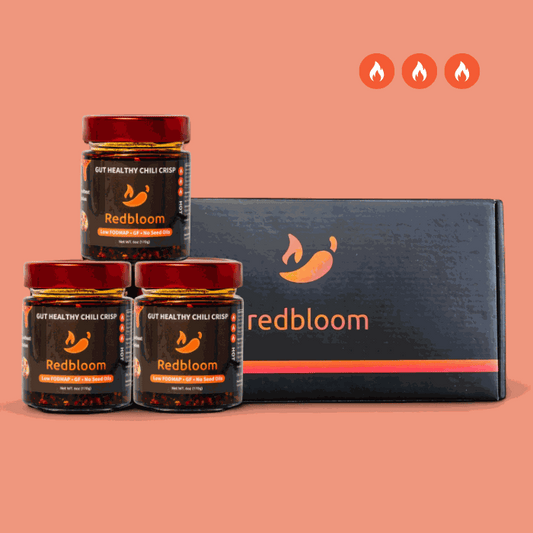
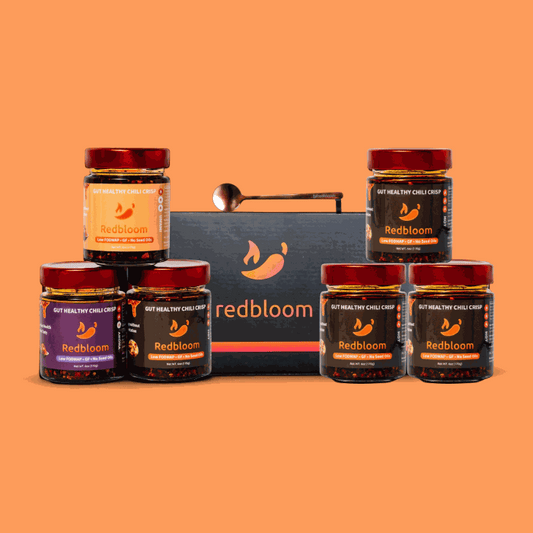
From there, Redbloom uses a structured 3-phase protocol: Mild Umami, then Medium Aroma, then Hot Dopamine. Rather than jumping straight to high heat, the protocol is designed to build your tolerance incrementally over time. Capsaicin is clinically shown to help reduce gut sensitivity through gradual, consistent exposure, the key word being gradual. The phased approach gives your TRPV1 receptors time to adapt at a pace that works for your body, making it a more sustainable way to bring the benefits of capsaicin into your routine.


Key Takeaways
- Gochujang is a fermented Korean paste made from red chili peppers, meju (fermented soybean blocks), glutinous rice, and salt, fermentation is what makes it nutritionally interesting.
- Key bioactive compounds include capsaicin, isoflavones, polyphenols, and fermentation-derived amino acids, which researchers think may support gut health and antioxidant defense.
- Early research suggests gochujang may help modulate the gut microbiome and reduce gut inflammation, though most studies so far are in animal models.
- Quality varies significantly between traditional and commercial versions, traditionally fermented gochujang tends to have greater microbial diversity.
- If you're sensitive to spice, the delivery method matters as much as the ingredient itself, gradual, structured exposure to capsaicin tends to be better tolerated than large, sudden doses.
Frequently asked questions
What is gochujang made of?
Gochujang is made from four core ingredients: red chili peppers, meju (fermented soybean blocks), glutinous rice, and salt. During fermentation, microbes including Aspergillus oryzae, Lactobacillus, and Bacillus subtilis transform these ingredients into a complex paste rich in capsaicin, isoflavones, amino acids, and antioxidants [1][2].
Is gochujang good for gut health?
Researchers think gochujang may support gut health through its fermentation-derived compounds, including capsaicin, isoflavones, and probiotic bacteria. Animal studies suggest it may help reduce gut inflammation and support a balanced gut microbiome [5][6]. That said, most evidence so far comes from animal models, and individual responses vary. If you have a diagnosed gut condition, consult a healthcare provider before making changes to your diet.
Is gochujang the same as chili paste or hot sauce?
Not quite. Unlike most hot sauces or simple chili pastes, gochujang is a fermented product with a complex flavor profile that includes sweetness, umami, and depth alongside heat. That fermentation process is what produces the bioactive compounds, capsaicin, isoflavones, and amino acids, that make gochujang nutritionally distinct from non-fermented chili condiments [1][2].
Does gochujang contain probiotics?
Traditional gochujang harbors a diverse community of live microbes during fermentation, including strains of Lactobacillus, Weissella, and Pediococcus [1][3]. Whether meaningful amounts of live cultures survive in commercially packaged gochujang depends on how it's processed and stored. Traditionally fermented varieties are more likely to retain microbial diversity than highly processed commercial versions.
Can people with IBS eat gochujang?
It depends on the individual. Capsaicin in gochujang activates TRPV1 receptors in the gut, which can trigger discomfort in people with visceral hypersensitivity, a common feature of IBS. However, some research suggests that gradual, low-dose capsaicin exposure may help desensitize those receptors over time [1][5]. Starting with very small amounts and monitoring your response is a reasonable approach. Always check with a healthcare provider if you have a diagnosed condition.
What's the difference between traditional and commercial gochujang?
Traditional gochujang is fermented in earthenware pots using naturally occurring microflora, producing greater microbial diversity and a broader range of volatile flavor and bioactive compounds. Commercial versions use standardized starter cultures for consistency and speed, which can result in a more uniform but potentially less complex product. Some cottage-industry traditional varieties have also been found to carry contamination risks, so sourcing from reputable producers matters [3].
References
- Park Y, Kim J, Ryu M, Yang H, Jeong D, Shin D. The Health Benefits and Functional Properties of Gochujang: A Comprehensive Review of Fermentation and Bioactive Compounds. Fermentation 2025.
- Jung S, Shin D. Gochujang, a Korean Traditional Fermented Soybean Product: History, Preparation and Functionality. Journal of Ethnic Foods 2024.
- Ramalingam S, Bahuguna A, Lim S, Joe AR, Lee JS, Kim SY, et al. Physicochemical, Microbial, and Volatile Compound Characteristics of Gochujang, Fermented Red Pepper Paste, Produced by Traditional Cottage Industries. Foods (Basel, Switzerland) 2022.
- Yang HJ, Lee YS, Choi IS. Comparison of Physicochemical Properties and Antioxidant Activities of Fermented Soybean-Based Red Pepper Paste, Gochujang, Prepared with Five Different Red Pepper (Capsicum annuum L.) Varieties. Journal of food science and technology 2018.
- Mahoro P, Moon H, Yang H, Kim K, Cha Y. Protective Effect of Gochujang on Inflammation in a DSS-Induced Colitis Rat Model. Foods 2021.
- Lee HY, Park YM, Shin DY, Hwang HM, Jeong H, Jeong SJ, et al. Gochujang, a Traditional Korean Fermented Food, Protects Through Suppressed Inflammatory Pathways and Histological Structure Disruption in Dextran Sodium Sulfate (DSS)-Induced Colitis Mice. Heliyon 2024.
- Seo EB, Oh SM, Han A. Gochujang Suppresses Cell Survival and Changes Reactive Oxygen Species Metabolism in Colorectal Cancer Cells. Food & nutrition research 2024.
- Kim H, Han S, Kim Y. Quality Characteristics of Gochujang Meju Prepared with Different Fermentation Tools and Inoculation Time of Aspergillus oryzae. Food Science and Biotechnology 2010.
- Gil NY, Jang YJ, Gwon HM, Jeong WS, Yeo SH, Kim SY. Comparative Evaluation of Quality and Metabolite Profiles in Meju Using Starter Cultures of Bacillus velezensis and Aspergillus oryzae. Foods (Basel, Switzerland) 2021.
- Lee DE, Shin GR, Lee S, Jang ES, Shin HW, Moon BS, et al. Metabolomics Reveal that Amino Acids Are the Main Contributors to Antioxidant Activity in Wheat and Rice Gochujangs (Korean Fermented Red Pepper Paste). Food research international (Ottawa, Ont.) 2016.
Medical disclaimer
Medical Disclaimer: This article is for informational purposes only and is not intended as medical advice. Always consult with a qualified healthcare provider before making dietary changes or if you have a medical condition.