Why Do People Have Different Spice Tolerance?

Why do people have different spice tolerance? It comes down to your genes, your gut bacteria, and a few surprising biological factors you probably haven't considered.
Your Genes Have a Lot to Say About It
If you've ever sat across from someone who happily downs ghost pepper wings while you're reaching for a glass of milk after a mild salsa, you've probably wondered what's going on. The short answer is that your body has a built-in heat sensor, and not everyone's is calibrated the same way.
That sensor is a protein called TRPV1A receptor protein found throughout your gut and nervous system that detects heat and capsaicin, sending a "burning" signal to your brain.. Think of it like a smoke detector. Some people's detectors go off at the first hint of smoke. Others need a full blaze before the alarm sounds. The difference often comes down to small variations in the gene that builds TRPV1.
Researchers have identified several of these genetic variants, and the evidence suggests they genuinely change how your body responds to capsaicin. One study found that people carrying a specific set of TRPV1 mutations were significantly less likely to react to high doses of capsaicin at all, because those mutations appear to reduce how active the receptor is [1]. A separate study showed that people with a particular variant called rs8065080 experienced noticeably less heat pain and burning sensation after capsaicin exposure compared to people without it [2]. And in a Japanese cohort, researchers found that people with two copies of a different variant were actually more sensitive to capsaicin than average [3].
A 2024 systematic review pulling together this body of evidence confirmed that TRPV1 genetic variation is one of the most consistent explanations for why capsaicin tolerance differs so much from person to person, and why studies on capsaicin's health effects sometimes produce contradictory results [4]. In other words, the science on spice isn't inconsistent because it's bad science. It's inconsistent because people are genuinely different at the genetic level.
Age, Sex, and the Biology of Heat Perception
Genes aren't the whole story. Research suggests that who you are biologically also shapes how you experience spice, in ways that have nothing to do with toughness or preference.
One study examining how people perceive capsaicin alongside other chemesthetic compounds (the category of sensations that includes spice, cooling, and astringency) found that men tended to be significantly less sensitive to capsaicin than women [9]. The researchers also found that older adults generally showed lower chemesthetic sensitivity overall, meaning the sharpness of spice perception tends to shift with age [9]. Whether that makes spice easier or harder to enjoy likely depends on the individual, but it does suggest your tolerance isn't static across your lifetime.
There's also a metabolic angle worth knowing about. A 2025 review noted that capsaicin is processed in the liver, and how efficiently your body breaks it down varies with sex, age, and genetic differences in liver enzyme activity [8]. So two people eating the same spicy meal may end up with very different amounts of active capsaicin circulating in their system, which could partly explain differences in both comfort and any downstream effects on the gut.
What Your Gut Bacteria Have to Do With It
Here's where things get interesting for anyone paying attention to gut health. Your gut microbiomeThe trillions of bacteria, fungi, and other microorganisms living in your digestive tract that influence digestion, immunity, and inflammation. doesn't just sit there while you eat spicy food. It actually interacts with capsaicin in ways researchers are still working to fully understand.
Animal studies have found that regular dietary capsaicin can increase populations of bacteria that produce butyrate, a short-chain fatty acid that helps nourish the gut lining and may support a calmer immune response [5]. An in vitro study using human fecal microbiota found similar signals: capsaicin treatment increased microbial diversity and elevated butyrate levels in the cultures [7]. A 2025 review described capsaicin as a compound that, in many contexts, seems to favor short-chain fatty acid producers while suppressing certain pro-inflammatory bacterial groups [8].
That said, context matters a great deal here. A study in type 1 diabetic mice found that capsaicin actually worsened gut microbiota disruption and increased intestinal permeability in that disease context [10]. So while capsaicin may offer microbiome benefits for many people, those effects are not universal, and they appear to depend heavily on the state of your gut going in. If your gut is already sensitized or compromised, the same compound that helps someone else could feel like the wrong tool at the wrong time.
The practical takeaway is that your microbiome composition may partly explain why you respond to spicy food the way you do, and why your tolerance can shift over time as your gut health changes.
Can You Actually Build Spice Tolerance?
The good news for spice lovers with sensitive guts is that tolerance isn't fixed. TRPV1 receptors can desensitize with repeated exposure, a process sometimes called receptor downregulation. Think of it like the way your eyes adjust when you walk into a bright room. At first it's overwhelming, but your system adapts. The same general principle seems to apply to capsaicin and your gut's heat sensors.
The key word is gradual. Flooding your system with heat all at once tends to produce discomfort rather than adaptation. But slow, consistent exposure at doses your gut can handle may, over time, raise your comfort threshold. This is part of why people who eat spicy food regularly often seem almost immune to heat that would floor a first-timer. Their receptors have had time to adjust.
For people with IBS or gut hypersensitivity, this process requires extra care. The goal isn't to push through pain but to find an entry point that's genuinely tolerable and build from there. That's a meaningful distinction, and it's one that shapes how thoughtfully designed spice products can differ from simply reaching for the hottest thing on the shelf.
How Redbloom Helps
If you have a sensitive gut and you've been curious about capsaicin's potential benefits but nervous about the aftermath, you're navigating a real tension. Capsaicin activates TRPV1 receptors and is clinically studied for its ability to help reduce gut sensitivity over time with careful, gradual exposure. The problem is that most traditional chili products deliver too much capsaicin too fast, which can trigger discomfort before your gut has a chance to adapt. That's not a willpower issue. It's a delivery issue.
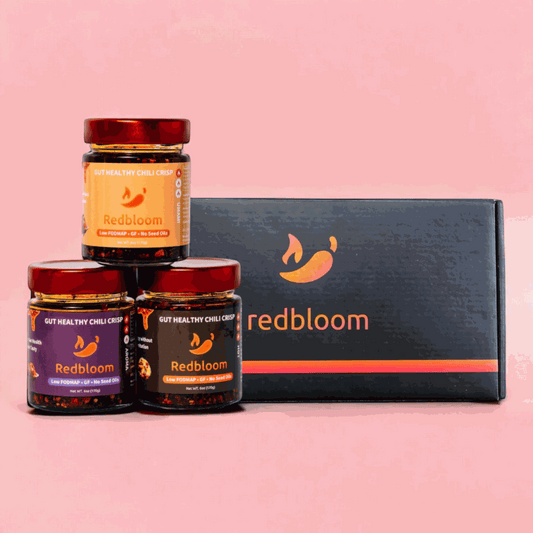
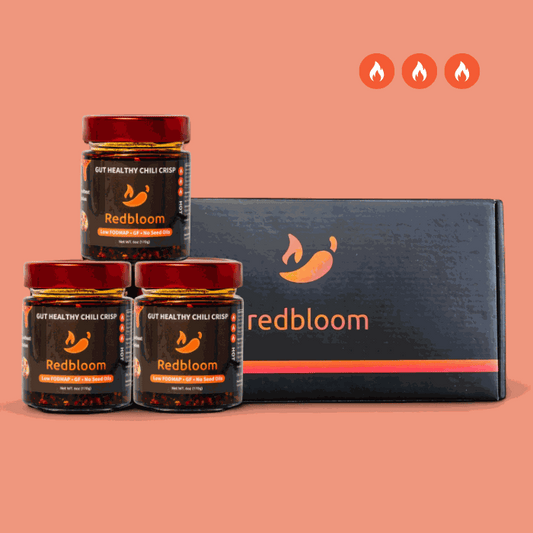
Redbloom Chili Crisp was designed with that challenge specifically in mind. Rather than hitting your gut with a concentrated burst of heat, Redbloom microencapsulates capsaicin in oleic acid from avocado oil. That encapsulation acts like a protective cushion, slowing the release and making the experience gentler on sensitive systems. It's a meaningful difference from simply drizzling standard chili oil on your food and hoping for the best.
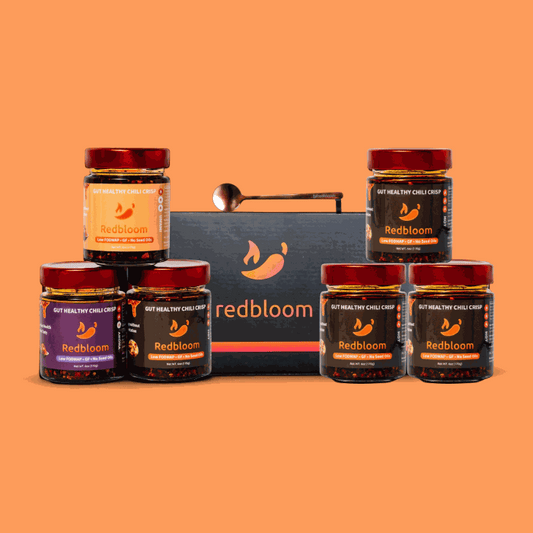
Redbloom also structures the experience as a 3-phase protocol: starting with Mild Umami, moving to Medium Aroma, and then progressing to Hot Dopamine. That sequencing isn't arbitrary. It mirrors the gradual exposure approach that researchers think gives the gut time to adapt without being overwhelmed. If you've wanted to work spice back into your life but haven't known where to start, that kind of structured progression gives your gut a real runway to build tolerance sustainably.


Key Takeaways
- TRPV1 gene variants are one of the clearest biological reasons why spice tolerance differs so much between people. Your receptor sensitivity may be partly set before you ever eat a chili pepper.
- Sex and age also influence capsaicin perception. Research suggests women tend to be more sensitive than men, and sensitivity can shift across your lifetime.
- Your gut microbiome interacts with capsaicin in ways that may support beneficial bacteria and butyrate production, but those effects depend heavily on your baseline gut health.
- Spice tolerance can be built over time through gradual, consistent exposure. Flooding your system with heat all at once tends to backfire, especially for sensitive guts.
- If you have IBS or gut hypersensitivity, a structured, low-and-slow approach to capsaicin is likely to serve you better than any all-or-nothing strategy.
Frequently asked questions
Why do people have different spice tolerance if we all have the same receptors?
Everyone has TRPV1 receptors, but not everyone's are built exactly the same way. Small genetic variations called SNPs (single nucleotide polymorphisms) can change how active those receptors are in response to capsaicin. Some variants make the receptor less responsive, so the person feels less heat. Others seem to amplify sensitivity [1][2][3]. On top of genetics, factors like sex, age, and even your gut microbiome composition all add additional layers of variation [4][9].
Is spice tolerance genetic or can it be learned?
Both, it seems. Your baseline sensitivity is partly shaped by the TRPV1 gene variants you were born with [4]. But TRPV1 receptors can desensitize with repeated exposure, meaning that gradual, consistent capsaicin intake may raise your comfort threshold over time. People who eat spicy food regularly tend to develop higher tolerance, which researchers think reflects genuine receptor adaptation rather than just psychological toughening up.
Why does spicy food bother my gut more than other people's?
A few things could be at play. If you have IBS or a sensitized gut, your TRPV1 receptors may already be in a heightened state, which makes capsaicin feel more intense than it would in a calmer system. Your specific TRPV1 gene variants may also make you more reactive to begin with [1][3]. Additionally, how your liver processes capsaicin varies with genetics, sex, and age, so the amount of active capsaicin your gut actually encounters after a spicy meal may differ from someone else eating the same dish [8].
Does spicy food affect gut bacteria?
Research suggests it can, though the direction of that effect seems to depend on your gut's starting point. Studies have found that capsaicin may increase populations of butyrate-producing bacteria and support microbial diversity in healthy contexts [5][7]. A 2025 review described capsaicin as tending to favor beneficial short-chain fatty acid producers [8]. However, at least one study in a disease model found that capsaicin worsened gut microbiota disruption rather than improving it [10], which is a reminder that these effects are not one-size-fits-all.
Are men and women affected by spicy food differently?
Research suggests yes. One study found that men were significantly less sensitive to capsaicin than women on average [9]. The reasons likely involve a combination of hormonal differences, variations in receptor expression, and differences in how capsaicin is metabolized in the liver, which appears to vary by sex [8]. Age also plays a role, with chemesthetic sensitivity (the category that includes spice perception) tending to shift as people get older [9].
Is it safe to eat spicy food if I have IBS?
It depends on your individual situation and where you are in your gut health journey. Some research suggests that gradual, low-dose capsaicin exposure may help desensitize gut receptors over time, which could be beneficial for some people with IBS. But starting with too much too fast often backfires. If you have IBS or a sensitive gut, it's worth talking to a healthcare provider before making significant changes to your spice intake. This article is for informational purposes only and is not medical advice.
References
- Sadofsky LR, Cantero-Recasens G, Wright C, Valverde MA, Morice AH. TRPV1 polymorphisms influence capsaicin cough sensitivity in men. Journal of thoracic disease 2017.
- Forstenpointner J, Förster M, May D, Hofschulte F, Cascorbi I, Wasner G, et al. TRPV1-polymorphism 1911 A>G alters capsaicin-induced sensory changes in healthy subjects. PloS one 2017.
- Okamoto N, Okumura M, Tadokoro O, Sogawa N, Tomida M, Kondo E. Effect of single-nucleotide polymorphisms in TRPV1 on burning pain and capsaicin sensitivity in Japanese adults. Molecular pain 2018.
- Gonzalez-Gil EM, Bueno-Lozano G, Moreno LA. Genetic Influence on Capsaicin Tolerance: Precision Nutrition Implications for Obesity Handling. Lifestyle Genomics 2024.
- Kang C, Wang B, Kaliannan K, Wang X, Lang H, Hui S, et al. Gut Microbiota Mediates the Protective Effects of Dietary Capsaicin against Chronic Low-Grade Inflammation and Associated Obesity Induced by High-Fat Diet. mBio 2017.
- Mahalak KK, Bobokalonov J, Firrman J, Williams R, Evans B, Fanelli B, et al. Analysis of the Ability of Capsaicin to Modulate the Human Gut Microbiota In Vitro. Nutrients 2022.
- Corral-Guerrero IA, Martínez-Medina AE, Alvarado-Mata LY, et al. Capsaicin as a Microbiome Modulator: Metabolic Interactions and Implications for Host Health. Metabolites 2025.
- Roukka S, Puputti S, Aisala H, Hoppu U, Seppä L, Sandell M. Factors explaining individual differences in the oral perception of capsaicin, l-menthol, and aluminum ammonium sulfate. Clinical and translational science 2023.
- Zhang X, Hu H, Zhang Y, Hu S, Lu J, Peng W, et al. Dietary Capsaicin Exacerbates Gut Microbiota Dysbiosis and Mental Disorders in Type 1 Diabetes Mice. Nutrients 2025.
Medical disclaimer
Medical Disclaimer: This article is for informational purposes only and is not intended as medical advice. Always consult with a qualified healthcare provider before making dietary changes or if you have a medical condition.