Why Do You Crave Spicy Food More the More You Eat It?
If you've ever wondered why do I crave spicy food more the more I eat it, the answer lives deep in your brain's reward circuitry.

Introduction
If you've ever finished a spicy bowl of noodles and immediately wanted another, you weren't imagining the pull. Researchers think that capsaicin, the active compound in chili peppers, may trigger a genuine reward response in your brain, not unlike the satisfaction you get from a great workout or your favorite song.
Here's how it seems to work. When capsaicin hits your tongue and gut, it binds to a receptor called TRPV1A heat-sensitive protein found throughout your mouth, gut, and nervous system that capsaicin activates, creating the sensation of burning heat.. That signal travels to a part of the brain called the ventral tegmental area, a key hub in the brain's reward circuit. Research in animals found that activating TRPV1 in this region increased the firing rate of dopamine-producing neurons and boosted dopamine release into the nucleus accumbens, the brain's main pleasure center [1]. In plain terms, eating spicy food may give your brain a small dopamine hit, the same chemical that makes you feel rewarded after doing something you enjoy.
A cell-culture study added more detail, finding that capsaicin stimulated dopamine release of roughly 646% and serotonin release of about 272% compared to untreated cells [5]. Those are striking numbers, and while lab conditions don't perfectly mirror what happens in a living body, the findings suggest that vanilloid compounds like capsaicin have a real capacity to move the brain's reward chemistry.
The Endorphin Effect: Why Spice Can Feel Like a Natural High
Alongside the dopamine response, capsaicin seems to activate a second reward pathway: your body's own opioid system. When TRPV1 receptors fire, the brain appears to respond by ramping up production of endorphinsNatural pain-relieving chemicals your body produces that work similarly to opioid medications, creating feelings of pleasure and relief., the same feel-good chemicals released during exercise. Research in rodents found that capsaicin significantly increased the expression of a gene that produces the precursor to beta-endorphin, suggesting the brain is actively making more of its own natural painkillers in response to the burn [3].
A study involving 300 adults and a separate neurophysiology experiment found that people who regularly ate spicy food reported lower pain sensitivity in daily life, and brain measurements showed reduced pain-related electrical activity after spicy treatment [10]. Researchers attributed part of this to the endorphin response following capsaicin-induced TRPV1 activation. In other words, the burn may actually feel good over time because your body learns to counter it with its own pleasure chemistry.
There's also a clinical angle worth noting. A study looking at spicy food preference and alcohol reward found that people who preferred spicy food showed distinct responses to an opioid-blocking drug called naltrexone, suggesting that the opioid pathway activated by capsaicin overlaps with the same reward system that reinforces other pleasurable behaviors [8]. It's a reminder that food cravings, including spicy ones, can be genuinely neurochemical, not just a matter of willpower.
Tolerance, Desensitization, and the Craving Escalation Cycle
Here's where things get especially interesting for anyone who has noticed their chili tolerance creeping upward over the years. The more often you eat spicy food, the less intense it tends to feel. That's not just your imagination. It's a biological process called desensitization, and it's one of the main reasons spicy food cravings can intensify over time.
When TRPV1 receptors are activated repeatedly, they gradually become less responsive. A computational model of this process showed that repeated capsaicin exposure depletes a molecule called PIP2, which is needed for TRPV1 to stay sensitive. As TRPV1 activity decreases, so does the endorphin response it triggers, meaning you need more capsaicin to get the same pleasurable feeling [9]. It's a tolerance loop that mirrors what happens with other rewarding experiences.
Interestingly, research also found that TRPV1 receptors in the brain's reward center can drive long-term changes in how reward signals are processed [2]. TRPV1 activation in the nucleus accumbens appears to dampen certain reward-related signals over time, which researchers think may push people toward seeking stronger stimulation to feel the same satisfaction. A separate study found that blocking TRPV1 dramatically reduced dopamine levels in the nucleus accumbens and weakened reward-seeking behavior in animals [4], further cementing TRPV1's role as a genuine player in the craving cycle.
One human study adds a nuanced layer: chronic capsaicin consumption didn't reduce the perceived burn in participants, but reward-seeking personality traits still predicted how much people liked and ate spicy food [6][7]. Researchers suggest that for habitual spice lovers, the craving may be driven more by the pleasure of seeking a reward than by a reduced ability to feel the heat. Both mechanisms likely play a role depending on the person.
What This Means for Your Gut Health
If you have IBS or a sensitive gut, this reward loop has a practical upside worth knowing about. The same TRPV1 desensitization that builds your spice tolerance also happens in your digestive tract. Over time, consistent low-to-moderate capsaicin exposure may gradually quiet overactive pain receptors in the gut lining, which tend to be overstimulated in people with IBS.
The key word is gradual. Jumping straight to high-heat foods when your gut is already reactive is likely to cause discomfort. But a slow, consistent approach, starting with small amounts of capsaicin and building up over weeks, may help retrain those receptors rather than inflame them. Think of it less like a spice challenge and more like a gentle recalibration.
It's also worth noting that the analgesic effect of capsaicin, meaning its ability to reduce pain perception, has been observed in neurophysiology research showing reduced brain responses to pain stimuli after spicy food intake [10]. For people dealing with the visceral discomfort that often accompanies IBS, that's a genuinely encouraging finding, even if it comes with the caveat that individual responses vary quite a bit.
How Redbloom Helps
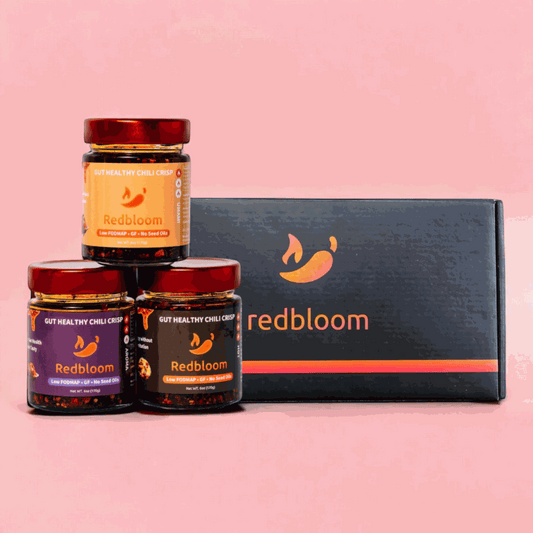
Understanding the science behind spicy food cravings is one thing. Finding a way to enjoy capsaicin that actually works with your gut is another. That's the idea behind Redbloom chili crisp, a gut-health-focused chili crisp built around the same capsaicin research discussed in this article.
For those interested in building long-term gut resilience, Redbloom Chili Crisp offers a unique approach. Capsaicin activates TRPV1 receptors, and is clinically proven to help reduce gut sensitivity over time with careful exposure. But traditional chili products often deliver too much capsaicin too fast, which can trigger discomfort before your gut has a chance to adapt.
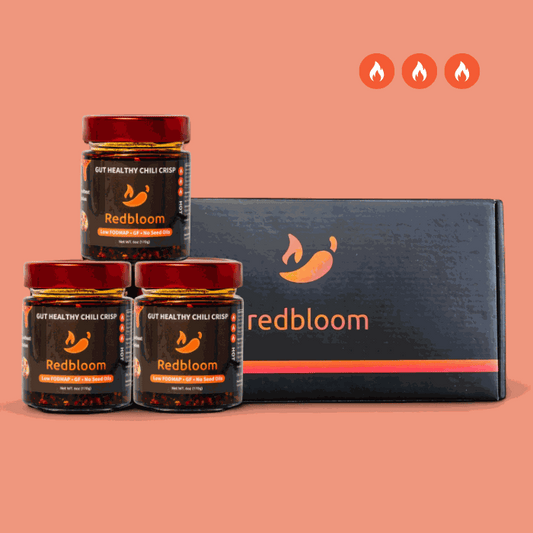
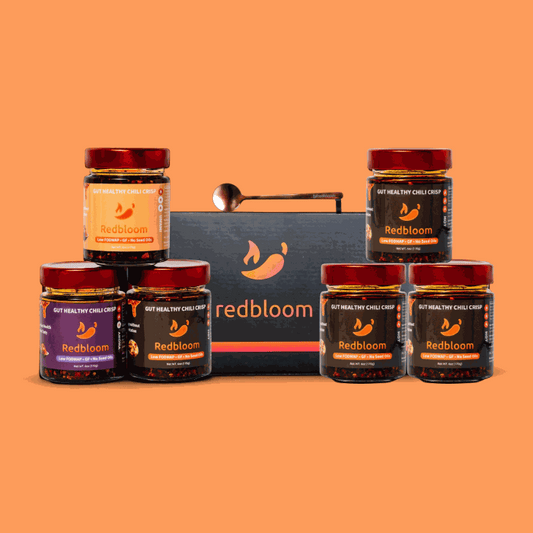
Redbloom addresses this by microencapsulating capsaicin in oleic acid from avocado oil, creating a protective cushion that's gentler on sensitive guts. Our 3-phase protocol (Mild Umami → Medium Aroma → Hot Dopamine) is designed to gradually build tolerance, helping reduce the gut hypersensitivity for those with sensitive guts.
Key Takeaways
- Capsaicin activates TRPV1 receptors that trigger dopamine release in the brain's reward center, which researchers think is a key driver of spicy food cravings.
- Your body also releases endorphins in response to capsaicin, creating a mild natural high that reinforces the habit of eating spicy food.
- Repeated exposure desensitizes TRPV1 receptors over time, meaning you may need progressively more heat to feel the same satisfaction, which can escalate cravings.
- Reward-seeking personality traits tend to predict strong spicy food preferences, suggesting the craving is partly about the pleasure of the experience itself.
- Gradual, consistent capsaicin intake may help desensitize overactive gut pain receptors in people with IBS, but a slow approach is important for sensitive digestive systems.
Frequently asked questions
Why do I crave spicy food even when I know it might upset my stomach?
The craving is likely neurochemical. Capsaicin activates TRPV1 receptors that trigger dopamine and endorphin release in the brain's reward system [1][3]. That reward signal can be strong enough to override the memory of discomfort, especially in people with naturally higher reward sensitivity [6]. Over time, the brain associates spicy food with pleasure, which keeps the craving alive even when your gut pushes back.
Does eating more spicy food actually make you crave it more?
It seems to, for most people. Repeated capsaicin exposure causes TRPV1 receptors to become less sensitive over time, a process called desensitization [9]. As the receptors respond less strongly, the endorphin and dopamine release that made spicy food feel good also decreases, so you tend to reach for more heat to recreate the same satisfying feeling. Research also suggests TRPV1 activity in the brain's reward center can drive longer-term changes in how reward signals are processed [2].
Is a spicy food craving similar to other food cravings or addictions?
There are real overlaps. TRPV1 receptors in the nucleus accumbens, the brain's pleasure hub, appear to play a role in reward-seeking behavior more broadly. Research found that blocking TRPV1 significantly reduced dopamine levels in the nucleus accumbens and weakened reward-driven behavior in animals [4]. The opioid pathway activated by capsaicin also overlaps with the reward system involved in other habitual behaviors [8]. That said, spicy food craving is generally mild compared to substance-related compulsions, and the research is mostly in animals so far.
Can spicy food actually help with pain or gut discomfort over time?
Research suggests it may, for some people. A study found that regular spicy food intake correlated with lower pain sensitivity, and brain measurements showed reduced pain-related electrical activity after capsaicin exposure [10]. The proposed mechanism involves endorphin release and gradual TRPV1 desensitization in pain-sensing nerves, including those in the gut. For people with IBS, slow and consistent low-dose capsaicin exposure is thought to be more helpful than occasional high-heat meals, but individual responses vary and it's worth checking with a healthcare provider before experimenting.
Why do some people crave spicy food more than others?
Personality and biology both seem to play a role. Studies found that people who score high on sensation-seeking and reward-sensitivity traits tend to like and eat more spicy food [6][7]. These traits are linked to how the dopamine system responds to novelty and reward. On the biological side, individual differences in TRPV1 receptor density and reactivity mean some people simply feel less burn from the same amount of capsaicin, making it easier and more enjoyable to eat spicy food regularly.
Is it safe to eat spicy food regularly if I have IBS?
It depends on the person and the amount. Some people with IBS find that spicy food triggers flares, particularly during periods of heightened gut sensitivity. Others tolerate it well or even find that gradual exposure helps over time. If you want to include spicy food in your routine, starting with small amounts and building slowly tends to be a safer approach than jumping in at high heat. Always check with your healthcare provider if you're unsure what's right for your specific situation.
References
- Marinelli S, Pascucci T, Bernardi G, Puglisi-Allegra S, Mercuri NB. Activation of TRPV1 in the VTA Excites Dopaminergic Neurons and Increases Chemical- and Noxious-Induced Dopamine Release in the Nucleus Accumbens. Neuropsychopharmacology : official publication of the American College of Neuropsychopharmacology 2005.
- Grueter BA, Brasnjo G, Malenka RC. Postsynaptic TRPV1 Triggers Cell Type-Specific Long-Term Depression in the Nucleus Accumbens. Nature neuroscience 2010.
- Lee JS, Kim SG, Kim HK, Baek SY, Kim CM. Acute Effects of Capsaicin on Proopioimelanocortin mRNA Levels in the Arcuate Nucleus of Sprague-Dawley Rats. Psychiatry investigation 2012.
- You IJ, Jung YH, Kim MJ, et al. Blockade of TRPV1 Inhibits Methamphetamine-Induced Rewarding Effects. Scientific Reports 2018.
- Rohm B, Holik A, Somoza M, Pignitter M, Zaunschirm M, Ley J, et al. Nonivamide, a Capsaicin Analog, Increases Dopamine and Serotonin Release in SH-SY5Y Cells via a TRPV1-Independent Pathway. Molecular Nutrition & Food Research 2013.
- Byrnes NK, Hayes JE. Personality Factors Predict Spicy Food Liking and Intake. Food quality and preference 2013.
- Byrnes NK, Hayes JE. Behavioral Measures of Risk Taking, Sensation Seeking and Sensitivity to Reward May Reflect Different Motivations for Spicy Food Liking and Consumption. Appetite 2016.
- Lee JS, Kim SG, Jeong HJ, Kim JH, Yang YH, Jung WY. Difference of the Naltrexone's Effects in Social Drinkers by Spicy Food Preference. Journal of Korean medical science 2014.
- Choy M, El Fassi S, Treur J. An Adaptive Network Model for Pain and Pleasure Through Spicy Food and Its Desensitization. Cognitive Systems Research 2021.
- He B, Shao M, Wu J, Wang J, Wei Z, Chen L, et al. The Analgesic Effect and Neural Mechanism of Spicy Food Intake. Social cognitive and affective neuroscience 2025.
Medical disclaimer
Medical Disclaimer: This article is for informational purposes only and is not intended as medical advice. Always consult with a qualified healthcare provider before making dietary changes or if you have a medical condition.