Why Does Spicy Food Speed Up Your Digestion?
Why does spicy food speed up digestion? The answer lives in your gut's alarm system, and understanding it can change how you eat.

The Gut Alarm System Behind the Rush
Why does spicy food speed up digestion? The short answer is that your gut is packed with tiny sensors called TRPV1 receptorsHeat-sensitive nerve receptors found throughout your digestive tract that respond to capsaicin as if it were actual heat or pain., and capsaicin knows exactly how to set them off.
Think of TRPV1 receptors like smoke detectors lining your digestive tract. Normally, they respond to genuine heat or injury. But capsaicin, the compound that makes chili peppers hot, fits into these receptors like a key in a lock, triggering the same alarm signal without any actual damage. Your gut's response is immediate: it speeds up muscle contractions, pushes contents along faster, and sometimes adds a surge of fluid to flush things through. The result, for a lot of people, is that very familiar sense of urgency.
This process happens all the way from your stomach to your colon. Researchers think the sudden flurry of nerve signals is what sets off the spasm, the cramping, and yes, the sprint to the bathroom. Spice tends to speed things up for a lot of people, which is part of why the after-burn shows up where it does.
Why IBS Makes Everything More Intense
If you have IBSIrritable bowel syndrome, a common gut condition involving cramping, bloating, diarrhea, or constipation without visible structural damage to the digestive tract., your gut's alarm system may already be running hot before you take a single bite of something spicy. Researchers call this visceral hypersensitivity, which is a fancy way of saying your gut nerves are more reactive than average. Signals that would feel mild to someone else can feel intense to you.
Studies suggest that people with IBS, particularly the diarrhea-predominant type known as IBS-D, tend to have higher levels of TRPV1 activity in their gut lining. So when capsaicin arrives, it's essentially pouring fuel on a fire that was already smoldering. The muscle contractions come faster, the pain signals are louder, and the urgency arrives sooner.
Research exploring treatments for IBS-D has highlighted how central gut muscle contractions and nerve hypersensitivity are to the condition's most disruptive symptoms [1]. The goal for many people isn't to avoid spice forever but to find ways to calm that overactive signaling so the gut can respond more proportionately.
The Diarrhea-Urgency Loop
Here's what tends to happen in sequence. Capsaicin activates TRPV1 receptors, your gut speeds up its contractions, water gets pulled into the intestine, and stool moves through faster than your body can absorb it properly. For someone with IBS-D, this loop can kick in at lower doses of spice and resolve more slowly than it would for someone without gut sensitivity. It's not a sign of permanent damage. It's your nervous system being, in a word, overzealous.
Can Your Gut Actually Adapt to Spice?
Here's the encouraging part: your gut's alarm system is not fixed. TRPV1 receptors can desensitize with repeated, low-level exposure to capsaicin. Think of it like adjusting to a cold shower. The first time feels shocking. By the fifth time, your body has recalibrated and the shock is much smaller.
Some researchers think this desensitization is why people who eat spicy food regularly tend to tolerate it better over time. Their TRPV1 receptors have been exposed often enough that they stop firing as aggressively. For people with IBS, this process may take longer and requires a more gradual approach, but the underlying biology suggests it's possible.
The key is consistency and patience. A small amount of capsaicin a few times a week, paired with gut-soothing foods, tends to work better than occasional large doses that overwhelm the system. Starting with milder chilies and slowly working up gives your gut time to adjust without triggering a full flare.
What This Means Practically
If you want to keep spice in your life without the urgency, a few habits seem to help most people:
- Start with a small amount of mild chili and wait a few days before increasing.
- Eat spicy food alongside starchy foods like rice or potatoes, which help buffer the effect.
- Avoid pairing spice with alcohol, very fatty meals, or acidic sauces, since these can amplify gut irritation.
- Track your symptoms for a week or two so you can spot your personal threshold.
How Redbloom Helps
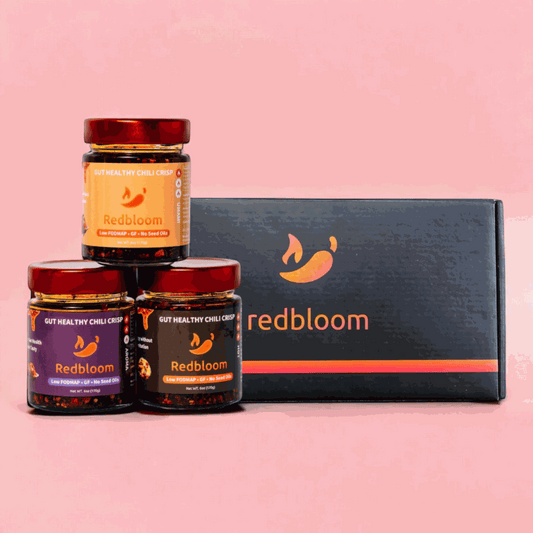
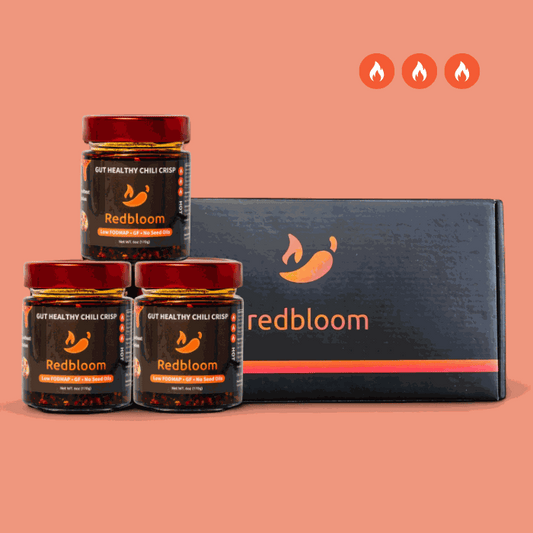
Most chili crisps are built for heat first and everything else second. Redbloom's gut health chili crisp takes a different approach, starting with the question of how to make spice feel good in your body, not just your mouth.
For those interested in building long-term gut resilience, Redbloom Chili Crisp offers a unique approach. Capsaicin activates TRPV1 receptors, and is clinically proven to help reduce gut sensitivity over time with careful exposure. But traditional chili products often deliver too much capsaicin too fast, which can trigger discomfort before your gut has a chance to adapt.
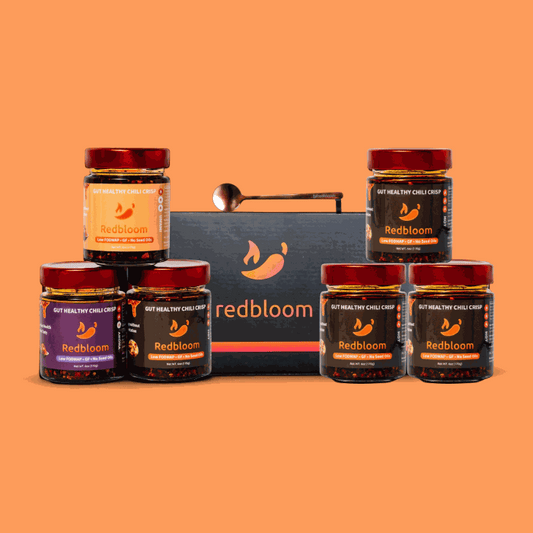
Redbloom addresses this by microencapsulating capsaicin in oleic acid from avocado oil, creating a protective cushion that's gentler on sensitive guts. Our 3-phase protocol (Mild Umami → Medium Aroma → Hot Dopamine) is designed to gradually build tolerance, helping reduce the gut hypersensitivity for those with sensitive guts.
Key Takeaways
- Capsaicin triggers TRPV1 receptors in your gut, speeding up muscle contractions and pushing digestion along faster, sometimes uncomfortably so.
- People with IBS tend to have more reactive gut nerves, which is why the same spicy meal can feel dramatically different from person to person.
- Gradual, consistent exposure to small amounts of capsaicin may help desensitize your gut over time, making spice more tolerable.
- Pairing spicy food with starchy foods, avoiding alcohol and heavy fats on spicy nights, and tracking your symptoms are practical ways to manage sensitivity.
- If spicy food consistently triggers severe symptoms, it's worth talking to a healthcare provider to rule out underlying conditions.
Frequently asked questions
Why does spicy food speed up digestion so fast for some people but not others?
It comes down to how reactive your TRPV1 receptors are. People with IBS or other gut sensitivities tend to have more active versions of these receptors, so capsaicin triggers a stronger, faster response. Genetics, gut microbiome composition, and stress levels can all influence how your gut responds to spice on any given day.
Is it bad for my gut if spicy food always sends me rushing to the bathroom?
For most people, the urgency is uncomfortable but not harmful. It reflects your gut's nervous system being overly responsive rather than any structural damage. That said, if it happens consistently and disrupts your daily life, it's worth speaking with a healthcare provider to explore whether IBS or another condition might be involved.
Can I build up a tolerance to spicy food if I have IBS?
Researchers think gradual, repeated exposure to low doses of capsaicin can desensitize TRPV1 receptors over time, even in people with IBS. The process tends to be slower for sensitive guts, so starting very small and increasing only when symptoms are calm is the approach most likely to work. Patience matters more than speed here.
What foods help counteract the urgency after a spicy meal?
Starchy foods like rice, bread, or potatoes can help buffer capsaicin's effect in the gut. Dairy products containing casein, such as yogurt or milk, may also help neutralize capsaicin. Avoiding alcohol and very acidic foods alongside spice tends to reduce the overall intensity of the reaction for most people.
Does the type of chili or oil matter for gut sensitivity?
It can. Capsaicin is fat-soluble, meaning the oil it's suspended in affects how it moves through your digestive tract. Heavier or lower-quality oils may cause more lingering irritation. Milder chilies deliver less capsaicin per bite, so starting with those and working up gradually gives your gut more time to adjust.
Should I avoid spicy food entirely if I have IBS-D?
Not necessarily. Research into IBS-D focuses heavily on calming overactive gut contractions and nerve sensitivity rather than eliminating triggers altogether [1]. Many people with IBS-D find they can tolerate small, consistent amounts of spice once they identify their threshold. Working with a registered dietitian who specializes in IBS can help you figure out what works for your gut specifically.
References
Medical disclaimer
Medical Disclaimer: This article is for informational purposes only and is not intended as medical advice. Always consult with a qualified healthcare provider before making dietary changes or if you have a medical condition.