Introduction
Love the complex heat of jalapeños but can't handle a single ghost pepper? Wonder why bell peppers sit fine while cayenne sends you running to the bathroom? You're experiencing the fascinating world of different peppers digestive effects. The main culprit is capsaicin, the compound that gives peppers their kick. But here's the thing: not all peppers pack the same punch, and not all guts react the same way. This article breaks down why some peppers torch your digestive system while others barely register, plus practical strategies to enjoy spice without the aftermath. [1,4,6]
What Is Capsaicin and How Does It Affect Your Digestive System?
Capsaicin is the natural compound that makes chili peppers hot. It binds to TRPV1 receptors, which are heat and pain sensors scattered throughout your mouth, stomach, and intestines. When activated, these receptors send "burning" signals to your brain, even though no actual tissue damage occurs. [1]
Animal studies suggest capsaicin has biphasic effects, with potential benefits at low doses and tissue irritation at very high doses [1]. These thresholds have not been established for human dietary intake.
- TRPV1 activation: Sends intense heat signals that your brain interprets as burning [1]
- Gut motility changes: May speed up intestinal transit and alter gastric emptying [4,5]
- Inflammation response: Animal studies show higher doses can trigger inflammatory responses in gut tissues [1]
Why Different Peppers Trigger Varying Gut Reactions
1) Capsaicin Concentration Levels
Different pepper varieties contain vastly different amounts of capsaicin. Bell peppers have zero capsaicin, while ghost peppers can contain over 1 million Scoville heat units. This concentration directly impacts how intensely your gut reacts. [1]
- Higher capsaicin levels mean more TRPV1 receptor activation [1]
- Concentrated doses can overwhelm your digestive system's tolerance [1]
2) Delivery Method and Bioavailability
How capsaicin reaches your gut matters enormously. Rat studies show that lipid-based formulations significantly increase capsaicin bioavailability compared to free capsaicin. Oil-based preparations can delay release and lengthen intestinal transit time, leading to more intense and prolonged effects. [2,7]
- Oil-based chili products may hit harder than fresh peppers [2,7]
- Enhanced absorption means longer-lasting digestive effects [2]
3) Individual Gut Sensitivity Variations
Animal studies demonstrate that capsaicin can normalize abnormal intestinal motility through regulation of enteric motor neurons. However, this same mechanism can trigger symptoms in people with sensitive guts or existing digestive conditions. [6]
- People with IBS may experience amplified responses [6]
- Gut health status influences capsaicin tolerance [6]
Common Symptoms of Pepper-Induced Digestive Distress
Different peppers can trigger a range of digestive symptoms that may appear immediately or hours after eating:
- Burning sensation in the stomach or throat
- Cramping and abdominal pain
- Urgent diarrhea or loose stools
- Bloating and gas
- Nausea or reflux symptoms
Why Some People Handle Spicy Peppers Better
Genetic Factors and Receptor Sensitivity
Some people naturally have fewer or less reactive TRPV1 receptors, which means they experience less intense burning sensations from capsaicin. This genetic variation explains why your spice-loving friend can demolish habaneros while you struggle with mild salsa.
Existing Digestive Conditions
Research indicates that people with functional gastrointestinal disorders may have heightened sensitivity to capsaicin. Conditions like IBS, GERD, or gastritis can amplify your reaction to even mild peppers. [6]
Adaptation Through Gradual Exposure
Studies suggest that regular, controlled exposure to capsaicin can desensitize TRPV1 receptors over time. This adaptation process may help build tolerance, but it requires consistency and patience.
What the Science Says: Key Research Findings
Recent research reveals important insights about how different peppers affect digestive health:
Dose-dependent effects: Animal studies suggest capsaicin has biphasic effects, with potential benefits at low doses and tissue irritation at very high doses [1]. These thresholds have not been established for human dietary intake.
Enhanced delivery systems: Research demonstrates that oil-water emulsions and specialized formulations significantly improved capsaicin bioavailability while reducing gastric irritation compared to free capsaicin. [3,7]
Motility regulation: Animal studies show capsaicin can have dual regulatory effects on intestinal motility, potentially normalizing both abnormal relaxation and contraction responses through enteric motor neuron regulation. [6]
Multiple pepper effects: Research on red, green, and black pepper varieties in guinea pigs found that all significantly increased intestinal transit, showing that both capsaicin and piperine affect gut motility. [5]
Immediate Relief Strategies
When a pepper hits your gut harder than expected, these tactics may help reduce discomfort:
- Dairy products: Milk, yogurt, or ice cream contain casein proteins that can help neutralize capsaicin
- Starchy foods: Rice, bread, or crackers can help absorb and dilute the burning compounds
- Sugar solutions: A spoonful of sugar or honey may help counteract the burning sensation
- Antacids: Over-the-counter options can help neutralize stomach acid if reflux occurs
Long-Term Strategies to Build Pepper Tolerance
1) Gradual Exposure Protocol
Start with mild peppers like poblanos or banana peppers, then slowly work your way up the heat scale. Increase spice levels only when your current tolerance feels comfortable.
2) Choose Pepper Preparation Carefully
Research suggests that delivery method significantly impacts capsaicin's effects. Consider that oil-based preparations may be more intense than fresh peppers due to enhanced bioavailability. [2,7]
3) Support Overall Gut Health
Maintaining good digestive health through stress management, adequate fiber intake, and proper hydration may improve your overall tolerance to spicy foods.
How Redbloom Fits In
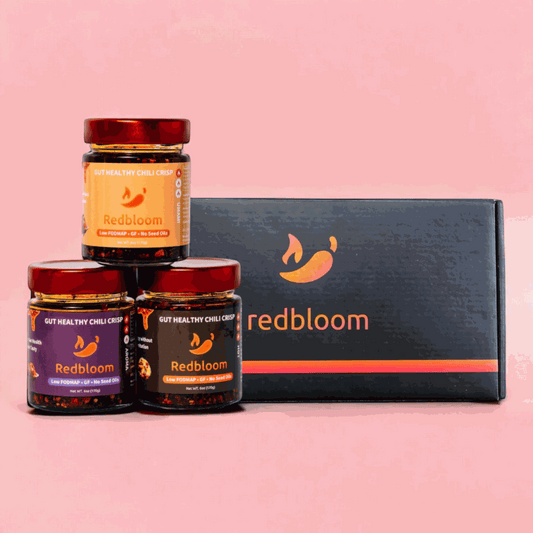
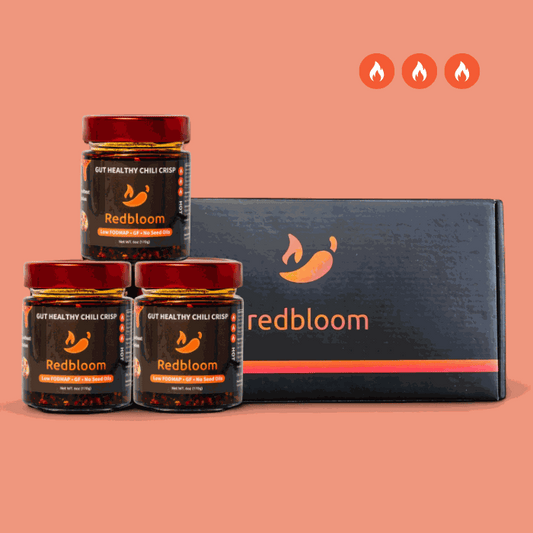
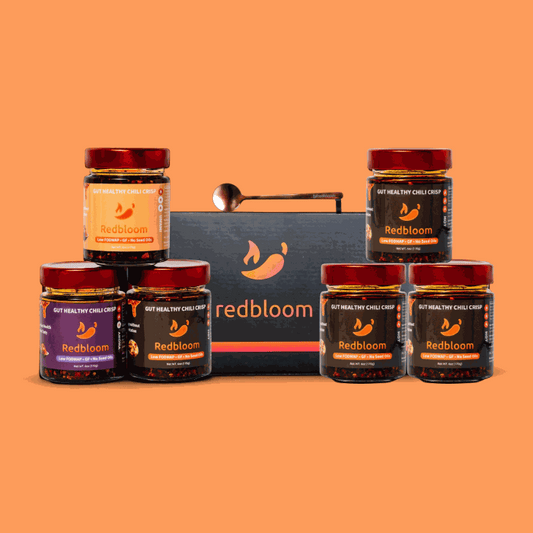
For those interested in building long-term gut resilience, Redbloom's chili crisp offers a unique approach. Capsaicin is clinically proven to reduce gut sensitivity, but traditional chili products can initially trigger flare-ups. Redbloom addresses this by microencapsulating capsaicin in oleic acid from avocado oil, creating a protective cushion that's gentler on sensitive guts. Our 3-phase protocol (Mild Umami → Medium Aroma → Hot Dopamine) is designed to gradually build tolerance, helping reduce gut hypersensitivity that underlies IBS symptoms.
FAQ
1) Why do some peppers cause diarrhea while others don't?
The capsaicin concentration and your individual sensitivity determine the response. Research shows that capsaicin affects intestinal motility, potentially speeding up transit time and causing loose stools. Higher-heat peppers contain more capsaicin, making diarrhea more likely. [4,5]
2) Are oil-based chili products worse for sensitive stomachs?
Rat studies suggest that lipid formulations can increase capsaicin bioavailability, potentially making oil-based products more intense. However, some research also shows that certain oil formulations may reduce gastric irritation compared to free capsaicin. [2,3,7]
3) Can I build tolerance to spicy peppers safely?
Research indicates that gradual exposure may help desensitize receptors over time. Start with mild varieties and slowly increase heat levels only when comfortable. Listen to your body and back off if symptoms worsen.
4) Do cooked peppers affect digestion differently than raw ones?
Cooking may slightly reduce capsaicin concentration and can break down some compounds, potentially making peppers easier to tolerate. However, the effect varies by pepper type and cooking method.
5) Why do I react differently to peppers on different days?
Your gut sensitivity can fluctuate based on stress levels, overall gut health, what else you've eaten, and hormonal changes. These factors can make the same pepper feel more or less intense on different occasions.
Conclusion
Understanding why different peppers have varying digestive effects comes down to capsaicin concentration, delivery method, and your individual gut sensitivity. By starting with milder varieties, choosing preparation methods wisely, and building tolerance gradually, you can expand your spice horizons without sacrificing digestive comfort. Remember that everyone's gut is different, so find what works for your unique system and enjoy the journey.
Medical Disclaimer: This article is for informational purposes only and is not intended as medical advice. Always consult with a qualified healthcare provider before making dietary changes or if you have a medical condition.
Bibliography
[1] Xiang Q, Tang X, Cui S, Zhang Q, Liu X, Zhao J, Zhang H, Mao B, Chen W. Capsaicin, the Spicy Ingredient of Chili Peppers: Effects on Gastrointestinal Tract and Composition of Gut Microbiota at Various Dosages. Foods (2022). DOI: 10.3390/foods11050686
[2] Kawada T, Hagihara K et al. Bioavailability of a Capsaicin Lipid Multi-particulate Formulation in Rats. European Journal of Drug Metabolism and Pharmacokinetics (2021). DOI: 10.1007/s13318-021-00697-x
[3] Lu M, Cao Y et al. Development of Organogel-Derived Capsaicin Nanoemulsion with Improved Bioaccessibility and Reduced Gastric Mucosa Irritation. Journal of Agricultural and Food Chemistry (2016). DOI: 10.1021/acs.jafc.6b01095
[4] Gonzalez R, Dunkel R et al. Effect of Capsaicin-Containing Red Pepper Sauce Suspension on Upper Gastrointestinal Motility in Healthy Volunteers. Digestive Diseases and Sciences (1998). DOI: 10.1023/A:1018831018566
[5] Ogbonna J, Okoro O et al. Effects of Red, Green and Black Pepper on Intestinal Motility and Post-Prandial Bicarbonate Concentration in Guinea Pigs. EAS Journal of Nutrition and Food Sciences (2024).
[6] Chen L, Wang L et al. Capsaicin Alleviates Abnormal Intestinal Motility Through Regulation of Enteric Motor Neurons and MLCK Activity. Molecular Nutrition & Food Research (2015). DOI: 10.1002/mnfr.201500039
[7] Rahman M, Khan S et al. A Comprehensive Review of Capsaicin: Biosynthesis, Industrial Productions, Processing to Applications, and Clinical Uses. Food Science & Nutrition (2024). DOI: 10.1002/fsn3.4567