Why Spicy Food Can Cause Diarrhea and What It Means
Diarrhea after spicy food is not just bad luck. Here is what the science says about why it happens and what you can actually do about it.

What Actually Happens in Your Gut When You Eat Spicy Food
Diarrhea after spicy food has a very specific biological explanation, and it starts with a receptor you have probably never heard of. Scattered throughout your gut lining are tiny sensors called TRPV1A heat-sensitive nerve receptor found throughout the digestive tract that capsaicin binds to, triggering a burning or pain signal. receptors. Their normal job is to detect dangerously hot temperatures and signal pain so you pull away from harm. Capsaicin, the active compound in chili peppers, is chemically shaped in a way that fits perfectly into these receptors and triggers them even at room temperature. Your gut does not know the difference between a bowl of hot soup and a spoonful of chili crisp. It just knows something is burning, and it responds accordingly [8].
That response tends to look like this: the gut speeds up its contractions to move the irritant through as quickly as possible, fluid secretion increases to flush things along, and the whole system goes into a kind of high-alert mode. Researchers think this sudden flurry of nerve signals is what drives the cramping and urgency many people feel after a spicy meal [7]. The capsaicin does not actually damage your gut lining in the way a cut damages skin. For most people, it is more of a sensory false alarm, one that feels very real but passes once the capsaicin clears your system.
The rectum and lower colon seem to be especially packed with TRPV1 receptors, which may explain why the urgency and burning tend to show up right at the end of the process [7]. Studies in healthy volunteers have found that red chili can induce rectal hypersensitivity even in people without any underlying gut condition, suggesting this is a normal human response rather than a sign something is broken [3].
Why People with IBS React So Much More Intensely
If you have IBSIrritable bowel syndrome, a common gut condition characterized by abdominal pain, bloating, and altered bowel habits without visible structural damage., you have probably noticed that spicy food hits you harder than it seems to hit everyone else at the table. There is a real biological reason for that, and it is not just a lower pain tolerance. Research has found that people with IBS actually have a higher density of TRPV1-expressing nerve fibers in their gut lining compared to people without IBS, and the level of that increase correlates directly with how much abdominal pain they report [6]. In other words, the more of these receptors you have, the louder the alarm bell rings when capsaicin shows up.
One study compared what happened when IBS patients with diarrhea-predominant symptoms ate a chili-containing meal versus a spice-free meal. The spicy meal triggered significantly more severe abdominal pain and burning in the IBS group than in healthy volunteers, even though the oral burning sensation was about the same for both groups. The researchers interpreted this as evidence that the gut itself in IBS patients is hypersensitive to capsaicin, not just the mouth [1]. That distinction matters because it means the problem is not about being a wimp about spice. It is about having a nervous system in your gut that is genuinely running hotter than average.
Serotonin signaling may also play a role here. Studies suggest that 5HT-3 receptors, which are part of your gut's serotonin system and already implicated in IBS-D, interact with capsaicin-sensitive nerve pathways in the rectum [3]. This may help explain why diarrhea-predominant IBS tends to be particularly reactive to spice, since both the capsaicin pathway and the serotonin pathway seem to amplify each other's effects.
The Surprising Case for Not Giving Up Spice Entirely
Here is where the story gets more interesting. The same receptor system that causes all this trouble also has a built-in off switch. TRPV1 receptors can desensitize, meaning that with repeated, moderate exposure to capsaicin, they gradually stop firing as loudly. Think of it like living next to a train track. The first week, every train jolts you awake. A month later, you barely notice. Your gut can undergo a similar kind of adaptation [8].
A randomized controlled trial tested this directly in IBS-D patients. Participants took chili capsules three times a day before meals for six weeks. By the end of the study, postprandial abdominal burning had decreased significantly, and the threshold at which the rectum registered discomfort had increased compared to placebo. The researchers concluded that chronic chili ingestion was desensitizing TRPV1 receptors in both the upper gut and the rectum [2]. A separate clinical trial in functional dyspepsia patients found a similar pattern: five weeks of red pepper powder reduced the intensity of symptoms compared to placebo, likely through the same desensitization mechanism [9].
Animal research adds some mechanistic support, showing that sustained TRPV1 activation eventually causes the receptor to become less responsive to further stimulation, and that this cross-desensitization can extend to other types of gut stimuli as well [10]. Researchers think this is why gradual capsaicin exposure, rather than avoiding it entirely, may be a more useful long-term strategy for people with sensitive guts [5]. The catch is that the exposure has to be gradual. Flooding a hypersensitive gut with heat tends to make things worse before they get better, which is why the dose and the delivery method matter enormously.
How Redbloom Helps
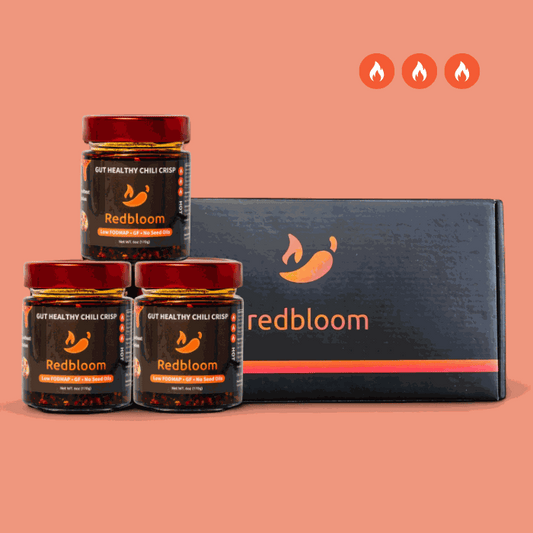
If you have a sensitive gut and you have been told to avoid spicy food, the research above probably feels both hopeful and a little frustrating. The potential is real, but the path there is narrow. Traditional chili products, whether a jar of chili crisp, a bottle of hot sauce, or a spoonful of chili flakes, tend to deliver a large, unpredictable dose of capsaicin all at once. For a gut that is already running on high alert, that kind of hit can trigger the exact discomfort you are trying to move past, before your TRPV1 receptors ever get the chance to adapt. Redbloom Chili Crisp was designed specifically with this problem in mind.
The difference starts with how the capsaicin is delivered. Redbloom microencapsulates capsaicin in oleic acid sourced from avocado oil, which creates a protective cushion around the active compound. Instead of hitting your gut lining all at once, the capsaicin releases more gradually as it moves through your digestive system. For people with visceral hypersensitivity, that slower, gentler release makes a meaningful difference in how the gut responds, giving your receptors a chance to register the signal without going into full alarm mode.
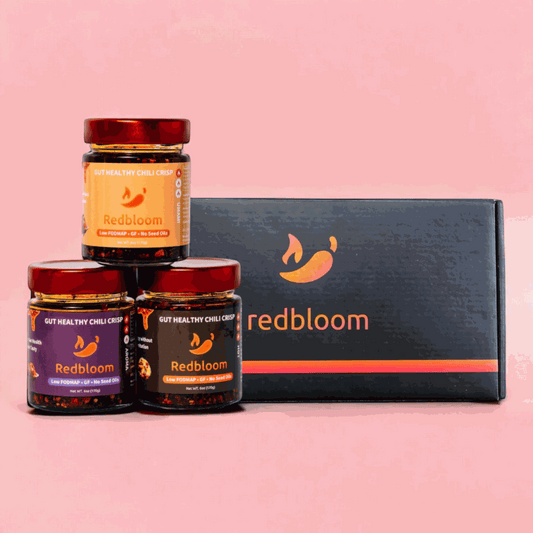
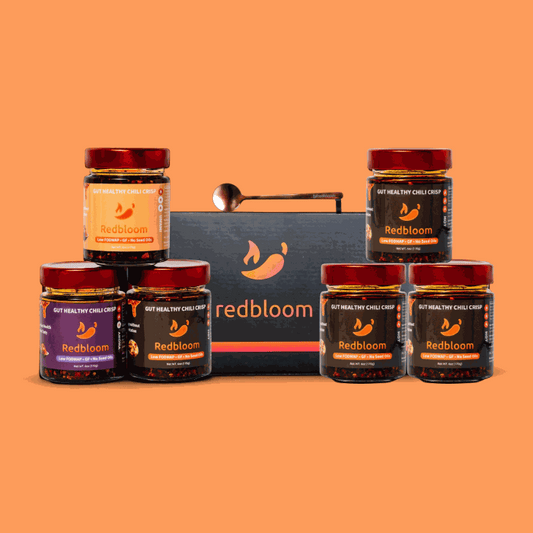
Redbloom also takes a structured approach to building tolerance over time through a three-phase protocol: Mild Umami first, then Medium Aroma, then Hot Dopamine. Each phase is designed to introduce a slightly higher level of capsaicin exposure as your gut adjusts, mirroring the kind of gradual desensitization that clinical research shows helps reduce gut hypersensitivity. Rather than asking your gut to handle everything at once, the protocol gives it a chance to adapt at a pace that is more likely to lead somewhere sustainable.


Key Takeaways
- Capsaicin binds to TRPV1 receptors in your gut, speeding up contractions and increasing fluid secretion, which is why diarrhea after spicy food is such a common experience.
- People with IBS have a higher density of TRPV1 receptors in their gut lining, which researchers believe makes them significantly more sensitive to capsaicin than people without IBS.
- Clinical trials suggest that gradual, consistent capsaicin exposure may desensitize TRPV1 receptors over time and reduce gut hypersensitivity, but the key word is gradual.
- Pairing spice with starchy foods, starting with mild heat, and building exposure slowly are practical strategies that may help your gut adapt without triggering a flare.
- If spicy food consistently causes severe or prolonged symptoms, it is worth talking to a healthcare provider to rule out underlying conditions that may need targeted care.
Frequently asked questions
Why do I always get diarrhea after spicy food but my friends are fine?
It likely comes down to how many TRPV1 receptors you have in your gut and how reactive they are. Research has found that people with IBS have significantly more of these capsaicin-sensitive nerve fibers than people without the condition, and the difference correlates with how much pain they report [6]. Even among healthy people, individual variation in receptor density and serotonin signaling means some guts are simply more responsive to capsaicin than others [3]. It is not a willpower issue. It is biology.
Is diarrhea after spicy food a sign that spice is damaging my gut?
For most people, probably not. Capsaicin triggers a strong sensory response in the gut, but researchers generally describe this as a nerve signaling event rather than structural damage. Your gut speeds up to move the irritant through, which causes the urgency and loose stools, but the lining itself is typically not harmed in the way a physical injury would be [1]. That said, if you are experiencing frequent or severe symptoms, it is worth checking in with a healthcare provider to make sure nothing else is going on.
Can I actually build up a tolerance to spicy food if I have IBS?
Research suggests you may be able to, with the right approach. A randomized controlled trial found that IBS-D patients who took chili capsules before meals for six weeks experienced significantly less abdominal burning and a higher rectal pain threshold by the end of the study, compared to those taking a placebo [2]. The mechanism seems to be TRPV1 desensitization, where repeated moderate exposure gradually quiets the receptor's response. The critical factor is that the exposure needs to be gradual and consistent. Jumping straight to high heat tends to worsen symptoms rather than build tolerance.
How long does it take for spicy food symptoms to go away after eating?
It varies depending on how much capsaicin you consumed and how sensitive your gut is. For most people, symptoms tend to resolve within a few hours as the capsaicin moves through and clears your system. Pairing spicy food with starchy foods like rice or bread may help slow the transit of capsaicin and reduce the intensity of symptoms. Dairy products containing casein can also help neutralize capsaicin in the upper digestive tract. If symptoms persist for more than a day or two, that is worth discussing with a healthcare provider.
Are some spicy foods easier on the gut than others?
Yes, and the delivery method seems to matter as much as the heat level. Oil-based chili products tend to be gentler than vinegar-heavy hot sauces for people who are also prone to reflux or upper GI discomfort, since high acidity can compound irritation. Lower-heat peppers like poblanos or mild paprika offer flavor with less capsaicin load. And how you eat spice matters too: a small amount of chili mixed into a starchy dish is likely to be easier on your gut than the same amount eaten on its own [1].
Should I avoid spicy food entirely if I have IBS-D?
Not necessarily, though it depends on where you are in managing your symptoms. During an active flare, cutting back on spice makes sense while your gut is already inflamed and reactive. Once symptoms are more stable, research suggests that a gradual reintroduction may actually help reduce sensitivity over time rather than make things worse [2][5]. The goal for most people is not permanent elimination but finding the dose and format that your gut can handle without triggering a reaction. Working with a registered dietitian who specializes in IBS can help you figure out what that looks like for you specifically.
References
- Gonlachanvit S, Mahayosnond A, Kullavanijaya P. Effects of chili on postprandial gastrointestinal symptoms in diarrhoea predominant irritable bowel syndrome: evidence for capsaicin-sensitive visceral nociception hypersensitivity. Neurogastroenterology and motility 2009.
- Aniwan S, Gonlachanvit S. Effects of Chili Treatment on Gastrointestinal and Rectal Sensation in Diarrhea-predominant Irritable Bowel Syndrome: A Randomized, Double-blinded, Crossover Study. Journal of neurogastroenterology and motility 2014.
- Gonlachanvit S, Fongkam P, Wittayalertpanya S, Kullavanijaya P. Red chili induces rectal hypersensitivity in healthy humans: possible role of 5HT-3 receptors on capsaicin-sensitive visceral nociceptive pathways. Alimentary pharmacology & therapeutics 2007.
- Patcharatrakul T, Gonlachanvit S. Chili Peppers, Curcumins, and Prebiotics in Gastrointestinal Health and Disease. Current gastroenterology reports 2016.
- Akbar A, Yiangou Y, Facer P, Walters JR, et al. Increased capsaicin receptor TRPV1-expressing sensory fibres in irritable bowel syndrome and their correlation with abdominal pain. Gut 2008.
- Matsumoto K, Kurosawa E, Terui H, Hosoya T, Tashima K, Murayama T, et al. Localization of TRPV1 and contractile effect of capsaicin in mouse large intestine: high abundance and sensitivity in rectum and distal colon. American journal of physiology. Gastrointestinal and liver physiology 2009.
- Capasso R, Aviello G, Borrelli F, Romano B, et al. Desensitization of transient receptor potential vanilloid type-1 (TRPV1) channel as promising therapy of irritable bowel syndrome: characterization of the action of palvanil in the mouse gastrointestinal tract. Pain 2010.
- Bortolotti M, Coccia G, Grossi G, Miglioli M. The treatment of functional dyspepsia with red pepper. Alimentary pharmacology & therapeutics 2002.
- Blackshaw LA, Gebhart GF. Acute effects of capsaicin on gastrointestinal vagal afferents. Journal of the Peripheral Nervous System 2002.
Medical disclaimer
Medical Disclaimer: This article is for informational purposes only and is not intended as medical advice. Always consult with a qualified healthcare provider before making dietary changes or if you have a medical condition.