Why Spicy Food Cravings Mean More Than You Think

Introduction
Ever caught yourself reaching for hot sauce even when you know it might not end well? You're not alone, and it turns out the psychology of why you crave spicy food runs a lot deeper than just liking bold flavors. Your brain is actively involved, and the same reward circuits that drive other powerful urges are part of the story.
This article breaks down the neuroscience behind spicy cravings, what your personality might have to do with it, why tolerance builds over time, and what it all means for your gut health. Whether you have IBS or just a curious mind, this one's for you.
What Is Capsaicin and How Does It Affect Your Brain?
Capsaicin is the compound in chili peppers that creates heat. It works by binding to TRPV1 receptors – sensors your body uses to detect heat and pain – found not just in your mouth and gut, but also in your brain's reward regions. [3]
When capsaicin activates those receptors, your brain doesn't just register "ouch." It also triggers a cascade of feel-good neurochemicals. Research shows that TRPV1 receptors are expressed in reward-related brain areas including the nucleus accumbens and dorsal striatum, regions central to motivation and pleasure. [3]
So that satisfying rush after a spicy bite? It has a real neurological basis.
Why Spicy Food Triggers a Reward Response
1) Dopamine Release in the Brain's Reward Circuit
Capsaicin activates TRPV1 receptors in the ventral tegmental area (VTA) – think of this as the brain's reward headquarters. One study found that capsaicin increased the firing rate of dopamine neurons in the VTA and induced bursting behavior in 44% of tested cells, directly linking capsaicin exposure to dopamine release in the nucleus accumbens. [1]
- Dopamine is the brain's "want more" signal – it drives motivation and craving. [1]
- This pathway is the same one involved in other rewarding experiences. [3]
2) Serotonin and Additional Neurochemical Pathways
It's not just dopamine. Research on capsaicin-like compounds found that they can also stimulate serotonin release in neural cells, suggesting that spice may lift mood through more than one neurochemical route. [2]
- Serotonin is associated with mood regulation and a sense of well-being. [2]
- This effect appeared to work through a pathway independent of TRPV1, meaning the brain response to capsaicin-like compounds may be broader than previously thought. [2]
3) Natural Endorphin Release
Spicy food also appears to trigger your body's own painkiller system. Research suggests that consuming spicy food may elevate beta-endorphin concentrations, the same endorphins released during exercise, and engage reward-motivation mechanisms in the brain. [7]
- Beta-endorphins bind to opioid receptors in the nucleus accumbens, contributing to the pleasurable "spicy food high." [6, 7]
- This may partly explain why spicy food can feel almost addictive for some people. [6]
Common Signs Your Craving Has a Neurological Hook
- You need progressively hotter food to get the same satisfaction
- Mild spice no longer feels exciting or rewarding
- You crave spicy food specifically when stressed or emotionally low
- The anticipation of eating something spicy feels almost as good as eating it
Why Some People Crave Spice More Than Others
Here's where personality comes in. Research suggests that sensation seeking and reward sensitivity – not just taste preference – play a meaningful role in who craves spicy food most. People who are drawn to novelty and feel rewards more intensely may be more susceptible to capsaicin's dopamine-driven pull. [9]
One study found that risk-taking and reward sensitivity may reflect distinct psychological motivations behind spicy food liking versus actual intake, suggesting the psychology is more layered than a simple "thrill seeker" label. [8]
Genetics also matter. Some people have fewer or less reactive TRPV1 receptors, meaning the same chili hits them with less intensity – and less reward. [1, 3] That's why one person's "comfortably warm" is another person's "call the fire department."
What the Science Says: Key Findings
The research on spicy food cravings and the brain is genuinely interesting. Here are some of the clearest takeaways:
- Capsaicin directly activates dopamine neurons. One study showed that microinjecting capsaicin into the VTA transiently increased dopamine release into the nucleus accumbens, the brain's core reward zone. [1]
- A distinct group of dopamine neurons express TRPV1. Research identified a subpopulation of dopamine neurons in the medial VTA that carry the capsaicin receptor, suggesting a direct anatomical basis for spice-driven motivation. [5]
- Tolerance builds through a specific mechanism. Computational modeling research found that repeated capsaicin exposure reduces TRPV1 sensitivity over time, which may require increasingly spicy food to achieve the same endorphin release and pleasure – a plausible explanation for craving escalation. [10]
- Spicy food may have analgesic effects. Research in human volunteers suggests that spicy food intake is associated with changes in pain sensitivity, potentially mediated by beta-endorphin release and opioid receptor engagement. [6]
Immediate Strategies If Cravings Are Causing Gut Trouble
If your spicy cravings are writing checks your gut can't cash, these strategies may help in the short term.
- Pair with dairy. Casein protein in milk and yogurt can help wash capsaicin away from receptors, reducing the burn sensation quickly.
- Add carbs to the meal. Rice, bread, or potatoes help dilute heat and slow capsaicin's contact with your gut lining.
- Time your spice intake. Avoid spicy food on an empty stomach or right before bed, when your gut is more reactive.
- Start smaller. If you're chasing the reward but dreading the aftermath, a smaller portion can still trigger the dopamine response without overwhelming your digestive system.
Long-Term Strategies to Build a Healthier Relationship with Spice
- Gradual exposure. Research on TRPV1 desensitization suggests that slow, consistent capsaicin exposure can reduce receptor sensitivity over time, which may actually improve gut comfort rather than worsen it. [10] Start mild and increase gradually, only when symptoms are calm.
- Understand your craving triggers. If you reach for spicy food when stressed or emotionally flat, that's a signal the dopamine reward loop is driving the choice. [1, 9] Building awareness of this pattern gives you more control over it.
- Support overall gut health. Stress management, adequate fiber, and hydration all influence how your gut handles capsaicin. A resilient gut is better equipped to enjoy spice without suffering for it.
When to See a Doctor
Spicy cravings are usually harmless, but sometimes they signal something worth investigating. Talk to a healthcare provider if you experience:
- Persistent abdominal pain that doesn't resolve after eating
- Blood in stool or unexplained weight loss
- Severe cramping, vomiting, or diarrhea after every spicy meal
- Symptoms that are worsening over time despite dietary adjustments
- Signs of compulsive eating patterns tied to spicy food
How Redbloom Helps
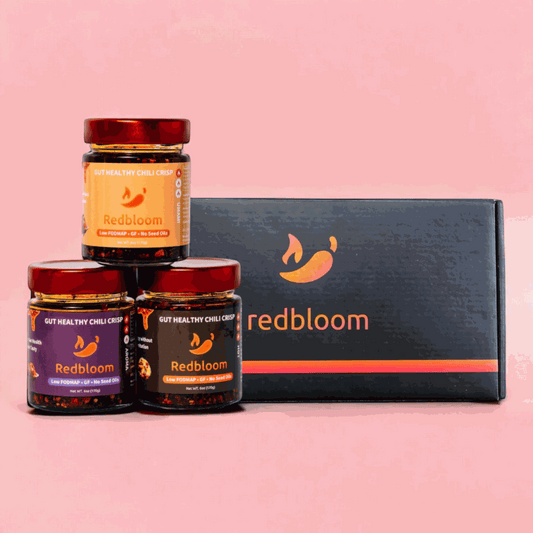
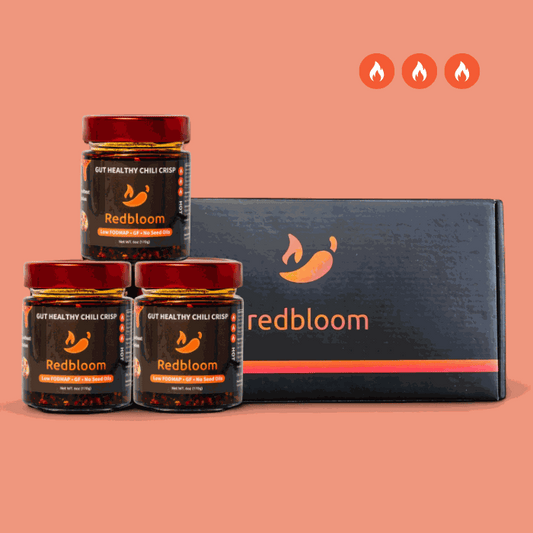
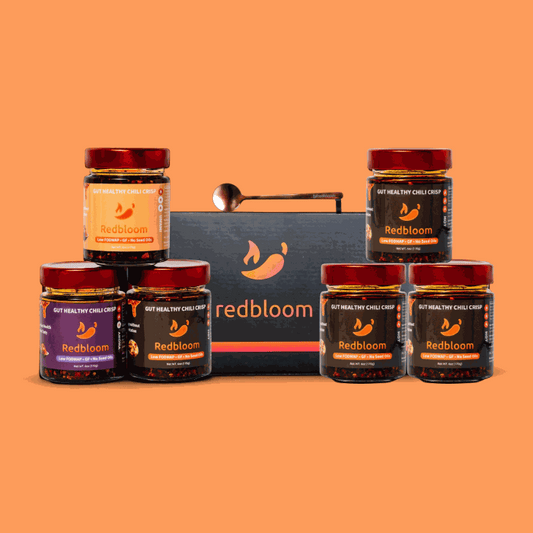
This is exactly the challenge that Redbloom Chili Crisp was designed around. Capsaicin is clinically proven to help reduce gut sensitivity over time through TRPV1 desensitization, but the problem with most traditional chili products is that they deliver too much capsaicin too fast. That spike can trigger discomfort before your tongue or your gut has had any chance to adapt.
Redbloom addresses this by microencapsulating capsaicin in oleic acid from avocado oil, creating a protective cushion that releases more gradually and tends to be gentler on sensitive systems. Instead of a sudden flood of heat, you get a more measured exposure that gives your receptors time to respond without being overwhelmed.
The product is also built around a 3-phase protocol: Mild Umami, then Medium Aroma, then Hot Dopamine. The idea is to move through increasing heat levels progressively, letting your tolerance build the way the research suggests it should, one manageable step at a time. For people with IBS or gut hypersensitivity who want to work spice back into their lives, that kind of structured, gradual approach tends to make the process feel a lot more sustainable.


Frequently asked questions
Why do I crave spicy food when I'm stressed?
Stress may push your brain to seek dopamine hits, and capsaicin is one way to get them. Research shows that capsaicin activates the brain's mesolimbic reward pathway, the same system involved in mood and motivation, which may make spicy food feel especially appealing when you're emotionally depleted. [1, 3]
Why does spicy food feel so satisfying even when it hurts?
That paradox has a neurological explanation. Research suggests spicy food may trigger beta-endorphin release, your body's natural painkiller, while simultaneously activating dopamine reward circuits. [6, 7] The pain and the pleasure are literally part of the same loop.
Why do I need hotter and hotter food over time?
Tolerance builds because repeated capsaicin exposure reduces TRPV1 receptor sensitivity through a process involving receptor desensitization. [10] Your brain needs more stimulation to get the same endorphin and dopamine response, which may drive craving escalation.
Is craving spicy food a personality thing?
Partly, yes. Research suggests that personality traits like sensation seeking and reward sensitivity are linked to stronger spicy food preferences, and that the dopamine response to capsaicin may underpin this connection. [8, 9] But genetics and gut sensitivity also play a role.
Can people with IBS still enjoy spicy food?
Potentially, with the right approach. Visceral hypersensitivity – where gut nerves become overly reactive – can make spicy food more uncomfortable for people with IBS. Gradual exposure, careful portioning, and protective delivery methods may help build tolerance over time without triggering flares.
Conclusion
Your spicy food cravings aren't a quirk or a weakness – they're your brain's reward system doing exactly what it's designed to do. Capsaicin taps into dopamine, endorphins, and serotonin pathways in ways that feel genuinely good. [1, 7] Understanding the psychology behind why you crave spicy food gives you real power: to enjoy it more intentionally, build tolerance gradually, and keep your gut in the conversation. Spice is meant to be a pleasure, not a punishment.
Bibliography
-
Marinelli S, Pascucci T, Bernardi G et al.. Activation of TRPV1 in the VTA Excites Dopaminergic Neurons and Increases Chemical- and Noxious-Induced Dopamine Release in the Nucleus Accumbens. *Neuropsychopharmacology*. 2005. DOI: [10.1038/sj.npp.1300615](https://doi.org/10.1038/sj.npp.1300615) https://doi.org/10.1038/sj.npp.1300615
-
Rohm B, Riedel A, Gehring R et al.. Nonivamide, a Capsaicin Analog, Increases Dopamine and Serotonin Release in SH-SY5Y Cells via a TRPV1-Independent Pathway. *Molecular Nutrition & Food Research*. 2013. DOI: [10.1002/mnfr.201200846](https://doi.org/10.1002/mnfr.201200846) https://doi.org/10.1002/mnfr.201200846
-
He XH, Jordan CJ, Vemuri K et al.. Blockade of TRPV1 Inhibits Methamphetamine-Induced Rewarding Effects. *Scientific Reports*. 2017. DOI: [10.1038/s41598-017-01856-y](https://doi.org/10.1038/s41598-017-01856-y) https://doi.org/10.1038/s41598-017-01856-y
-
Nguyen JD, Creehan KM, Kerr TM et al.. Impairment of Opiate-Mediated Behaviors by the Selective TRPV1 Antagonist SB366791. *Psychopharmacology*. 2016. DOI: [10.1007/s00213-016-4448-z](https://doi.org/10.1007/s00213-016-4448-z) https://doi.org/10.1007/s00213-016-4448-z
-
Gorecka M, Osoboa I, Bhatt DL et al.. Midbrain Dopamine Neurons Defined by TrpV1 Modulate Psychomotor Behavior. *eNeuro*. 2021. DOI: [10.1523/ENEURO.0173-21.2021](https://doi.org/10.1523/ENEURO.0173-21.2021) https://doi.org/10.1523/ENEURO.0173-21.2021
-
Yin Z, Zhang C, Li J et al.. Effects of Spicy Stimulation and Spicy-Food Consumption on Human Pain Sensitivity: A Healthy Volunteer Study. *Journal of Pain*. 2020. DOI: [10.1016/j.jpain.2019.10.008](https://doi.org/10.1016/j.jpain.2019.10.008) https://doi.org/10.1016/j.jpain.2019.10.008
-
Wang Y, Huang L, Chen J et al.. Analgesic Effect and Neural Mechanism of Spicy Food Intake. *Social Cognitive and Affective Neuroscience*. 2025. DOI: [10.1093/scan/nsaf040](https://doi.org/10.1093/scan/nsaf040) https://doi.org/10.1093/scan/nsaf040
-
Byrnes NK, Hayes JE. Behavioral Measures of Risk Taking, Sensation Seeking and Sensitivity to Reward May Reflect Different Motivations for Spicy Food Liking and Consumption. *Appetite*. 2016. DOI: [10.1016/j.appet.2016.04.037](https://doi.org/10.1016/j.appet.2016.04.037) https://doi.org/10.1016/j.appet.2016.04.037
-
Kershaw JM, Torres-Pagán L. Spicy Personality: On the Relationship Between Personality Traits and the Preference for Spicy Foods. *Foods*. 2026. DOI: [10.3390/foods15030559](https://doi.org/10.3390/foods15030559) https://doi.org/10.3390/foods15030559
-
Blankert T, Treur J. An Adaptive Network Model for Pain and Pleasure Through Spicy Food and Its Desensitization. *Cognitive Systems Research*. 2020. DOI: [10.1016/j.cogsys.2020.06.006](https://doi.org/10.1016/j.cogsys.2020.06.006) https://doi.org/10.1016/j.cogsys.2020.06.006
Medical Disclaimer: This article is for informational purposes only and is not intended as medical advice. Always consult with a qualified healthcare provider before making dietary changes or if you have a medical condition.