Introduction
Ever grabbed a spoonful of chili crisp before breakfast and instantly regretted it? That burning, cramping feeling – spicy food empty stomach pain – is one of the most common gut complaints around. You are definitely not alone.
Here is the thing: the same chili sauce that feels totally fine over a bowl of rice can feel like a blowtorch when your stomach is empty. The difference is not in your head. There is a real biological reason your gut reacts so much harder without food as a buffer.
This article breaks down why that happens, what the research says about capsaicin and your stomach lining, and what you can do to keep enjoying spice without the aftermath.
What Is Capsaicin and How Does It Affect Your Stomach?
Capsaicin is the natural compound that makes chili peppers hot. When you eat it, it binds to TRPV1 receptors – heat and pain sensors found throughout your mouth, esophagus, stomach, and intestines. Your brain reads that signal as burning, even though nothing is actually on fire.
In a healthy gut with food present, capsaicin's effects are buffered. But on an empty stomach, capsaicin makes direct contact with the stomach lining and those nerve receptors have nothing competing for their attention. Research confirms that capsaicin's effects on the gut span the stomach, small intestine, and colon, and that the dose and context matter enormously for whether you feel discomfort or nothing at all [2].
The short version: an empty stomach gives capsaicin a VIP pass straight to your most sensitive tissues.
Why Spicy Food on an Empty Stomach Hurts More
1) No Food Buffer Means Direct Mucosal Contact
When you eat a meal first, food physically dilutes capsaicin and slows how quickly it reaches your stomach lining. On an empty stomach, capsaicin lands directly on unprotected mucosa – the moist inner lining of your gut. Research in animal models suggests capsaicin can stimulate sensory neurons in ways that affect the stomach lining, and that the presence of protective compounds matters for whether those nerves trigger discomfort or stay calm [7]. (Note: this finding comes from rodent studies and may not translate directly to humans.)
- Direct mucosal contact intensifies the burning sensation.
- No food means faster gastric transit of capsaicin to sensitive areas.
2) Gastric Motility Changes Without Food
Capsaicin actively changes how your stomach moves. One human study found that capsaicin significantly shortened the time for the stomach to empty its contents – cutting the peak emptying time roughly in half compared to a control condition [4]. On an empty stomach, this accelerated motility has nothing to work with, which can translate to cramping and urgency. A separate controlled trial found that capsaicin applied to the esophagus actually delayed gastric emptying and reduced normal electrical stomach activity in healthy volunteers [5], suggesting capsaicin's motility effects are complex and context-dependent.
- Faster or disrupted stomach contractions can cause cramping.
- Altered electrical activity in the stomach may contribute to nausea [5].
3) Heightened Nerve Sensitivity Without Competing Signals
Food in your stomach creates a range of competing nerve signals – stretch, pressure, chemical digestion. Those signals effectively "crowd out" some of capsaicin's impact on TRPV1 receptors. Without food, those receptors have no competition. Research in patients with gastroesophageal conditions found that capsaicin produced significantly greater changes in gastric response compared to a placebo, particularly in people whose guts were already more reactive [1]. If you have IBS or a sensitive gut, this effect is likely even more pronounced.
- Unoccupied TRPV1 receptors respond more intensely to capsaicin.
- People with gut conditions may experience stronger reactions [1].
Common Symptoms to Watch For
Spicy food empty stomach pain can show up in several ways, sometimes within minutes:
- Burning or sharp pain in the upper stomach
- Nausea or queasiness
- Cramping or urgent need to use the bathroom
- Bloating or a heavy, unsettled feeling
- Burning in the chest or throat (reflux-style discomfort) [1]
Why Some People React More Than Others
Not everyone doubles over after a forkful of chili on an empty stomach. Genetics play a role – some people simply have fewer or less reactive TRPV1 receptors, so the same dose of capsaicin registers as mild warmth rather than real pain.
Gut conditions change the picture significantly. Research suggests that people with conditions like GERD or functional dyspepsia show abnormal gastric responses to capsaicin that healthy volunteers do not [1]. Visceral hypersensitivity – where the nerves around the gut become overly reactive to normal stimuli – can make even a small amount of capsaicin feel intense.
The good news is that regular, low-dose capsaicin exposure can gradually desensitize those TRPV1 receptors over time, raising your comfort threshold [3, 9]. Occasional spice challenges tend to be harder on the gut than consistent, small amounts.
What the Science Says: Key Findings
A few research findings are especially useful here:
- Gastric accommodation: A randomized crossover study in humans found that people with gastroesophageal conditions showed significantly greater gastric volume changes after capsaicin compared to placebo, while healthy volunteers showed no significant difference. This suggests underlying gut sensitivity amplifies capsaicin's impact [1].
- Dose is everything: Research in animal models found that high doses of capsaicin were associated with gastrointestinal tissue changes and elevated inflammatory markers, while lower doses showed more favorable profiles [2]. (Animal findings; human applicability is not yet established.)
- Desensitization is real: Reviews of capsaicin's mechanisms suggest that appropriate dietary doses may support GI health over time by gradually reducing TRPV1 sensitivity and modulating gut function [3, 9].
- Motility matters: Human research found capsaicin nearly halved the time to peak gastric emptying, indicating it actively alters how the stomach processes its contents [4].
Immediate Relief Strategies
Already in pain? These approaches may help calm things down:
- Eat something bland immediately. Rice, bread, or crackers dilute capsaicin and give your stomach lining a physical buffer. This is the fastest practical fix.
- Try dairy. Milk or yogurt contains casein, a protein that can help wash capsaicin away from receptor sites. Full-fat options may work better since capsaicin is fat-soluble.
- Drink something warm (not hot). Warm water or herbal tea can help soothe irritated stomach tissue without adding more stimulation.
- Avoid acidic drinks. Coffee, orange juice, or soda can compound irritation when your stomach is already reactive [1].
- Stay upright. Lying down after spicy food on an empty stomach can worsen reflux-style discomfort by allowing stomach contents to move toward the esophagus [1].
Long-Term Strategies to Reduce Sensitivity
If spicy food empty stomach pain is a recurring problem, these longer-term habits can make a real difference:
- Never eat spice on a completely empty stomach. Even a small snack – a few crackers, a spoonful of nut butter – creates enough of a buffer to change the experience significantly.
- Build tolerance gradually. Research suggests that consistent, low-dose capsaicin exposure may help desensitize TRPV1 receptors over time [3, 9]. Start with mild heat and increase slowly only when your gut feels settled.
- Avoid combining spice with other irritants. Alcohol, very acidic foods, and high-fat fried foods can all compound capsaicin's effects on a sensitive gut. Keep spicy meals simple on rough gut days.
- Support your overall gut health. Adequate fiber, hydration, and stress management all contribute to a more resilient gut lining that handles capsaicin better day to day.
How Redbloom Fits In
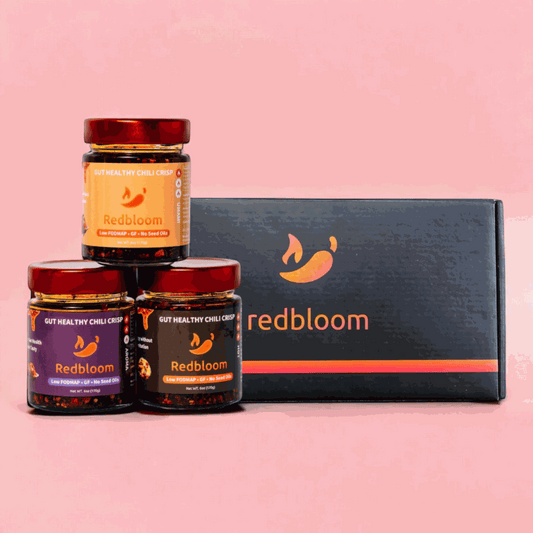
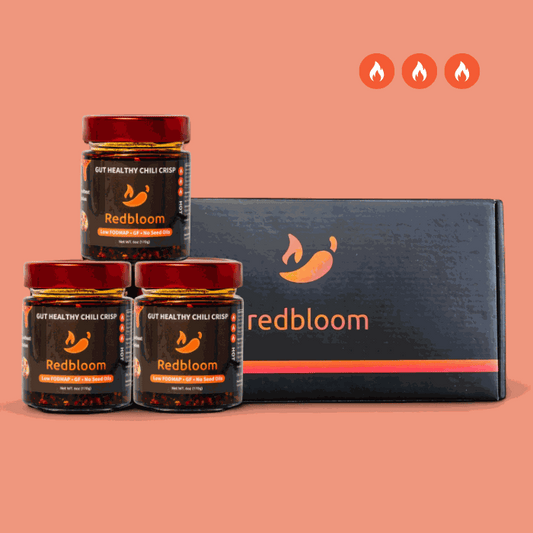
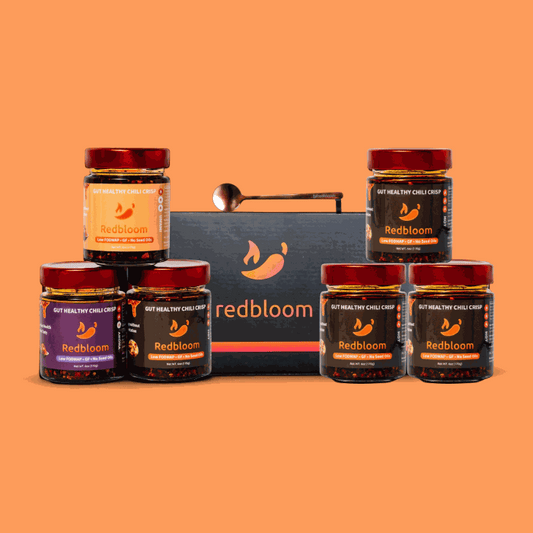
For those interested in building long-term gut resilience, Redbloom's chili crisp offers a unique approach. Capsaicin is clinically proven to reduce gut sensitivity, but traditional chili products can initially trigger flare-ups. Redbloom addresses this by microencapsulating capsaicin in oleic acid from avocado oil, creating a protective cushion that's gentler on sensitive guts. Our 3-phase protocol (Mild Umami → Medium Aroma → Hot Dopamine) is designed to gradually build tolerance, helping reduce gut hypersensitivity that underlies IBS symptoms.
FAQ
1) Why does my stomach hurt more when I eat spicy food before breakfast?
Without food present, capsaicin makes direct contact with your stomach lining and TRPV1 nerve receptors have no competing signals. Research shows capsaicin significantly alters gastric motility and can intensify discomfort in people with reactive guts [1, 4]. Even a small snack beforehand creates a meaningful buffer.
2) Can spicy food on an empty stomach damage my stomach lining?
For most people, occasional discomfort does not mean lasting damage. Animal studies suggest capsaicin at high doses may affect stomach tissue [2], but these findings have not been confirmed in humans at typical dietary amounts. If you experience frequent or severe pain, it is worth checking with a clinician to rule out underlying conditions like gastritis or ulcers.
3) Does eating spicy food regularly make you more or less sensitive over time?
Research suggests that regular, low-dose capsaicin exposure may gradually desensitize TRPV1 receptors, raising your pain threshold over time [3, 9]. Occasional large doses tend to be harder on the gut than small, consistent amounts. Slow and steady tends to work better here.
4) Are people with IBS more affected by spicy food on an empty stomach?
Likely yes. Visceral hypersensitivity – where gut nerves become overly reactive – is a key feature of IBS, and research shows that people with sensitive gut conditions show stronger responses to capsaicin than healthy volunteers [1]. An empty stomach removes any buffer, which can make the experience significantly more intense.
5) What is the safest way to enjoy spicy food with a sensitive stomach?
Always eat something bland first, start with small amounts of heat, pair spice with carbohydrates or a little dairy, and avoid combining it with alcohol or very acidic foods. Gradual, consistent exposure over time may also help build tolerance [3].
Conclusion
Spicy food empty stomach pain is not a mystery once you understand what capsaicin is actually doing in there. Without food as a buffer, your stomach lining and nerve receptors get the full force of the heat signal. The good news is that smart habits – eating something first, building tolerance gradually, and pairing spice thoughtfully – can make a real difference. Your gut can learn to handle heat. Give it the right conditions and a little patience.
Medical Disclaimer: This article is for informational purposes only and is not intended as medical advice. Always consult with a qualified healthcare provider before making dietary changes or if you have a medical condition.
Bibliography
- Patcharatrakul T, Kovit Pongprasobchai S, Gonlachanvit S. Acute Effects of Red Chili, a Natural Capsaicin Receptor Agonist, on Gastric Accommodation and Upper Gastrointestinal Symptoms in Healthy Volunteers and Gastroesophageal Reflux Disease Patients. Nutrients (2020). https://doi.org/10.3390/nu12123740
- Xiang Q, Tang X, Cui S et al. Capsaicin, the Spicy Ingredient of Chili Peppers: Effects on Gastrointestinal Tract and Composition of Gut Microbiota at Various Dosages. Foods (2022). https://doi.org/10.3390/foods11050686
- Zheng J, Zheng S, Feng Q et al. Beneficial Effects of Dietary Capsaicin in Gastrointestinal Health and Disease. Journal of Agricultural and Food Chemistry (2022). https://doi.org/10.1021/acs.jafc.2c00598
- Debreceni A, Abdel-Salam OM, Figler M et al. Capsaicin Increases Gastric Emptying Rate in Healthy Human Subjects Measured by 13C-Labeled Octanoic Acid Breath Test. European Journal of Pharmacology (1999). https://doi.org/10.1016/s0014-2999(99)00573-0
- Schwarz B, Schwarz W, Mrugala M et al. Effect of Capsaicin-Containing Red Pepper Sauce Suspension on Upper Gastrointestinal Motility in Healthy Volunteers. Digestive Diseases and Sciences (1998). https://doi.org/10.1023/A:1018831018566
- Takeuchi K, Kato S, Aihara E et al. Facilitation by Endogenous Prostaglandins of Capsaicin-Induced Gastric Protection in Rodents Through EP2 and IP Receptors. Journal of Pharmacology and Experimental Therapeutics (2003). https://doi.org/10.1124/jpet.102.047340
- Liu T, Wan Y, Meng Y et al. Capsaicin: A Novel Approach to the Treatment of Functional Dyspepsia. Current Opinion in Pharmacology (2023). https://doi.org/10.1016/j.coph.2023.102340