Introduction
Ever notice how some people can handle ghost pepper challenges but get stomach cramps from mild salsa? Or maybe you're the opposite – you love spicy food in your mouth but your stomach rebels hours later. This mouth burn vs stomach burn spicy food mystery comes down to where your body has the most capsaicin receptors and how sensitive they are. Your mouth, stomach, and intestines all have different concentrations of TRPV1 receptors (the sensors that detect heat from chilies), which explains why spice hits everyone differently. Understanding this distribution can help you enjoy the heat without the hurt.
What Is Capsaicin and How Does It Affect Your Digestive System?
Capsaicin binds to TRPV1 receptors – specialized sensors that detect heat, pain, and chemical irritation. These receptors are scattered throughout your digestive tract, from your tongue to your intestines, but they're not evenly distributed [1,2].
Research shows that TRPV1 receptors are found in high concentrations in your mouth's nerve fibers and taste buds [3,4]. In your stomach, they're primarily located in parietal cells (acid-producing cells) and mucous cells that line the stomach wall [1,2].
When capsaicin activates these receptors, your brain interprets this as burning or pain, even though no actual tissue damage occurs. The intensity depends on receptor density and individual sensitivity levels.
Why Spicy Food Triggers Different Reactions in Different Places
1) Receptor Distribution May Vary
While some studies suggest TRPV1 expression differs between oral tissues and stomach tissues [1,3], the picture is more complex than initially thought. The primary source of TRPV1 receptors throughout the GI tract appears to be sensory neurons, and factors like receptor sensitivity and central nervous system processing also play important roles. Interestingly, at least one study found no significant difference in receptor expression between mouth and stomach tissues despite clear differences in capsaicin sensitivity between these areas.
- Tongue and oral mucosa: Receptors concentrated in surface nerve fibers [3,4]
- Stomach lining: Receptors embedded in tissue layers and sensory neurons [1,2]
2) Contact Time and Concentration
Your mouth experiences direct, concentrated capsaicin contact, while your stomach receives diluted capsaicin mixed with food and digestive juices [8]. The stomach's acidic environment can also influence how capsaicin interacts with receptors.
- Immediate oral exposure creates intense but brief sensations
- Stomach exposure is prolonged but often less concentrated
3) Individual Sensitivity Patterns
Some people naturally have more reactive receptors in specific locations, though the mechanisms behind this variation are still being studied.
- Genetic variations affect receptor sensitivity [5,6]
- Previous exposure can increase or decrease sensitivity [7]
Common Symptoms of Location-Specific Spice Sensitivity
Mouth-dominant sensitivity typically includes:
- Immediate burning sensation on tongue and lips
- Increased salivation and tearing
- Temporary taste bud numbness
Stomach-dominant sensitivity often presents as:
- Delayed burning or cramping in upper abdomen
- Nausea or acid reflux symptoms
- Bloating or digestive discomfort hours after eating
Why Some People React Differently to Spice
Individual differences in spice tolerance come down to genetics, gut health, and adaptation over time. Some people inherit fewer or less sensitive TRPV1 receptors, making capsaicin feel less intense [1,5].
Underlying digestive conditions can amplify stomach reactions. Research shows that people with gastric irritation or inflammation may have altered TRPV1 expression patterns [2,7]. Previous exposure to capsaicin can also modify receptor sensitivity – regular spice eaters often develop tolerance through a process called desensitization [7].
What the Science Says: Key Findings
Recent research reveals fascinating patterns in how capsaicin affects different body regions [1,2,3].
Stomach receptor patterns: Studies of human gastric tissue found TRPV1 receptors are most abundant in parietal cells of the stomach fundus, with lower concentrations in the duodenum [1]. Expression levels remained consistent between different body weights, suggesting genetic rather than lifestyle factors drive receptor density.
Oral tissue differences: Research on oral mucosa shows TRPV1 receptors are primarily located in nerve fibers and specialized sensory structures [4].
Pain sensitization: Animal studies indicate that gastric acid exposure can increase TRPV1 expression in stomach-innervating nerves, potentially explaining why some people develop increased stomach sensitivity over time [7].
Immediate Relief Strategies
1) For mouth burning: Dairy products contain casein, which helps wash capsaicin away from oral receptors. Cold milk or yogurt works better than water.
2) For stomach discomfort: Bland carbohydrates like rice or bread can help absorb excess capsaicin and provide a protective buffer in your stomach.
3) Sugar solutions: A spoonful of sugar or honey may help neutralize capsaicin's receptor binding in your mouth.
4) Antacids: Over-the-counter calcium carbonate can neutralize stomach acid that may be amplifying capsaicin's effects.
Long-Term Strategies to Reduce Sensitivity
1) Gradual exposure: Research suggests that consistent, low-dose capsaicin exposure can desensitize TRPV1 receptors over time [7]. Start with mild spices and slowly increase intensity over several weeks.
2) Address underlying conditions: If you have chronic heartburn, gastritis, or other digestive issues, managing these conditions may reduce your capsaicin sensitivity. Stomach irritation can increase TRPV1 expression [7].
3) Smart timing and pairing: Eat spicy foods with meals rather than on an empty stomach. Fats and proteins can help buffer capsaicin's effects and slow absorption.
How Redbloom Fits In
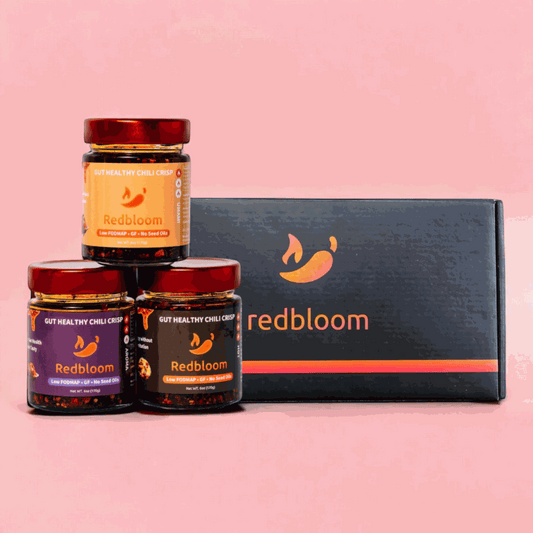
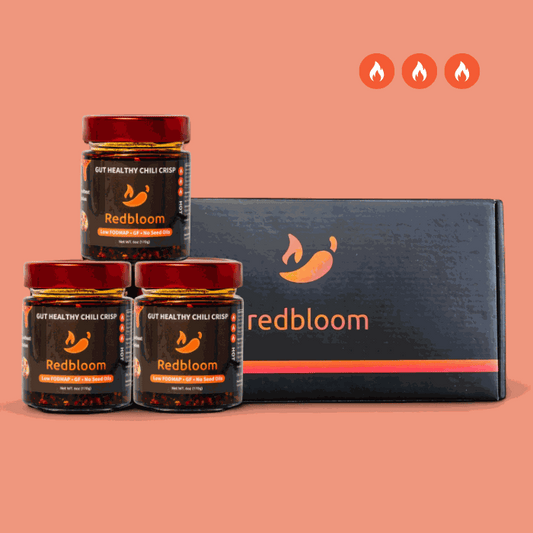
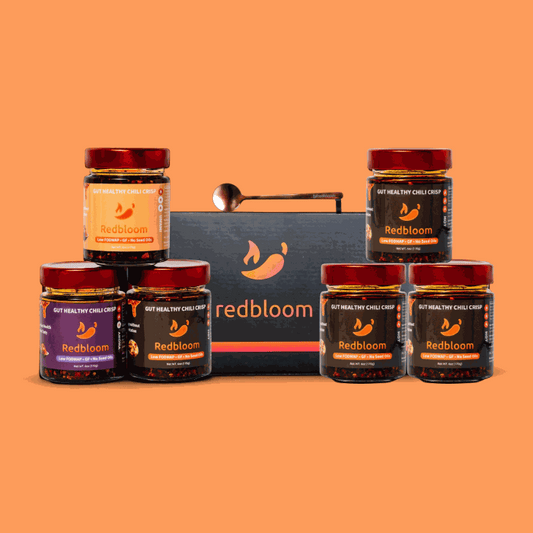
For those interested in building long-term gut resilience, Redbloom's chili crisp offers a unique approach. Capsaicin is clinically proven to reduce gut sensitivity, but traditional chili products can initially trigger flare-ups. Redbloom addresses this by microencapsulating capsaicin in oleic acid from avocado oil, creating a protective cushion that's gentler on sensitive guts. Our 3-phase protocol (Mild Umami → Medium Aroma → Hot Dopamine) is designed to gradually build tolerance, helping reduce gut hypersensitivity that underlies IBS symptoms. Learn more about Redbloom's approach.
FAQ
1) Why can I handle spicy food in my mouth but not my stomach?
This likely means you have less sensitive TRPV1 receptors in your oral tissues but more reactive ones in your stomach lining. Research suggests receptor distribution and sensitivity can vary between these areas [1,3].
2) Can I train my stomach to handle spice better?
Yes, studies suggest gradual capsaicin exposure can desensitize receptors over time [7]. Start with small amounts and increase slowly over several weeks while monitoring your symptoms.
3) Why do some people seem immune to all spice?
Genetic variations affect TRPV1 receptor sensitivity and density. Some people inherit naturally less reactive receptors throughout their digestive system [5,6].
4) Does age affect spice tolerance?
While the provided research doesn't directly address age, TRPV1 expression can change with tissue health and previous exposure patterns. Regular spice consumption may help maintain tolerance over time [7].
5) Should I be concerned if spicy food always hurts my stomach?
Persistent stomach pain from mild spices could indicate underlying digestive issues. Research shows that gastric irritation can increase TRPV1 sensitivity [2,7]. Consider consulting a healthcare provider if symptoms are severe or worsening.
Conclusion
Understanding why your mouth burns but your stomach doesn't (or vice versa) comes down to receptor distribution, individual sensitivity, and exposure history. Whether you're team mouth-fire or team stomach-sensitive, you can work with your body's unique patterns to enjoy spice more comfortably. Start where you're comfortable, build gradually, and remember that everyone's spice journey is different.
Bibliography
[1] Akdaş S, Güliter S, Kılıçkap S. Distribution of transient receptor potential vanilloid-1 channels in gastrointestinal tract of patients with morbid obesity. World Journal of Clinical Cases. 2022. https://doi.org/10.12998/wjcc.v10.i1.79
[2] Ziagaki A, Vartholomatos G, Koukoulis G et al. Gastric Carcinogenesis and Potential Role of the Transient Receptor Potential Vanilloid 1 (TRPV1) Receptor: An Observational Histopathological Study. International Journal of Molecular Sciences. 2024.
[3] Morita M, Yamagata K, Ishida Y et al. Upregulated Expression of Transient Receptor Potential Cation Channel Subfamily V Receptors in Mucosae of Patients with Oral Squamous Cell Carcinoma and Patients with a History of Alcohol Consumption or Smoking. PLOS ONE. 2017. https://doi.org/10.1371/journal.pone.0169723
[4] Peng J, Delaney C, Huang AH et al. Localization of TRP Channels in Healthy Oral Mucosa from Human Donors. Journal of Dental Research. 2022.
[5] Saloman JL, Albers KM, Li D et al. Oral cancer induced TRPV1 sensitization is mediated by PAR2 signaling in primary afferent neurons innervating the cancer microenvironment. Pain. 2022.
[6] Li J, Xie W, Zhang JM et al. Transient receptor potential Vanilloid 1-based gene therapy alleviates orthodontic pain in rats. Gene Therapy. 2019.
[7] Lamb K, Kang YM, Gebhart GF, Bielefeldt K. Increased expression of TRPV1 receptor in dorsal root ganglia by acid insult of the rat gastric mucosa. Pain. 2004.
[8] Pan F, Liang B, Hu X et al. The Role of Transient Receptor Potential Vanilloid 1 in Common Diseases of the Digestive Tract and the Cardiovascular and Respiratory System. Frontiers in Physiology. 2019.
Medical Disclaimer: This article is for informational purposes only and is not intended as medical advice. Always consult with a qualified healthcare provider before making dietary changes or if you have a medical condition.